A Record of Groundbreaking Science
Below is a running list of all RMP publications, with the most recent publications at the top. The Pulse, the RMP Update, and Status and Trends publications are included among others.
In addition to RMP-produced publications, the Bay RMP contributed to the production of Estuary News magazine, and many articles feature Bay RMP findings. Estuary News, a former publication of the San Francisco Estuary Partnership, reported San Francisco Bay, Delta, and watershed news from 1992 to 2023, and won an award for excellence in 2011. Read more about Estuary News.

Bay Regional Monitoring Program Sediment Workgroup Management Questions 1 & 2 Update and Workplan
Author(s): Melissa Foley | Scott Dusterhoff | Lester McKee
2026
The goal of this update and workplan is to document the process used to update Management Questions s 1 and 2 and develop science questions, as well as articulate a 5-year workplan the Sediment Workgroup of the Regional Monitoring Program for Water Quality in San Francisco…
Author(s): Matthew Heberger | Lester McKee
2026
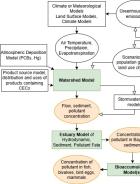
This document outlines a strategy of the Regional Monitoring Program for Water Quality in San Francisco Bay (RMP) for developing an integrated system of watershed and in-Bay models to help answer key management questions and support water quality protection and restoration…
Regional Monitoring Program for Water Quality in San Francisco Bay Communication Strategy
Author(s): Sierra Garcia | Jay Davis
2026
Communicating information in support of management decisions is a key element of the Regional Monitoring Program for Water Quality in San Francisco Bay. Although the Program has always prioritized high-caliber communication outputs, 2025 is the first time staff capacity has…
Author(s): Amy Kleckner | Jay Davis
2026
The purpose of this document is to guide efforts and summarize plans developed within the RMP. The intended audience includes representatives of the many organizations who directly participate in the Program. This document will also be useful for individuals who are not…
Author(s): Amy Kleckner | Jay Davis
2026
In 2026, the Regional Monitoring Program for Water Quality in San Francisco Bay (RMP) is entering its 34th year of collecting data and communicating information to support water quality management decisions. This Detailed Workplan and Budget describes the activities that will…
Author(s): Martin Trinh | Amy Kleckner | Jay Davis | Alicia Gilbreath | Donald Yee | Miguel Méndez | Ezra Miller | Rebecca Sutton | Jennifer Dougherty
2026
The Regional Monitoring Program for Water Quality in San Francisco Bay (RMP) has conducted long-term contaminant monitoring in San Francisco Bay waters since 1993 through its Status and Trends (S&T) program. Following a 2020 program review and growing concern that urban…
Author(s): Amy Kleckner | Jennifer Dougherty | Sasha Mariniuk
2026
In 2016, the State Water Resources Control Board approved a selenium TMDL for North San Francisco Bay. The TMDL established a target concentration of 11.3 μg/g dw in white sturgeon muscle tissue as the basis for evaluating impairment (SFBRWQCB 2015). Following discussions…
Author(s): Anna Mahony | Miguel Méndez | Rebecca Sutton | Patrick McNamara | William Arnold
2026
Quaternary ammonium compounds (QACs) are widely used and have numerous routes to the environment. This work assessed the levels of QACs in surface waters that receive treated wastewater effluent. Samples were collected over a 27 months period from eight different surface…
Author(s): Jennifer Dougherty | Kayli Paterson | Melissa Gonzalez | Edward Kolodziej | Diana Lin | Alicia Gilbreath | Elisabeth Rødland | Win Cowger | Hazel Vaquero | Andrea Amend | Rebecca Sutton
2026
The performance capabilities of bioretention systems for a range of stormwater constituents remain lightly characterized, particularly for emerging organic contaminants. To address this gap, we evaluated concentration- and load-based treatment outcomes at four urban…
Author(s): Oliver Fringer | Rachel Allen | Allie King | Jessica Lacy
2026
This document presents a study plan to improve sediment transport modeling in San Francisco Bay, with a focus on improving parameterizations of erosion and settling to more accurately model the transport of fine suspended sediments. It is composed of (1) a detailed literature…
Author(s): Ezra Miller | Sierra Garcia | Ruth Askevold | Jennifer Symonds | Rebecca Sutton
2026
In 2018, the Regional Monitoring Program for Water Quality in San Francisco Bay (RMP) launched an innovative investigation to detect contaminants that were either new to Bay sediment or had previously gone undetected. This study used nontarget analysis, a powerful tool that…
Regional Framework for the Next Generation of Urban Greening
Author(s): Lauren Stoneburner | Melissa Foley | Cate Jaffe | Kendall Harris
2025
The Regional Framework for the Next Generation of Urban Greening (“the Framework”) provides a roadmap for this alignment, offering nine essential steps to help practitioners navigate the complex, cross-cutting challenges of urban greening. Each step is supported by practical…
Evaluation of the Chronic Toxicity of San Francisco Estuary Ambient Waters
Author(s): Stephen Clark
2025
As part of the San Francisco Estuary RMP 2025 Summer Cruise monitoring, Pacific EcoRisk (PER) was contracted to perform evaluations of the chronic toxicity of ambient waters collected from the San Francisco Estuary system in August and September of 2025. These evaluations…
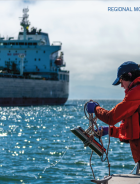
Author(s): San Francisco Estuary Institute (SFEI)
2025
The overarching goal of the Regional Monitoring Program for Water Quality in San Francisco Bay (RMP) is to answer the highest priority scientific questions faced by managers of Bay water quality. The RMP is an innovative collaboration between the San Francisco Bay Regional…
Comparison of creek and bay influences on salt marsh sediment budget and deposition patterns
Author(s): Lukas WinklerPrins | Jessica Lacy | Mark Stacey | Karen Thorne | McKenna Bristow | Scott Jones
2025
The resilience of salt marshes with low organic production depends on their effective capture and retention of mineral sediment from adjacent waters. Little prior work has directly compared mechanisms of sediment import from wave-influenced marsh boundaries against those of…
Author(s): Pedro Avellaneda | Lorenzo Flores | Lester McKee
2025
The San Francisco Bay Regional Watershed Spreadsheet Model (RWSM) was developed within the Regional Monitoring Program for Water Quality in San Francisco Bay (RMP) to estimate average annual regional and sub-regional scale pollutant loads to the Bay from stormwater. The RWSM…
Integrated Watershed Modeling and Monitoring Framework to Support the Regional Monitoring Program
Author(s): Lester McKee | Kelly Moran | Jay Davis
2025
The Regional Monitoring Program (RMP) is transitioning from a watershed program predominantly using monitoring data and data-driven load estimation methods to support management decisions on polychlorinated biphenyls (PCBs) and mercury (Hg) to an integrated modeling and…
Charter: Regional Monitoring Program for Water Quality in San Francisco Bay
Author(s): Jay Davis | Amy Kleckner
2025
This Charter describes the purpose and function of the Regional Monitoring Program for Water Quality in San Francisco Bay (RMP). Established in 1993, the RMP is a collaborative effort between the San Francisco Estuary Institute, the California Regional Water Quality Control…
Continuous Suspended Sediment Monitoring in South and Lower South San Francisco Bay Final Report
Author(s): Martin Volaric | Lilia Mourier | Lucy Montgomery | Katie Noland | David Senn | Ariella Chelsky
2025
This report presents results from a three-year effort (2022-2024) to estimate continuous suspended sediment concentration (SSC) in the South Bay (SB) and Lower South Bay (LSB) regions of San Francisco Bay (SFB). We used discrete SSC samples to calibrate high-frequency (15-min…
Author(s): Amy Kleckner | Jay Davis
2025
In 2025, the Regional Monitoring Program for Water Quality in San Francisco Bay (RMP) is
entering its 33rd year of collecting data and communicating information to support water
quality management decisions. This Detailed Workplan and Budget describes the activities…
Author(s): Amy Kleckner | Jay Davis
2025
The purpose of this document is to guide efforts and summarize plans developed within the RMP. The intended audience includes representatives of the many organizations who directly participate in the Program. This document will also be useful for individuals who are not…
Author(s): Anna Mahony | Tyler Clair | Miguel Méndez | Patrick McNamara | William Arnold
2025
Quaternary ammonium compounds (QACs) are high production volume chemicals used in consumer and industrial products, including disinfectants. Influent, effluent, and biosolid samples were collected from 12 wastewater treatment plants (WWTPs) from 2020 to 2023 and analyzed for…
Author(s): Miguel Méndez | Jay Davis | Ezra Miller | Richard Grace | Rebecca Sutton
2025
Consumption of contaminated food, especially seafood, is a key source of human perfluoroalkyl and polyfluoroalkyl
substances (PFAS) exposure. Here, we examine the occurrence of PFAS in shiner surfperch (Cymatogaster aggregata), striped bass (Morone saxatilis…
Author(s): Jennifer Dougherty | Diana Lin | Ezra Miller | Rebecca Sutton | Samantha DiLoreto | Kirsten Overdahl | Bernadette Vogler | Lee Ferguson
2024
Ethoxylated surfactant compounds are a broad class of non-ionic surfactants that include alkylphenol ethoxylates (APEOs) and alcohol ethoxylates (AEs). Together, APEOs and AEs are used in a wide range of consumer and industrial applications as emulsifiers, wetting agents,…
Author(s): Alicia Gilbreath | Lester McKee | Matthew Heberger | Kelly Moran
2024
The Sources, Pathways, and Loadings (SPL) Workgroup (WG) is one of the five active workgroups within the Regional Monitoring Program for Water Quality in San Francisco Bay (Bay; RMP). The Workgroup produces recommendations for collection, interpretation, and synthesis of data…
Author(s): Yeo Cho | Diana Lin | Donald Yee | Jay Davis | Richard Luthy
2024
To assess historical PCB loading and spatial distribution in the Steinberger Slough and Redwood Creek (SS/RC) complex, a passive sampling campaign was conducted in the summer of 2020 at eight selected sites. Passive sampler uptakes (CPE) successfully captured PCB distribution…
Author(s): San Francisco Estuary Institute (SFEI)
2024
The theme of the 2024 Pulse is "Contaminants of Emerging Concern." The 2013 edition of the Pulse was the first to focus on contaminants of emerging concern (CECs), with the goal of providing an overview of past RMP work, future plans, and a…
Author(s): Donald Yee | Adam Wong
2024
San Francisco Bay margins (i.e., mudflats and adjacent shallow areas of the Bay that are shallower than 1 foot below mean lower low water [MLLW]) are important habitats with high potential for aquatic life to be exposed to contaminants. These areas were not routinely sampled…
Author(s): Lilia Mourier | Lucy Montgomery | Martin Volaric | Ariella Chelsky | David Senn
2024
This report provides a project update for year two of a three-year collaboration between the San Francisco Bay Nutrient Management Strategy (NMS), San Francisco Bay Regional Monitoring Program, and South Bay Salt Pond Restoration Project, to estimate high frequency suspended…
Author(s): Paul Mayer | Kelly Moran | Ezra Miller | Susanne Brander | Stacey Harper | Manuel Garcia-Jaramillo | Victor Carrasco-Navarro | Kay Ho | Robert Burgess | Leah Hampton | Elise Granek | Margaret McCauley | Jenifer McIntyre | Edward Kolodziej | Ximin Hu | Antony Williams | Barbara Beckingham | Miranda Jackson | Rhea Sanders-Smith | Chloe Fender | George King | Michael Bollman | Sujay Kaushal | Brittany Cunningham | Sara Hutton | Jackelyn Lang | Heather Goss | Samreen Siddiqui | Rebecca Sutton | Diana Lin | Miguel Mendez
2024
About 3 billion new tires are produced each year and about 800 million tires become waste annually. Global dependence upon tires produced from natural rubber and petroleum-based compounds represents a persistent and complex environmental problem with only partial and often…
Selenium Concentrations in Water and Clams in North San Francisco Bay, 2019-2020
Author(s): Melissa Foley | Jay Davis | Nina Buzby
2024
The Regional Monitoring Program for Water Quality in San Francisco Bay (RMP) started implementing a new design for North Bay selenium (Se) sampling in 2019 after a long-term USGS program was terminated in 2017. To determine if the RMP sampling and analysis methods are…
Water Year 2024 RMP Near-Field Water Sampling and Analysis Plan
Author(s): Jennifer Dougherty | Amy Kleckner | Rebecca Sutton | Donald Yee | Alicia Gilbreath | Martin Trinh
2024
This report details sampling and analysis plans associated with the pilot near-field water sampling for the Regional Monitoring Program for Water Quality in San Francisco Bay (RMP). The RMP added a pilot effort to the Status & Trends (S&T) Program to…
Author(s): Melissa Foley | Jay Davis | Rebecca Sutton | Donald Yee
2024
In 2020, the Regional Monitoring Program for Water Quality in San Francisco Bay (RMP) undertook a review of the Status and Trends (S&T) Program, a vital component of the RMP. The goals of the S&T Program are to measure contaminant concentrations in San Francisco Bay…
Author(s): Amy Kleckner | Jay Davis
2024
The purpose of this document is to guide efforts and summarize plans developed within the RMP. The intended audience includes representatives of the many organizations who directly participate in the Program. This document will also be useful for individuals who are not…
Author(s): Sam McWilliams | Kara Scheu | Craig Jones | Donald Yee | Allie King | Jay Davis
2024
Modeling of fate and transport in San Francisco Bay is needed to address many priority management questions that have been articulated by RMP workgroups for PCBs, sediment, and contaminants of emerging concern (CECs). This report is part of a first phase of implementation of…
Author(s):
2024
This report provides information about sportfish monitoring collection conducted by ICF during 2024 for the San Francisco Estuary Institute (SFEI) as part of the Regional Monitoring Program for Water Quality in San Francisco Bay (RMP). The RMP monitors spatial patterns and…
Author(s): Diana Lin | Miguel Méndez | Kayli Paterson | Adam Wong | Donald Yee | Rebecca Sutton | Erika Houtz | Mary Cousins | Lorien Fono
2024
Identification of major sources of per- and polyfluoroalkyl substances (PFAS) in wastewater requires comprehensive evaluation, as wastewater is a pathway for a wide range of PFAS products in use, and the PFAS class includes thousands of compounds. We applied both EPA Method…
Author(s): Rebecca Sutton | Ezra Miller | Miguel Méndez | Adam Wong | Kayli Paterson | Jennifer Dougherty | Diana Lin
2024
Over 350,000 chemicals and mixtures of chemicals have been registered for production and use worldwide. A portion of these may meet the definition of contaminants of emerging concern (CECs), chemicals that are unregulated or under-regulated, not commonly monitored in…
Author(s): Jennifer Dougherty | Miguel Méndez | Ezra Miller | Rebecca Sutton
2024
Chlorinated paraffins are a class of mixtures of chlorinated hydrocarbons that are produced and used globally at high volumes for various consumer and industrial applications. Chlorinated paraffins are composed of short-chain (SCCPs), medium-chain (MCCPs), and long-chain…
Author(s): Katherine Peter | Alicia Gilbreath | Melissa Gonzalez | Zhenyu Tian | Adam Wong | Donald Yee | Ezra Miller | Pedro Avellaneda | Da Chen | Andrew Patterson | Nicole Fitzgerald | Christopher Higgins | Edward Kolodziej | Rebecca Sutton
2024
In urban to peri-urban watersheds such as those surrounding San Francisco Bay, stormwater runoff is a major pathway by which contaminants enter aquatic ecosystems. We evaluated the occurrence of 154 organic contaminants via liquid chromatography coupled to tandem mass…
Author(s): Anna Mahony | William Arnold | Miguel Méndez | Ezra Miller | Rebecca Sutton
2024
Quaternary ammonium compounds (QACs) are surfactants widely used in a variety of consumer products, particularly as antimicrobials. The COVID-19 pandemic has increased use of products containing QACs. This is of concern because QACs can be toxic to aquatic life at low…
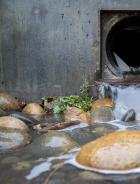
Screening Bay Area Stormwater for Emerging Contaminants: Summary for Managers
Author(s): Rebecca Sutton | Pedro Avellaneda | Miguel Méndez | Jennifer Dougherty | Alicia Gilbreath
2024
As part of a maturing science strategy, the Regional Monitoring Program for Water Quality in San Francisco Bay (RMP) focuses on monitoring and modeling of emerging contaminants in major pathways in an effort to track Bay contaminants back to their sources and better inform…
San Francisco Bay Triennial Bird Egg Monitoring Program for Contaminants - 2024 Data Summary
Author(s): Joshua Ackerman | Alex Hartman | Mark Herzog | Brady Fettig
2024
The USGS's long-term Wildlife Contaminants Program in collaboration with the San Francisco Bay Regional Monitoring Program (RMP) collects bird eggs throughout the San Francisco Bay Estuary to assess temporal trends in contaminant concentrations. This document…
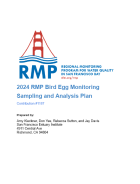
Author(s): Amy Kleckner | Donald Yee | Rebecca Sutton | Jay Davis
2024
This document details sampling and analysis plans associated with triennial monitoring of contaminants in bird egg tissue for the Regional Monitoring Program for Water Quality in San Francisco Bay (RMP). In 2024 staff at the USGS Western Ecological Research Center (USGS-WERC)…
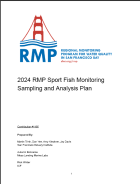
Author(s): Martin Trinh | Donald Yee | Amy Kleckner | Jay Davis | Autumn Bonnema | Rick Wilder
2024
This document details sampling and analysis plans associated with the Status and Trends (S&T) sport fish contaminant monitoring for the Regional Monitoring Program for Water Quality in San Francisco Bay (RMP). Fish will be collected from various locations in the Bay.…
Study of Per- and Polyfluoroalkyl Substances in Bay Area POTWs: Final Report
Author(s): Diana Lin | Miguel Méndez | Kayli Paterson
2024
Per- and polyfluoroalkyl substances (PFAS) are a broad class of fluorine-rich specialty chemicals with many uses across consumer, commercial, and industrial applications and products. The carbon-fluorine bonds that define this class afford PFAS stability during use and…
Author(s): Amy Kleckner | Jay Davis
2023
In 2024, the Regional Monitoring Program for Water Quality in San Francisco Bay (RMP) is entering its 32nd year of collecting data and communicating information to support water quality management decisions. This Detailed Workplan and Budget describes the activities that will…
Author(s): Djordje Vuckovic | Jessica MacDonald | Diana Lin | Miguel Méndez | Ezra Miller | William Mitch
2023
Research in the United States evaluating ecotoxic risk to receiving waters posed by contaminants occurring in wastewater discharges typically has focused on measurements of pharmaceuticals and personal care products (PPCPs), with limited evaluations of UV filters…
Author(s): Lester McKee | David Peterson | Alex Braud | Melissa Foley | Scott Dusterhoff | Jeremy Lowe | Allie King | Jay Davis
2023
This document was prepared with guidance gained through two RMP Sediment Workgroup workshops held in late 2022 and early 2023. Given the variety of participants involved, this Workplan encompasses interests beyond San Francisco Bay RMP funders. We thank the attendees for…
Author(s): San Francisco Estuary Institute (SFEI)
2023
The overarching goal of the Regional Monitoring Program for Water Quality in San Francisco Bay (RMP) is to answer the highest priority scientific questions faced by managers of Bay water quality. The RMP is an innovative collaboration between the San Francisco Bay Regional…
Author(s): K.M. Thorne | M.L. Bristow
2023
The U.S. Geological Survey, Western Ecological Research Center collected sediment and accretion data at a wave-exposed tidal salt marsh in South San Francisco Bay, California. Sediment traps and feldspar marker horizons (MH) were deployed along transects of increasing…
Author(s): Amy Kleckner | Rebecca Sutton | Donald Yee | Adam Wong | Jay Davis | Paul Salop
2023
This report details plans associated with the 2023 Regional Monitoring Program for Water Quality in the San Francisco Estuary (RMP) water cruise. The RMP water sampling program was redesigned in 2002 to adopt a randomized sampling design at thirty-one stations in place of the…
Author(s):
2023
This report outlines details from the annual Regional Monitoring Program for Water Quality in the San Francisco Estuary (RMP) sediment cruise, conducted July 24 – 27, 2023. The Regional Monitoring Program conducts routine monitoring of water, sediment and biological tissue.…
Author(s): Joanne Ferreira | Samantha Mcgill | Angela Tan | Jessica Lacy
2023
Sediment samples were collected on and adjacent to the Whale’s Tail South marsh. Short push-cores of bed sediment were collected in South San Francisco Bay adjacent to Whales Tail South marsh on five days from June through August 2021 and 3 days from November 2021 to January…
2023 Bay Prey Fish and Near-field / Margins Sediment Sampling and Analysis Plan
Author(s): Miguel Mendez | Amy Kleckner | Rebecca Sutton | Donald Yee | Adam Wong | Jay Davis | Marco Sigala
2023
This is a sampling and analysis plan for the Bay Status and Trends (S&T) Prey Fish and Near-field / Margins Sediment monitoring for the Regional Monitoring Program for Water Quality in San Francisco Bay (RMP). Bay margins are defined by the RMP as extending from Mean…
Author(s): Amy Kleckner | Rebecca Sutton | Donald Yee | Adam Wong | Jay Davis | Paul Salop
2023
This report details plans associated with the Regional Monitoring Program for Water Quality in the San Francisco Estuary (RMP) deep bay sediment cruise. The RMP, through the Status and Trends monitoring program, conducts routine monitoring of water, sediment and biological…
Conceptual Understanding of Fine Sediment Transport in San Francisco Bay
Author(s): Katie McKnight | Alex Braud | Scott Dusterhoff | Letitia Grenier | Sam Shaw | Jeremy Lowe | Melissa Foley | Lester McKee
2023
Sediment is a lifeblood of San Francisco Bay (Bay). It serves three key functions: (1) create and maintain tidal marshes and mudflats, (2) transport nutrients and contaminants, and (3) reduce impacts from excessive human-derived nutrients in the Bay. Because of these…
Water Year 2023 RMP Near-Field Water Sampling and Analysis Plan
Author(s): Amy Kleckner | Rebecca Sutton | Donald Yee | Alicia Gilbreath | Martin Trinh
2023
This report details plans associated with the pilot near-field water sampling for the Regional Monitoring Program for Water Quality in San Francisco Bay (RMP). The RMP recently reviewed the Status & Trends (S&T) Program and added a pilot effort to quantify…
Author(s): Lilia Mourier | Martin Volaric | Ariella Chelsky | David Senn
2023
Suspended sediment concentration (SSC) is of critical importance to the management of San Francisco Bay (SFB), yet has not been a focus of sustained high frequency monitoring efforts in shallow shoal and slough habitats that make up a majority of the area of the South Bay (SB…
Re-evaluation of the Floating Percentile Method for Deriving Dredged Sediment Screening Guidelines
Author(s): Donald Yee | Adam Wong
2023
This document summarizes a study conducted for the Regional Monitoring Program for Water Quality in San Francisco Bay (RMP) to re-evaluate the use of the Floating Percentile Method
(FPM) to derive sediment screening guidelines for dredged material reuse in the San…
Concentrations of Select Commonly Used Organic UV Filters in San Francisco Bay Wastewater Effluent
Author(s): Miguel Méndez | Ezra Miller | Diana Lin | Djordje Vuckovic | William Mitch
2023
Ultraviolet (UV) radiation filters are chemicals designed to absorb or reflect harmful solar radiation, and are used in products as diverse as personal care products (e.g., sunscreens, lotions, and cosmetics) and industrial products (e.g., insecticides, plastics, and paints)…
Quaternary Ammonium Compounds: A Chemical Class of Emerging Concern
Author(s): William Arnold | Courtney Carigan | Gino Cortopassi | Sandipan Datta | Jamie DeWitt | Anne-Cooper Doherty | Rolf Halden | Homero Harari | Erica Hartmann | Terry Hrubec | Shoba Iyer | Carol Kwiatkowski | Jonas LaPier | Dingsheng Li | Li Li | Jorge Ortiz | Amina Salamova | Ted Schettler | Ryan Seguin | Anna Soehl | Rebecca Sutton | Libin Xu | Guomao Zheng | Arlene Blum | Jennifer Branyan | Thomas Bruton
2023
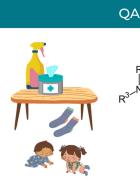
Quaternary ammonium compounds (QACs), a large class of chemicals that includes high production volume substances, have been used for decades as antimicrobials, preservatives, and antistatic agents and for other functions in cleaning, disinfecting, personal care products, and…
Author(s): J.B Logan | L.T. Winklerprins | J.R Lacy
2023
This data release presents digital surface models (DSMs) and orthomosaic images of the Whale's Tail Marsh region of South San Francisco Bay, CA. The data were created using structure-from-motion (SfM) processing of repeat aerial imagery collected from fixed-wing aircraft. The…
Bathymetric change analysis in San Francisco Bay, California, from 1971 to 2020
Author(s): Theresa Fregoso | Bruce Jaffe | Amy Foxgrover
2023
This data release provides bathymetric change grids of four geographic areas of San Francisco Bay, California, comparing digital elevation models (DEMs) created from bathymetric data collected in the 1970s and 1980s with DEMs created from bathymetric data collected in the…
Author(s): Joanne Ferreira | Jessica Lacy | Samantha Mcgill | Lukas WinklerPrins | Daniel Nowacki | Andrew Stevens | Angela Tan
2023
The U.S. Geological Survey Pacific Coastal and Marine Science Center collected hydrodynamic and sediment-transport data at shallow water sites in South San Francisco Bay and in the Whale's Tail South marsh in Eden Landing Ecological Reserve in Alameda County, CA in 2021 and…
Author(s): Analise Lindborg | Kirsten Overdahl | Bernadette Vogler | Diana Lin | Rebecca Sutton | P.L. Ferguson
2023
Ethoxylated surfactants are ubiquitous organic environmental contaminants that have received continued attention over the past several decades, particularly as manufacturing rates increase worldwide and as toxicity concerns grow regarding alcohol ethoxylates. Presence of…
Author(s): Theresa Fregoso | Amy Foxgrover | Bruce Jaffe
2023
Bathymetric change analyses document historical patterns of sediment deposition and erosion, providing valuable insight into the sediment dynamics of coastal systems, including pathways of sediment and sediment-bound contaminants. In 2014 and 2015, the Office for Coastal…
Author(s): Theresa Fregoso | Amy Foxgrover | Bruce Jaffe
2023
Bathymetric change analyses document historical patterns of sediment deposition and erosion, providing valuable insight into the sediment dynamics of coastal systems, including pathways of sediment and sediment-bound contaminants. In 2014 and 2015, the California Ocean…
Tire Wear: Emissions Estimates and Market Insights to Inform Monitoring Design
Author(s): Kelly Moran | Alicia Gilbreath | Miguel Méndez | Diana Lin | Rebecca Sutton
2023
Every vehicle on the road sheds tiny particles from its rubber tires into the environment. Tire wear is one of the top sources of microplastic releases to the environment. Tire wear also disperses tire-related chemicals into the environment. SFEI studies supported by the…
Author(s): Melissa Foley | Jay Davis | Donald Yee
2023
The purpose of this document is to guide efforts and summarize plans developed within the RMP. The intended audience includes representatives of the many organizations who directly participate in the Program. This document will also be useful for individuals who are not…
Optimizing Chemicals Management in the United States and Canada through the Essential-Use Approach
Author(s): Simona Bǎlan | David Andrews | Arlene Blum | Miriam Diamond | Seth Fernández | Elizabeth Harriman | Andrew Lindstrom | Anna Reade | Lauren Richter | Rebecca Sutton | Zhanyun Wang | Carol Kwiatkowski
2023
Chemicals have improved the functionality and convenience of industrial and consumer products, but sometimes at the expense of human or ecological health. Existing regulatory systems have proven to be inadequate for assessing and managing the tens of thousands of chemicals in…
2023 RMP Margins & Nearfield Sediment and Prey Fish Cruise Report
Author(s):
2023
This report contains information on the summer 2023 field sampling efforts conducted by the San Jose State University Research Foundation’s (SJSURF) Marine Pollution Studies Lab at Moss Landing Marine Labs (MPSL-MLML) in support of the Regional Monitoring Program’s (RMP)…