A Record of Groundbreaking Science
Below is a running list of all RMP publications, with the most recent publications at the top. The Pulse, the RMP Update, and Status and Trends publications are included among others.
In addition to RMP-produced publications, the Bay RMP contributed to the production of Estuary News magazine, and many articles feature Bay RMP findings. Estuary News, a former publication of the San Francisco Estuary Partnership, reported San Francisco Bay, Delta, and watershed news from 1992 to 2023, and won an award for excellence in 2011. Read more about Estuary News.

2023 Status and Trends Monitoring - Sampling Plans and QA Reports
Author(s):
2023
- 2023 Water Cruise Plan .pdf
- 2022-23 Near-Field water SAP.pdf
- Sampling and Analysis Plan (SAP) for 2023 RMP Sediment - Final.pdf
- S&T 2023 - Prey Fish and Sampling Plan - FINAL.pdf
- 2023 RMP Sediment Cruise Report.pdf
- 2023 RMP Water Cruise Report.pdf
- 2023 RMP Margins and Nearfield Sediment and Prey Fish Cruise Report.pdf
San Francisco Bay Watershed Dynamic Model (WDM) Progress Report, Phase 2
Author(s): Tan Zi | Alex Braud | Lester McKee | Melissa Foley
2022
The San Francisco Bay total maximum daily loads (TMDLs) call for a 50% reduction in mercury (Hg) loads by 2028 and a 90% reduction in PCBs loads by 2030. In support of these TMDLs, the Municipal Regional Permit for Stormwater (MRP) (SFBRWQCB, 2009, SFBRWQCB, 2015, SFBRWQCB,…
Charter: Regional Monitoring Program for Water Quality in San Francisco Bay
Author(s): Melissa Foley | Jay Davis
2022
This Charter describes the purpose and function of the Regional Monitoring Program for Water
Quality in San Francisco Bay (RMP). Established in 1993, the RMP is a collaborative effort
between the San Francisco Estuary Institute, the California Regional Water…
Author(s): Miguel Mendez | Martin Trinh | Ezra Miller | Diana Lin | Rebecca Sutton
2022
Per- and polyfluoroalkyl substances (PFAS), a family of thousands of synthetic, fluorine-rich compounds commonly referred to as “forever chemicals,” are known for their thermal stability, non-reactivity, and surfactant properties. These unique compounds have widespread uses…
Author(s): Applied Marine Sciences (AMS)
2022
This report details activities associated with the biannual Regional Monitoring Program for Water Quality in the San Francisco Estuary (RMP) water cruise. The RMP water sampling program was redesigned in 2002 to adopt a randomized sampling design at thirty-one sites in place…
Author(s): Miguel Mendez | Cristina Grosso | Diana Lin
2022
The Dredged Material Management Office (DMMO) is responsible for annually approving dredging and disposal of millions of cubic yards of sediment to maintain safe navigation in San Francisco Bay. Dredged sediment is characterized for physical, chemical, and biological…
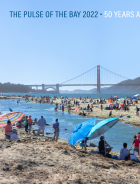
The Pulse of the Bay 2022: 50 Years After the Clean Water Act
Author(s): Jay Davis | Melissa Foley | Ruth Askevold | Rebecca Sutton | David Senn | Ellen Plane
2022
The theme of the 2022 Pulse is "50 Years After the Clean Water Act." Nine different individuals or groups have contributed perspectives on progress to date and challenges ahead. This Pulse also includes summaries, from a historical perspective, on the major water…
Bisphenols in San Francisco Bay: Wastewater, Stormwater, and Margin Sediment Monitoring
Author(s): Miguel Mendez | Ezra Miller | Jia Liu | Da Chen | Rebecca Sutton
2022
Bisphenols are a class of synthetic, mobile, endocrine-disrupting chemicals. Bisphenol A (BPA), the most well-studied bisphenol, is produced and used in vast quantities worldwide—especially in polycarbonate plastics and as a polymer additive. Recently, some manufacturers have…
A living tool for the continued exploration of microplastic toxicity
Author(s): Leah Hampton | Hannah De Frond | Ludovic Hermabessiere | Ezra Miller | Vera de Ruijter | Andrea Faltynkova | Syd Kotar | Laura Monclús | Samreen Siddiqui | Johannes Völker | Susanne Brander | Albert Koelmans | Chelsea Rochman | Martin Wagner | Alvine Mehinto | Heili Lowman | Scott Coffin | Emily Darin
2022
Throughout the past decade, many studies have reported adverse effects in biota following microplastic exposure. Yet, the field is still emerging as the current understanding of microplastic toxicity is limited. At the same time, recent legislative mandates have required…
Author(s): Craig Jones | Jay Davis | Donald Yee
2022
This report presents a strategy and multi-year workplan for modeling polychlorinated biphenyls (PCBs), contaminants of emerging concern (CECs), and sediment in San Francisco Bay (the Bay). Robust in-Bay fate modeling is needed to address priority management questions that…
Author(s): Leah Hampton | Hans Bouwmeester | Susanne Brander | Scott Coffin | Matthew Cole | Ludovic Hermabessiere | Alvine Mehinto | Ezra Miller | Chelsea Rochman | Stephen Weisberg
2022
To assess the potential risk of microplastic exposure to humans and aquatic ecosystems, reliable toxicity data is needed. This includes a more complete foundational understanding of microplastic toxicity and better characterization of the hazards they may present. To expand…
Risk-based management framework for microplastics in aquatic ecosystems
Author(s): Alvine Mehinto | Scott Coffin | Albert Koelmans | Susanne Brander | Martin Wagner | Leah Hampton | Allen Burton | Ezra Miller | Todd Gouin | Stephen Weisberg | Chelsea Rochman
2022
Microplastic particles (MPs) are ubiquitous across a wide range of aquatic habitats but determining an appropriate level of risk management is hindered by a poor understanding of environmental risk. Here, we introduce a risk management framework for aquatic ecosystems that…
Author(s): Miaomiao Wang | Juliet Kinyua | Ting Jiang | Meg Sedlak | Lester McKee | Richard Fadness | Rebecca Sutton | June-Soo Park
2022
The combustion of structures and household materials as well as firefighting during wildfires lead to releases of potentially hazardous chemicals directly into the landscape. Subsequent storm-water runoff events can transport wildfire-related contaminants to downstream…
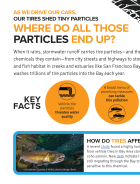
Microplastics from Tire Particles in San Francisco Bay Fact Sheet
Author(s): Kelly Moran | Ruth Askevold
2022
As we drive our cars, our tires shed tiny particles
When it rains, stormwater runoff carries tire particles—and the toxic chemicals they contain—from city streets and highways to storm drains and fish habitat in creeks and estuaries like San Francisco…
Author(s): Melissa Foley | Jay Davis | Donald Yee
2022
In 2022 the Regional Monitoring Program for Water Quality in San Francisco Bay (RMP) is entering its 31st year of collecting data and communicating information to support water quality management decisions. This Detailed Workplan and Budget describes the activities that will…
Author(s): Lester McKee | Alicia Gilbreath | Lisa Sabin
2022
Stormwater agencies in the San Francisco Bay Area are identifying watershed areas that are polluted with PCBs in order to prioritize management efforts to reduce impairment in the Bay caused by PCBs carried in stormwater. Water sampling during storms has been used to…
Author(s): Ila Shimabuku | Da Chen | Yan Wu | Ezra Miller | Jennifer Sun | Rebecca Sutton
2022
Organophosphate esters (OPEs) and bisphenols are two classes of industrial chemicals that are ubiquitously detected in environmental matrices due to high global production and widespread use, particularly in the manufacture of plastic products. In 2017, water…
A ubiquitous tire rubber-derived chemical induces acute mortality in coho salmon
Author(s): Zhenyu Tian | Haoqi Zhao | Katherine Peter | Melissa Gonzalez | Jill Wetzel | Christopher Wu | Ximin Hu | Jasmine Prat | Emma Mudrock | Rachel Hettinger | Allan Cortina | Rajshree Biswas | Flávio Kock | Ronald Soong | Amy Jenne | Bowen Du | Fan Hou | Huan He | Rachel Lundeen | Alicia Gilbreath | Rebecca Sutton | Nathaniel Scholz | Jay Davis | Michael Dodd | Andre Simpson | Jenifer McIntyre | Edward Kolodziej
2021
In U.S. Pacific Northwest coho salmon (Oncorhynchus kisutch), stormwater exposure annually causes unexplained acute mortality when adult salmon migrate to urban creeks to reproduce. By investigating this phenomenon, we identified a highly toxic quinone transformation product…
Pollutants of Concern Reconnaissance Monitoring Progress Report, Water Years 2015-2020
Author(s): Alicia Gilbreath | Lester McKee | Jennifer Hunt
2021
The San Francisco Bay polychlorinated biphenyl (PCB) and mercury (Hg) total maximum daily loads (TMDLs) call for implementation of control measures to reduce PCB and Hg loads entering the Bay via stormwater. In 2009, the San Francisco Bay Regional Water Quality Control Board…
Author(s): Rachel Allen | J.R. Lacy | S.C. McGill | J.C.T. Ferreira
2021
The U.S. Geological Survey (USGS) Pacific Coastal and Marine Science Center collected hydrodynamic and suspended sediment flocculation data at channel and shallow water sites in south San Francisco Bay in July 2020. The data were used to determine water column stratification,…
Author(s): Jay Davis | Melissa Foley | Ruth Askevold | Ariella Chelsky | Scott Dusterhoff | Alicia Gilbreath | Diana Lin | Donald Yee | David Senn | Rebecca Sutton
2021
The overarching goal of the Regional Monitoring Program for Water Quality in San Francisco Bay (RMP) is to answer the highest priority scientific questions faced by managers of Bay water quality. The RMP is an innovative collaboration between the San Francisco Bay Regional…
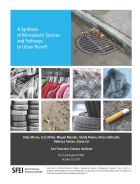
A Synthesis of Microplastic Sources and Pathways to Urban Runoff
Author(s): Kelly Moran | Ezra Miller | Miguel Mendez | Shelly Moore | Alicia Gilbreath | Rebecca Sutton | Diana Lin
2021
California Senate Bill 1263 (2018) tasks the Ocean Protection Council (OPC) with leading statewide efforts to address microplastic pollution, and requires the OPC to adopt and implement a Statewide Microplastics Strategy related to microplastic materials that pose an emerging…
PCBs in Shiner Surfperch in Priority Margin Areas of San Francisco Bay
Author(s): Jay Davis | Nina Buzby
2021
Conceptual models developed for selected San Francisco Bay margin areas (referred to as priority margin units, or PMUs) have identified shiner surfperch as a crucial indicator of PCB impairment, due to their explicit inclusion as an indicator species in the PCBs TMDL,…
Author(s): Melissa Foley | Rebecca Sutton | Donald Yee | Paul Salop
2021
This report details plans associated with the annual Regional Monitoring Program for Water Quality in the San Francisco Estuary (RMP) water cruise. The RMP water sampling program was redesigned in 2002 to adopt a randomized sampling design at thirty-one sites in place of the…
Author(s): Xia Zhu | Keenan Munno | Jelena Grbic | Larissa Werbowski | Jacqueline Bikker | Annissa Ho | Edie Guo | Meg Sedlak | Rebecca Sutton | Carolynn Box | Diana Lin | Alicia Gilbreath | Rusty Holleman | Marie-Josee Fortin | Chelsea Rochman
2021
The physical and chemical properties of microplastics and their environmental distributions may provide clues about their sources and inform their fate. We demonstrate the value of extensive monitoring of microplastics in an urban bay, San Francisco Bay. Surface water, fish,…
The San Francisco Estuary Institute Collection at the NIST Biorepository
Author(s): Debra Ellisor | Nina Buzby | Michael Weaver | Melissa Foley | Rebecca Pugh
2021
The National Institute of Standards and Technology (NIST) has been collaborating with the San Francisco Bay Estuary Institute (SFEI) since 2009, providing biobanking services at the NIST Biorepository in Charleston, South Carolina in support of their ongoing water quality…
Author(s):
2021
This report details plans associated with sediment sampling for the Bay Margins Sediment Study for the Regional Monitoring Program for Water Quality in San Francisco Bay (RMP). Bay margins (i.e., mud flats and adjacent shallow areas of the Bay) are productive and highly…
Author(s):
2021
This report contains information on the late summer/early fall field sampling efforts conducted
by the Marine Pollution Studies Lab at Moss Landing Marine Labs (MPSL-MLML) in support of
the San Francisco Bay Regional Monitoring Program (RMP) North Bay (San…
Author(s): Kirsten Overdahl | Rebecca Sutton | Jennifer Sun | Noelle DeStefano | Gordon Getzinger | Lee Ferguson
2021
A comprehensive, non-targeted analysis of polar organic pollutants using high resolution/accurate mass (HR/AM) mass spectrometry approaches has been applied to water samples from San Francisco (SF) Bay, a major urban estuary on the western coast of the United States, to…
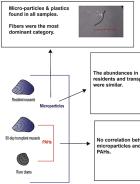
Author(s): Natasha Klasios | Hannah De Frond | Ezra Miller | Meg Sedlak | Chelsea Rochman
2021
Microplastics are an emerging contaminant of high environmental concern due to their widespread distribution and availability to aquatic organisms. Filter-feeding organisms like bivalves have been identified as particularly susceptible to microplastics, and because of this,…
Author(s): Melissa Foley | Jay Davis | Donald Yee
2021
In 2021 the Regional Monitoring Program for Water Quality in San Francisco Bay (RMP) is entering its 29th year of collecting data and communicating information to support water quality management decisions. This Detailed Workplan and Budget describes the activities that will…
Author(s): Donald Yee
2021
This memo provides a high-level summary of the quality assurance assessment for data reported by the RMP. In 2019, fish tissue samples were collected from nine Bay/Delta areas and three additional wetland/slough areas for the Regional Monitoring Program for Water…
Author(s): Applied Marine Sciences (AMS)
2021
This report details activities associated with the Regional Monitoring Program North Bay Selenium Study in 2020 and 2021. The study was designed to monitor two sites for selenium (Se) in water and clam tissue six times annually between June and February. Due to the COVID…
Author(s): D Chang | W Richardot | Ezra Miller | N Dodder | Meg Sedlak | E Hoh | Rebecca Sutton
2021
Wildfires can be extremely destructive to communities and ecosystems. However, the full scope of the ecological damage is often hard to assess, in part due to limited information on the types of chemicals introduced to affected landscapes and waterways. The objective of this…
Author(s): L.M. Werbowski | Alicia Gilbreath | K. Munno | X. Zhu | J. Grbic | T. Wu | Rebecca Sutton | Meg Sedlak | A.D. Deshpande | Chelsea Rochman
2021
Stormwater runoff has been suggested to be a significant pathway of microplastics to aquatic habitats; yet, few studies have quantified microplastics in stormwater. Here, we quantify and characterize urban stormwater runoff from 12 watersheds surrounding San Francisco Bay for…
Author(s): Ezra Miller | Meg Sedlak | Rebecca Sutton | D Chang | N Dodder | E Hoh
2021
Urban-wildland interfaces in the western US are increasingly threatened by the growing number and intensity of wildfires, potentially changing the type of contaminants released into the landscape as more urban structures are burned. In October 2017, the Tubbs, Nuns, and Atlas…
Author(s): Ezra Miller | Meg Sedlak | Diana Lin | Carolynn Box | Christopher Holleman | Chelsea Rochman | Rebecca Sutton
2020
Microplastics are ubiquitous and persistent contaminants in the ocean and a pervasive and preventable threat to the health of marine ecosystems. Microplastics come in a wide variety of shapes, sizes, and plastic types, each with unique physical and chemical properties and…
Author(s): Chelsea Rochman | Keenan Munno | Carolynn Box | Anna Cummins | Xia Zhu | Rebecca Sutton
2020
Microplastic contamination in the marine environment is a global issue. Across the world, policies at the national and international level are needed to facilitate the scale of change needed to tackle this significant problem. However, sources and patterns of plastic…
Author(s): D. Livsey | Maureen Downing-Kunz | David Schoellhamer | A. Manning
2020
Recent modeling has demonstrated that sediment supply is one of the primary environmental variables that will determine the sustainability of San Francisco Estuary tidal marshes over the next century as sea level rises. Therefore, understanding the environmental controls on…
Author(s): Jay Davis | Melissa Foley | Ruth Askevold | Nina Buzby | Ariella Chelsky | Scott Dusterhoff | Alicia Gilbreath | Diana Lin | Ezra Miller | David Senn | Rebecca Sutton
2020
The overarching goal of the Regional Monitoring Program for Water Quality in San Francisco Bay (RMP) is to answer the highest priority scientific questions faced by managers of Bay water quality. The RMP is an innovative collaboration between the San Francisco Bay Regional…
Author(s): Susanne Brander | Violet Renick | Melissa Foley | Clare Steele | Mary Woo | Amy Lusher | Steve Carr | Paul Helm | Carolynn Box | Sam Cherniak | Robert Andrews | Chelsea Rochman
2020
Plastic pollution is a defining environmental contaminant and is considered to be one of the greatest environmental threats of the Anthropocene, with its presence documented across aquatic and terrestrial ecosystems. The majority of this plastic debris falls into the micro (1…
Author(s): Ezra Miller | Miguel Mendez | Ila Shimabuku | Nina Buzby | Rebecca Sutton
2020
This 2020 CEC Strategy Update is a brief summary document that describes the addition of recently monitored CECs to the tiered risk-based framework. Reviews of findings relevant to San Francisco Bay are provided, as is a discussion of the role of environmental persistence in…
Author(s): Sarah Pearce | Lester McKee
2020
This report summarizes the precipitation, discharge, and sediment conditions observed from October 1, 2016 to September 30th, 2017 (Water Year (WY) 2017) in the Arroyo de la Laguna watershed, with a focus on the Arroyo Mocho watershed. This information was collected by the…
Pollutants of Concern Reconnaissance Monitoring Progress Report, Water Years 2015 - 2019
Author(s): Alicia Gilbreath | Jennifer Hunt | Lester McKee
2020
Reconnaissance monitoring for water years 2015, 2016, 2017, 2018 and 2019 was completed with funding provided by the Regional Monitoring Program for Water Quality in San Francisco Bay (RMP). This report is designed to be updated each year until completion of the study. At…
Neonicotinoids and Their Degradates in San Francisco Bay Water
Author(s): Nina Buzby | Diana Lin | Rebecca Sutton
2020
In the summer of 2017, open Bay water samples were collected during the RMP Status and Trends Water Cruise. Samples were analyzed for 19 neonicotinoids and metabolites. The only neonicotinoid detected was imidacloprid, an active ingredient used in both urban and agricultural…
Author(s): Jennifer Sun | Rebecca Sutton | Lee Ferguson | Kirsten Overdahl
2020
In 2016, the RMP launched a novel investigation to detect new or unexpected contaminants in Bay waters, as well as treated sewage (or wastewater) discharged to the Bay. This study used non-targeted analysis, a powerful tool that provides a broad, open-ended view of thousands…
Author(s): Daniel Livsey | Maureen Downing-Kunz | David Schoellhamer | Andrew Manning
2020
In this study, we investigate how changes in the vertical distribution of suspended sediment affect continuous suspended sediment flux measurements at a location in the San Francisco Estuary. Current methods for measuring continuous suspended sediment flux estimates relate…
Author(s): Melissa Foley | Elizabeth Christian | Brenda Goeden | Brian Ross
2020
The beneficial reuse of dredged sediment is one strategy in a broader portfolio that is being developed for San Francisco Bay to help marshes adapt to rising sea level. Dredged sediment is currently being used in restoration projects around the Bay, but additional sediment is…
Microparticles, Microplastics, and PAHs in Bivalves in San Francisco Bay
Author(s): Ezra Miller | Natasha Klasios | Diana Lin | Meg Sedlak | Rebecca Sutton | Chelsea Rochman
2020
California mussels (Mytilus californianus and hybrid Mytilus galloprovincialis / Mytilus trossulus) and Asian clams (Corbicula fluminea) were collected at multiple sites in San Francisco Bay. Mussels from a reference area with minimal urban influence were also deployed in…
Multi-box mass balance model of PFOA and PFOS in different regions of San Francisco Bay
Author(s): Francisco Soberón | Rebecca Sutton | Meg Sedlak | Donald Yee | Marta Schuhmacher | June-Soo Park
2020
We present a model to predict the long-term distribution and concentrations of perfluorooctanoic acid (PFOA) and perfluorooctanesulfonic acid (PFOS) in estuaries comprising multiple intercommunicated sub-embayments. To that end, a mass balance model including rate constants…
Author(s): Matthew Heberger | Rebecca Sutton | Nina Buzby | Jennifer Sun | Diana Lin | Miguel Mendez | Michelle Hladik | James Orlando | Corey Sanders | Edward Furlong
2020
The Regional Monitoring Program for Water Quality in San Francisco Bay (RMP) has recently focused attention on better characterization of contaminants in nearshore “margin” areas of San Francisco Bay. The margins of the Lower South Bay are mudflats and shallow regions that…
2019 RMP North Bay Selenium Monitoring Sampling and Analysis Plan
Author(s): Nina Buzby | Donald Yee | Paul Salop | Melissa Foley
2020
The goal of monitoring for selenium in the North Bay tissue and water is to identify leading indicators of change to allow prompt management response to signs of increasing impairment. At the 2016 technical workshop, participants reached a consensus that monitoring…
Author(s): Nina Buzby | Donald Yee | Melissa Foley | Jay Davis | Marco Sigala | Autumn Bonnema
2020
The Regional Monitoring Program for Water Quality in San Francisco Bay (RMP) monitors concentrations of contaminants in fish tissue as indicators of bioaccumulation of contaminants in the Bay. In 2019, the RMP will conduct its eighth round of sport fish monitoring by…
Author(s): Applied Marine Sciences (AMS)
2020
This report details activities associated with the Regional Monitoring Program North Bay Selenium Study. The study was designed to monitor two sites for selenium (Se) in clam tissues and water six times between June 2019 and February 2020. This report outlines the…
Author(s): Katie McKnight | Jeremy Lowe | Ellen Plane
2020
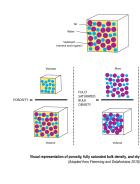
Sediment bulk density is the total mass of mineral and organic sediment within a defined volume. It is a key variable in many research questions pertaining to Bay sediment studies but one that is often poorly quantified and can be misinterpreted. The motivation for this…
Author(s): Charlotte Hung | Natasha Klasios | Xia Zhu | Meg Sedlak | Rebecca Sutton
2020
To inform mitigation strategies and understand how microplastics affect wildlife, research is focused on understanding the sources, pathways, and occurrence of microplastics in the environment and in wildlife. Microplastics research entails counting and characterizing…
Author(s): Meg Sedlak | Rebecca Sutton | Ezra Miller | Diana Lin
2019
Based on the detection of microplastics in San Francisco Bay surface water and Bay Area wastewater effluent in 2015, the Regional Monitoring Program for Water Quality in San Francisco Bay (RMP) convened a Microplastic Workgroup (MPWG) in 2016 to discuss the issue, identify…
2019 RMP Contaminant Concentrations in San Francisco Bay Sportfish Cruise Report
Author(s): Marco Sigala
2019
This report contains information on the spring and summer field sampling efforts conducted by the Marine Pollution Studies Laboratory at Moss Landing Marine Labs (MPSL-MLML). The purpose of this field effort was to collect sportfish for an eighth season of data (in support of…
Characterization of Sediment Contamination in South Bay Margin Areas
Author(s): Donald Yee | Adam Wong | Nina Buzby
2019
The Bay margins (i.e., mudflats and adjacent shallow areas of the Bay) are important habitats where there is high potential for wildlife to be exposed to contaminants. However, until recently, these areas had not been routinely sampled by the Regional Monitoring Program for…
Selenium in White Sturgeon from North San Francisco Bay: The 2015-2017 Sturgeon Derby Study
Author(s): Jennifer Sun | Jay Davis | Robin Stewart | Vince Palace
2019
This report presents the findings from a study evaluating selenium concentrations in white sturgeon (Acipenser transmontanus) tissues collected during the 2015-2017 Sturgeon Derby events in North San Francisco Bay. The goal of this study was to investigate the distribution of…

Understanding Microplastic Levels, Pathways, and Transport in the San Francisco Bay Region
Author(s): Rebecca Sutton | Diana Lin | Meg Sedlak | Carolynn Box | Alicia Gilbreath | Rusty Holleman | Ezra Miller | Adam Wong | Keenan Munno | Xia Zhu | Chelsea Rochman
2019
Microplastics (particles less than 5 mm) are ubiquitous and persistent pollutants in the ocean and a pervasive and preventable threat to the health of marine ecosystems. Microplastics come in a wide variety of shapes, sizes, and plastic types, each with unique physical and…
Author(s): Paul Salop | Clifton Herrmann
2019
This report details activities associated with the annual Regional Monitoring Program for Water Quality in the San Francisco Estuary (RMP) water cruise. The RMP water sampling program was redesigned in 2002 to adopt a randomized sampling design at thirty-one sites in place of…
Author(s): Melissa Foley | Jay Davis | Donald Yee
2019
In 2019 the Regional Monitoring Program for Water Quality in San Francisco Bay (RMP) is entering its 27th year of collecting data and communicating information to support water quality management decisions. This Detailed Workplan and Budget describes the activities that will…
Author(s): Donald Yee | Alicia Gilbreath | Lester McKee | Jay Davis
2019
The goal of RMP PCB special studies over the next few years is to inform the review and possible revision of the PCB TMDL and the reissuance of the Municipal Regional Permit for Stormwater, both of which are tentatively scheduled to occur in 2020. Conceptual model development…
Optimal Selection and Placement of Green Infrastructure in Urban Watersheds for PCB Control
Author(s): Jing Wu | Pete Kauhanen | Jennifer Hunt | David Senn | Tony Hale | Lester McKee
2019
San Francisco Bay and its watersheds are polluted by legacy polychlorinated biphenyls (PCBs), resulting in the establishment of a total maximum daily load (TDML) that requires a 90% PCB load reduction from municipal stormwater. Green infrastructure (GI) is a multibenefit…
Occurrence and Sources of Pesticides to Urban Wastewater and the Environment
Author(s): Rebecca Sutton | Yina Xie | Kelly Moran | Jennifer Teerlink
2019
Municipal wastewater has not been extensively examined as a pathway by which pesticides contaminate surface water, particularly relative to the well-recognized pathways of agricultural and urban runoff. A state-of-the-science review of the occurrence and fate of current-use…
Author(s): Donald Yee
2019
In 2018, sediment samples were collected from 27 stations (7 historical sites, with the rest from the GRTS random draw panels) for the Regional Monitoring Program for Water Quality in San Francisco Bay. The details of the cruise and sample collection methods are described in…
Author(s): Donald Yee
2019
In 2018, bivalve tissue samples were collected from six Bay/Delta stations and a reference site for the Regional Monitoring Program for Water Quality in San Francisco Bay. Bird egg tissue samples were collected from two sites for cormorants, and four sites for terns. General…
Author(s): Sarah Lowe | Pete Kauhanen
2019
This report describes the application of GreenPlan-IT’s Site Locator Tool to identify and rank candidate…