Assessing where, when, and how sediment moves
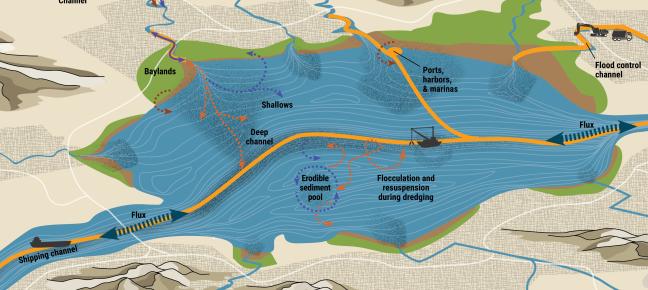
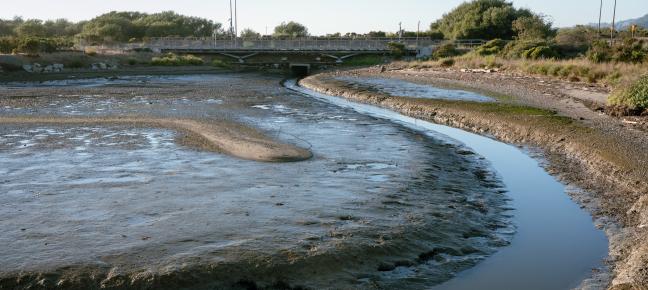
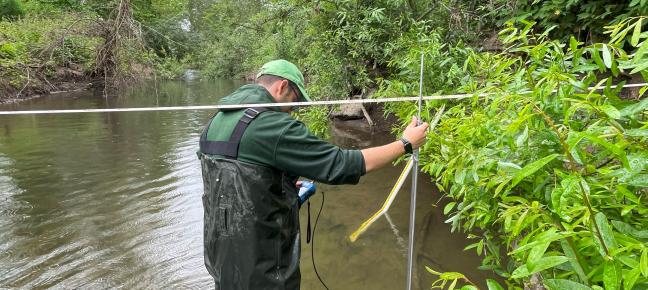
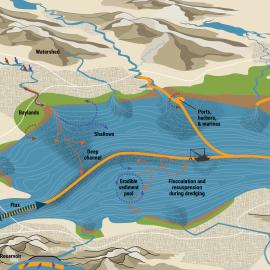
Sediment is crucial for healthy watersheds and resilient baylands, supporting animal habitat in streams and building up tidal marshes at the Bay interface. The sediment science team considers the origin, transport, and destination of sediment across all of these settings, from the hills to the Bay. Our work covers a range of scales, from regional evaluations to in-field investigations. These techniques provide decision makers with the tools they need to improve the health of watershed and Bay ecosystems.
Latest News
Thu, Apr 30 2026
A New Course for Adobe Creek’s Baylands
Fri, Mar 6 2026
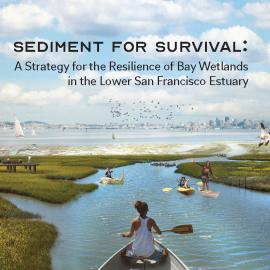
To Save the Bay, Save its Sediment
Featured Projects
Recent Publications
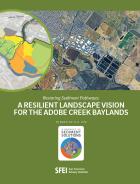
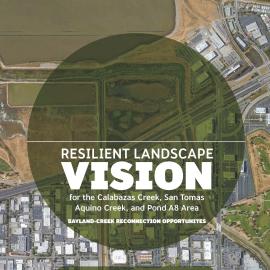
Restoring Sediment Pathways: A Resilient Landscape Vision for the Adobe Creek Baylands
Restoring Sediment Pathways: A Resilient Landscape Vision for the Adobe Creek Baylands synthesizes science and community priorities into a nature-based approach for improving the resilience and ecological…
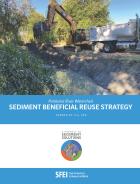
Petaluma River Watershed sediment beneficial reuse strategy
Sediment is a critical yet often overlooked component of healthy stream, wetland, and bayland ecosystems. In the Petaluma River Operational Landscape Unit (OLU), decades of development, land-use changes, and channel…
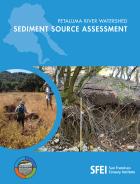
Petaluma River Watershed Sediment Source Assessment
Over the past several decades, the average annual sediment supply from the Petaluma River watershed to the channel network is estimated to be 59,100 t/yr, equivalent to an average annual sediment yield of 184 t/km2/yr.…
ASSOCIATED STAFF