Review our work products
We provide easy access to thousands of SFEI’s reports, journal articles, books, conference papers/proceedings, factsheets, hearing summaries, maps, and more.
These printable and downloadable materials connect our science to action, cover a broad range of topics, and have many applications. This library is searchable and filterable. If you have difficulty finding the information you are looking for, please contact us at [email protected].
Programs & Topics
Select the program or topic of your interest among the nested filters below.

Bay Regional Monitoring Program Sediment Workgroup Management Questions 1 & 2 Update and Workplan
Author(s): Melissa Foley | Scott Dusterhoff | Lester McKee
2026
The goal of this update and workplan is to document the process used to update Management Questions s 1 and 2 and develop science questions, as well as articulate a 5-year workplan the Sediment Workgroup of the Regional Monitoring Program for Water Quality in San Francisco…
Author(s): Amy Kleckner | Jennifer Dougherty | Sasha Mariniuk
2026
In 2016, the State Water Resources Control Board approved a selenium TMDL for North San Francisco Bay. The TMDL established a target concentration of 11.3 μg/g dw in white sturgeon muscle tissue as the basis for evaluating impairment (SFBRWQCB 2015). Following discussions…
Author(s): Dan Killam | David Senn | Lindsey Sim | Raphael Kudela | Richard Stumpf | Shelly Tomlinson | Andrew Meredith | Brian Bergamaschi | Tamara Krauss | Katy O'Donnell
2026
This project represents the first effort to use satellite data to create a long-term, multi-satellite San Francisco Bay-specific turbidity dataset. Having accurate turbidity data will ultimately improve estimates of long-term gross primary productivity, and allow…
Author(s): Anna Mahony | Miguel Méndez | Rebecca Sutton | Patrick McNamara | William Arnold
2026
Quaternary ammonium compounds (QACs) are widely used and have numerous routes to the environment. This work assessed the levels of QACs in surface waters that receive treated wastewater effluent. Samples were collected over a 27 months period from eight different surface…
Statewide Plastics Monitoring Strategy and Planning Framework
Author(s): Diana Lin | Tony Hale | Kayli Paterson | Ezra Miller | Shelly Moore
2026
Plastic pollution is a pervasive threat to California’s aquatic environments, with impacts spanning ecological health, human well-being, and the integrity of natural resources. From visible macroplastics (trash) littering shorelines, cities, and waterways to microscopic…
Author(s): Jennifer Dougherty | Kayli Paterson | Melissa Gonzalez | Edward Kolodziej | Diana Lin | Alicia Gilbreath | Elisabeth Rødland | Win Cowger | Hazel Vaquero | Andrea Amend | Rebecca Sutton
2026
The performance capabilities of bioretention systems for a range of stormwater constituents remain lightly characterized, particularly for emerging organic contaminants. To address this gap, we evaluated concentration- and load-based treatment outcomes at four urban…
Author(s): Sarah Pearce | Sarah Lowe | David Peterson | Zooey Diggory
2026
The Santa Clara Valley Water District (Valley Water) collects data on the health, or overall ecological condition, of streams across its five watersheds as a part of its voter-approved Safe, Clean Water and Natural Flood Protection Program. That program identified six…
Author(s): Oliver Fringer | Rachel Allen | Allie King | Jessica Lacy
2026
This document presents a study plan to improve sediment transport modeling in San Francisco Bay, with a focus on improving parameterizations of erosion and settling to more accurately model the transport of fine suspended sediments. It is composed of (1) a detailed literature…
Moored Sensor Program Semi-annual Report November 2025 - March 2026
Author(s): Charlotte Diamant | Dan Killam | Ariella Chelsky | Katie Noland | Lucy Montgomery | Martin Volaric | Camille Michalak | Ben Hodder
2026
This report provides an overview of the Nutrient Management Strategy Moored Sensor Program's major accomplishments and findings between November 2025 and March 2026. Highlights include installing a new station in San Pablo Bay, installing a new station at the northern end of…
Author(s): Matthew Heberger | Lester McKee
2026
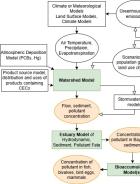
This document outlines a strategy of the Regional Monitoring Program for Water Quality in San Francisco Bay (RMP) for developing an integrated system of watershed and in-Bay models to help answer key management questions and support water quality protection and restoration…
Author(s): Ezra Miller | Sierra Garcia | Ruth Askevold | Jennifer Symonds | Rebecca Sutton
2026
In 2018, the Regional Monitoring Program for Water Quality in San Francisco Bay (RMP) launched an innovative investigation to detect contaminants that were either new to Bay sediment or had previously gone undetected. This study used nontarget analysis, a powerful tool that…
Regional Monitoring Program for Water Quality in San Francisco Bay Communication Strategy
Author(s): Sierra Garcia | Jay Davis
2026
Communicating information in support of management decisions is a key element of the Regional Monitoring Program for Water Quality in San Francisco Bay. Although the Program has always prioritized high-caliber communication outputs, 2025 is the first time staff capacity has…
Author(s): Amy Kleckner | Jay Davis
2026
The purpose of this document is to guide efforts and summarize plans developed within the RMP. The intended audience includes representatives of the many organizations who directly participate in the Program. This document will also be useful for individuals who are not…
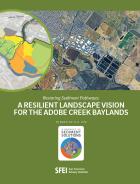
Restoring Sediment Pathways: A Resilient Landscape Vision for the Adobe Creek Baylands
Author(s): Emma Sevier | Katie McKnight | Kendall Harris | Scott Dusterhoff | Ruth Askevold | Ben Satzman
2026
Restoring Sediment Pathways: A Resilient Landscape Vision for the Adobe Creek Baylands synthesizes science and community priorities into a nature-based approach for improving the resilience and ecological functioning of, and community and Tribal access to, the Adobe…
Selenium Concentrations in Water, Sturgeon, and Splittail in Western Suisun Bay
Author(s): Amy Kleckner
2026
To investigate the potential impacts of Martinez Refining Company (MRC) discharging selenium (Se) above its wasteload allocation, the San Francisco Bay Regional Water Quality Control Board (SFBRWQCB) required MRC to monitor for possible effects of selenium on Sacramento…
Author(s): Amy Kleckner | Jay Davis
2026
In 2026, the Regional Monitoring Program for Water Quality in San Francisco Bay (RMP) is entering its 34th year of collecting data and communicating information to support water quality management decisions. This Detailed Workplan and Budget describes the activities that will…
Updates to Moored Sensor Program Calibration and Data QAQC Procedures (2025)
Author(s): Martin Volaric | Katie Noland | Lilia Mourier | David Senn | Ariella Chelsky
2025
The San Francisco Bay (SFB) Nutrient Management Strategy maintains an extensive array of in situ data sondes for water quality monitoring as a part of its Moored Sensor Program (MSP). This report describes new calibrations for three of these sonde types. It also documents a…
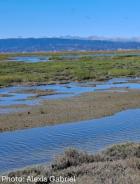
Baylands Habitat Map 2020 Webinar Series Part 2: Tidal Marsh Extent Webinar
Author(s): Cristina Grosso | Lisa Beers | Kelly Iknayan
2025
The WRMP held a webinar on April 16, 2025 to discuss how we answered the question: How much tidal wetland do we have in San Francisco Bay?
…
Evaluation of the Chronic Toxicity of San Francisco Estuary Ambient Waters
Author(s): Stephen Clark
2025
As part of the San Francisco Estuary RMP 2025 Summer Cruise monitoring, Pacific EcoRisk (PER) was contracted to perform evaluations of the chronic toxicity of ambient waters collected from the San Francisco Estuary system in August and September of 2025. These evaluations…
Author(s): Anna Mahony | Tyler Clair | Miguel Méndez | Patrick McNamara | William Arnold
2025
Quaternary ammonium compounds (QACs) are high production volume chemicals used in consumer and industrial products, including disinfectants. Influent, effluent, and biosolid samples were collected from 12 wastewater treatment plants (WWTPs) from 2020 to 2023 and analyzed for…
From site-scale to landscape-scale: stormwater benefits of urban trees with SWMM-Canopy
Author(s): Tan Zi | Alison Whipple | Pete Kauhanen | Melissa Foley
2025
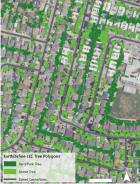
Urban trees can reduce stormwater runoff through canopy interception and enhanced infiltration, yet their benefits are often underrepresented in conventional models. This study introduces Storm Water Management Model-Canopy (SWMM-Canopy), a process-based tool that simulates…

EcoAtlas Essentials Webinar Showcases Practical Tools for Ecological Planning
Author(s): Cristina Grosso | Todd Hallenbeck | Lisa Beers | Sarah Pearce | Pete Kauhanen | Erica Johnson | Heidi Williams
2025
On October 1, 2025, the San Francisco Estuary Geospatial Workgroup (SFEGWG) hosted EcoAtlas Essentials: Practical Tools for Effective Ecological Planning, a webinar designed to guide participants in exploring how …
Author(s): WRMP
2025
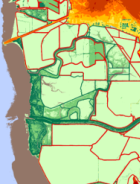
To develop effective climate vulnerability assessments and adaptation plans, coastal resource managers need to understand how shoreline topography, hydrology, and habitats change over time. The California Ocean Protection Council funded the San Francisco Estuary Institute and…
Lake Silveira CRAM Assessments: Mitigation Monitoring Report Post-Construction - Year 5 (2025)
Author(s): Sarah Pearce | Sarah Lowe | David Peterson
2025
The Santa Clara Valley Water District’s (Valley Water) Upper Llagas Creek Flood Protection Project (Project) aims to increase flood protection within the City of Morgan Hill and surrounding unincorporated areas. Project impacts are being mitigated by permittee-responsible…
Regional Framework for the Next Generation of Urban Greening
Author(s): Lauren Stoneburner | Melissa Foley | Cate Jaffe | Kendall Harris
2025
The Regional Framework for the Next Generation of Urban Greening (“the Framework”) provides a roadmap for this alignment, offering nine essential steps to help practitioners navigate the complex, cross-cutting challenges of urban greening. Each step is supported by practical…
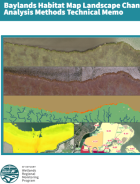
Baylands Habitat Map Landscape Change Analysis Methods Technical Memo
Author(s): Alex Braud | Pete Kauhanen | Katarina Palermo | Cristina Grosso
2025
The purpose of this report is to describe the methods for the Baylands Habitat Map (BHM) change analysis, highlight key observations from a preliminary test case study in the Belmont-Redwood Operation Landscape Unit (OLU), provide recommendations for conducting the change…
Author(s): San Francisco Estuary Institute (SFEI)
2025
The overarching goal of the Regional Monitoring Program for Water Quality in San Francisco Bay (RMP) is to answer the highest priority scientific questions faced by managers of Bay water quality. The RMP is an innovative collaboration between the San Francisco Bay Regional…
Author(s): Sarah Pearce | Kyle Stark
2025
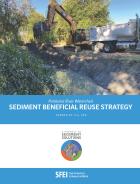
Sediment is a critical yet often overlooked component of healthy stream, wetland, and bayland ecosystems. In the Petaluma River Operational Landscape Unit (OLU), decades of development, land-use changes, and channel modifications have disrupted natural sediment transport and…
Comparison of creek and bay influences on salt marsh sediment budget and deposition patterns
Author(s): Lukas WinklerPrins | Jessica Lacy | Mark Stacey | Karen Thorne | McKenna Bristow | Scott Jones
2025
The resilience of salt marshes with low organic production depends on their effective capture and retention of mineral sediment from adjacent waters. Little prior work has directly compared mechanisms of sediment import from wave-influenced marsh boundaries against those of…
Author(s): Miguel Méndez | Jay Davis | Ezra Miller | Richard Grace | Rebecca Sutton
2025
Consumption of contaminated food, especially seafood, is a key source of human perfluoroalkyl and polyfluoroalkyl
substances (PFAS) exposure. Here, we examine the occurrence of PFAS in shiner surfperch (Cymatogaster aggregata), striped bass (Morone saxatilis…
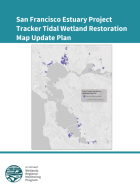
Tracking Tidal Wetland Extent in San Francisco Bay: A 2020 Mapping Update
Author(s): WRMP | April Robinson | Lisa Beers | Denise Walker | Jennifer Symonds | Cristina Grosso | Alex Braud | Kelly Iknayan
2025
The tidal wetlands of San Francisco Bay provide numerous benefits to the region, including carbon sequestration, flood protection, providing habitat for native and endangered species, protecting shoreline communities and infrastructure from wave impact, improving water…
Author(s): David Peterson | Kyle Stark | Sarah Pearce | Scott Dusterhoff
2025
Over the past several decades, the average annual sediment supply from the Petaluma River watershed to the channel network is estimated to be 59,100 t/yr, equivalent to an average annual sediment yield of 184 t/km2/yr. This sediment source assessment quantifies average annual…
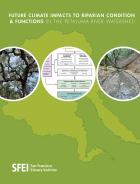
Future Climate Impacts to Riparian Condition & Functions in the Petaluma River Watershed
Author(s): Emma Sevier | David Peterson | Kyle Stark | Alison Whipple | Lydia Vaughn | Rachael Pentico | John Stella
2025
This technical memorandum describes an assessment of future climate impacts to riparian ecosystem conditions and functions in the Petaluma River watershed and adjacent drainages (the Petaluma Operational Landscape Unit). Four bias-corrected, downscaled global climate models…
Author(s): Ellen Plane | Alex Braud | Annie Sneed | Jeremy Lowe
2025
Our region faces an immense challenge in adapting to sea level rise. Without action, the San Francisco Bay Area (Bay Area) risks losing shoreline habitats and the critical services they provide, from flood protection to wildlife support to carbon sequestration.
Nature…
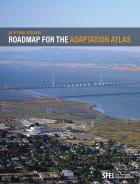
Author(s): Annie Sneed | Katie McKnight | Ruth Askevold
2025
The San Francisco Bay Shoreline Adaptation Atlas, developed by SFEI and SPUR in 2019, provides a framework for addressing sea-level rise through nature-based solutions. By defining Operational Landscape Units (OLUs)—planning units based on natural processes rather than…
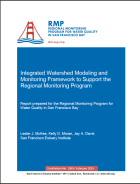
Integrated Watershed Modeling and Monitoring Framework to Support the Regional Monitoring Program
Author(s): Lester McKee | Kelly Moran | Jay Davis
2025
The Regional Monitoring Program (RMP) is transitioning from a watershed program predominantly using monitoring data and data-driven load estimation methods to support management decisions on polychlorinated biphenyls (PCBs) and mercury (Hg) to an integrated modeling and…
Author(s): Amy Kleckner | Jay Davis
2025
In 2025, the Regional Monitoring Program for Water Quality in San Francisco Bay (RMP) is
entering its 33rd year of collecting data and communicating information to support water
quality management decisions. This Detailed Workplan and Budget describes the activities…
Author(s): Amy Kleckner | Jay Davis
2025
The purpose of this document is to guide efforts and summarize plans developed within the RMP. The intended audience includes representatives of the many organizations who directly participate in the Program. This document will also be useful for individuals who are not…
Author(s): Pedro Avellaneda | Lorenzo Flores | Lester McKee
2025
The San Francisco Bay Regional Watershed Spreadsheet Model (RWSM) was developed within the Regional Monitoring Program for Water Quality in San Francisco Bay (RMP) to estimate average annual regional and sub-regional scale pollutant loads to the Bay from stormwater. The RWSM…
Continuous Suspended Sediment Monitoring in South and Lower South San Francisco Bay Final Report
Author(s): Martin Volaric | Lilia Mourier | Lucy Montgomery | Katie Noland | David Senn | Ariella Chelsky
2025
This report presents results from a three-year effort (2022-2024) to estimate continuous suspended sediment concentration (SSC) in the South Bay (SB) and Lower South Bay (LSB) regions of San Francisco Bay (SFB). We used discrete SSC samples to calibrate high-frequency (15-min…
Author(s): San Francisco Estuary Institute (SFEI)
2025
The Landscapes Scenario Planning Tool (LSPT) is a standardized, science-based resource for analyzing and comparing land-use scenarios in the Sacramento-San Joaquin Delta and Suisun Marsh. The tool takes data from detailed landscape maps and calculates metrics related to…
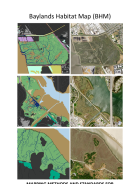
Mapping Methods And Standards For Bayland Habitats In The San Francisco Bay
Author(s): Alex Braud | Pete Kauhanen | Regan Murray | Katarina Palermo
2025
The purpose of this document is to describe the mapping classification system and methods used to develop the Baylands Habitat Map 2020 (BHM). BHM is a geospatial inventory of tidal and diked baylands and their key landform features. The inventory was largely developed using…
Charter: Regional Monitoring Program for Water Quality in San Francisco Bay
Author(s): Jay Davis | Amy Kleckner
2025
This Charter describes the purpose and function of the Regional Monitoring Program for Water Quality in San Francisco Bay (RMP). Established in 1993, the RMP is a collaborative effort between the San Francisco Estuary Institute, the California Regional Water Quality Control…
Author(s): Sam McWilliams | Kara Scheu | Craig Jones | Donald Yee | Allie King | Jay Davis
2024
Modeling of fate and transport in San Francisco Bay is needed to address many priority management questions that have been articulated by RMP workgroups for PCBs, sediment, and contaminants of emerging concern (CECs). This report is part of a first phase of implementation of…
Author(s): Sarah Pearce | Sarah Lowe | David Peterson | Denise Walker | Pete Kauhanen | Zooey Diggory | Douglas Titus
2024
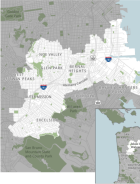
The baseline survey of ecological condition of streams within the Guadalupe River watershed was completed in 2012, and this reassessment survey was completed ten years later in 2022. The survey focuses upon stream conditions in the watershed as a whole, and in two primary…
Author(s): Melissa Foley | Jay Davis | Rebecca Sutton | Donald Yee
2024
In 2020, the Regional Monitoring Program for Water Quality in San Francisco Bay (RMP) undertook a review of the Status and Trends (S&T) Program, a vital component of the RMP. The goals of the S&T Program are to measure contaminant concentrations in San Francisco Bay…
Author(s):
2024
This report provides information about sportfish monitoring collection conducted by ICF during 2024 for the San Francisco Estuary Institute (SFEI) as part of the Regional Monitoring Program for Water Quality in San Francisco Bay (RMP). The RMP monitors spatial patterns and…
Author(s): Martin Trinh | Donald Yee | Amy Kleckner | Jay Davis | Autumn Bonnema | Rick Wilder
2024
This document details sampling and analysis plans associated with the Status and Trends (S&T) sport fish contaminant monitoring for the Regional Monitoring Program for Water Quality in San Francisco Bay (RMP). Fish will be collected from various locations in the Bay.…
San Francisco Bay Triennial Bird Egg Monitoring Program for Contaminants - 2024 Data Summary
Author(s): Joshua Ackerman | Alex Hartman | Mark Herzog | Brady Fettig
2024
The USGS's long-term Wildlife Contaminants Program in collaboration with the San Francisco Bay Regional Monitoring Program (RMP) collects bird eggs throughout the San Francisco Bay Estuary to assess temporal trends in contaminant concentrations. This document…
Author(s): Amy Kleckner | Donald Yee | Rebecca Sutton | Jay Davis
2024
This document details sampling and analysis plans associated with triennial monitoring of contaminants in bird egg tissue for the Regional Monitoring Program for Water Quality in San Francisco Bay (RMP). In 2024 staff at the USGS Western Ecological Research Center (USGS-WERC)…
Screening Bay Area Stormwater for Emerging Contaminants: Summary for Managers
Author(s): Rebecca Sutton | Pedro Avellaneda | Miguel Méndez | Jennifer Dougherty | Alicia Gilbreath
2024
As part of a maturing science strategy, the Regional Monitoring Program for Water Quality in San Francisco Bay (RMP) focuses on monitoring and modeling of emerging contaminants in major pathways in an effort to track Bay contaminants back to their sources and better inform…
Author(s): Jennifer Dougherty | Diana Lin | Ezra Miller | Rebecca Sutton | Samantha DiLoreto | Kirsten Overdahl | Bernadette Vogler | Lee Ferguson
2024
Ethoxylated surfactant compounds are a broad class of non-ionic surfactants that include alkylphenol ethoxylates (APEOs) and alcohol ethoxylates (AEs). Together, APEOs and AEs are used in a wide range of consumer and industrial applications as emulsifiers, wetting agents,…
Author(s): Alicia Gilbreath | Lester McKee | Matthew Heberger | Kelly Moran
2024
The Sources, Pathways, and Loadings (SPL) Workgroup (WG) is one of the five active workgroups within the Regional Monitoring Program for Water Quality in San Francisco Bay (Bay; RMP). The Workgroup produces recommendations for collection, interpretation, and synthesis of data…
Author(s): Rebecca Sutton | Ezra Miller | Miguel Méndez | Adam Wong | Kayli Paterson | Jennifer Dougherty | Diana Lin
2024
Over 350,000 chemicals and mixtures of chemicals have been registered for production and use worldwide. A portion of these may meet the definition of contaminants of emerging concern (CECs), chemicals that are unregulated or under-regulated, not commonly monitored in…