Browse Our Stories
Tue, Jul 7 2026
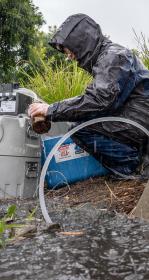
A new study shows that rain gardens substantially reduce levels of 21 contaminants in stormwater before that water ends up in San Francisco Bay.
Fri, Jun 26 2026
20 Years of Investigating Underregulated Chemicals
The Regional Monitoring Program for Water Quality in San Francisco Bay has grown into a world leader in studying under-regulated and poorly understood contaminants. The efforts have led to groundbreaking studies about forever chemicals, flame retardants, microplastics, pesticides, tire chemicals, and more—and inspired policy changes.
Fri, May 15 2026
New Data on Salmon-Killing Chemical In San Francisco Bay
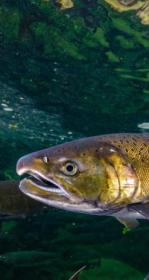
A new dataset on San Francisco Bay water includes some of the world's the first information about levels of the car tire chemical 6PPDQ in an estuary. Threatened steelhead trout may be susceptible to levels found in the Bay.
Fri, Mar 13 2026
How Stormwater Studies Can Make the Bay Cleaner
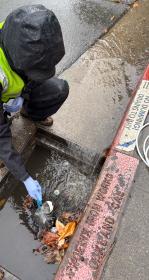
As stormwater sampling across the San Francisco Bay Area reveals more poorly regulated chemicals, those who want clean water in the Bay face a tricky question: what can be done about it? The final part of a special feature series on stormwater monitoring.

Fri, Mar 6 2026
To Save the Bay, Save its Sediment
Sand and mud are the essential building blocks for the Bay's shoreline to keep pace with sea level rise. But San Francisco Bay is losing 1.7 million metric tons more of sand and mud per year than it's gaining—more than double the weight of the Golden Gate Bridge. Sand mining and other human extraction are major drivers of the Bay’s sand deficit.

Tue, Feb 17 2026
When rainstorms wash contaminants into the Bay, scientists can only sample stormwater in a few places at once. Three years of inventing and testing have led to a solution in the form of 15 briefcase-sized robots, with names like “Captain Capture” and “Missus Sippy,” to slurp up samples without human supervision onsite.

Thu, Feb 5 2026
Why The Fate of Antimicrobial Chemicals Matters for San Francisco Bay
Antimicrobial chemicals called QACs have soared in popularity since the COVID-19 pandemic, and are a possible threat to Bay water quality. A new study finds that sewage treatment plants remove 98% of QACs on average from wastewater—but that's not necessarily a success for human and environmental health.
Fri, Jan 9 2026
The Storm Chasers: What Stormwater Reveals About Pollution In San Francisco Bay
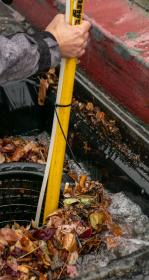
SFEI’s stormwater monitoring team has grown and is innovating techniques to further expand its influential studies. Part one of a special feature series on stormwater.

Fri, Nov 14 2025
Winning Stormwater Robot Names Selected
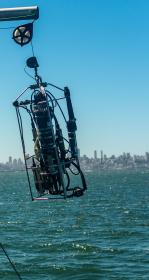
Meet Captain Capture, Pre Sipitation, and our 13 other stormwater sampling robots we named with help from the public.
Wed, Oct 15 2025
“More Science, and Better” for RMP with Historic Grant
“For a lot of years we were very budget constrained, so we were making really small steps in our progress,” says Bridgette DeShields, the Chair of the RMP’s Technical Review Committee. “By having that extra funding it'll allow us to advance at a faster rate—we can make strides in our management actions and trying to meet our long-term goals.”
Thu, Sep 18 2025
All Aboard for Water Quality Sampling
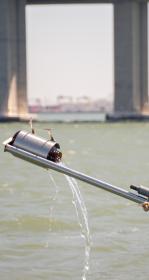
Hundreds of bottles of Bay water. Thousands of chemicals. Five dawn-to-dusk days all over San Francisco Bay. Every two years, the Regional Monitoring Program embarks on a mission to sample water from the surface of the Bay for water quality measurements and pollutants. Explore our 2025 efforts.
Mon, Aug 11 - Mon, Aug 25 2025
Help Us Name Our New Stormwater Sampling Machines!
The SFEI stormwater team has developed robot samplers to pump up sips of stormwater runoff during rainstorms so we can test for pollution. Now, it’s prime time to name the 15 new samplers that we’ll deploy in the field across the Bay Area this upcoming wet season.
Tue, Aug 5 2025
New Bay PFAS Data Show Reasons for Optimism and Concern
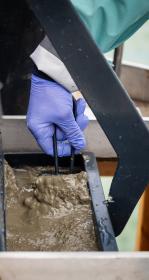
Monitoring for PFAS, or forever chemicals, has come a long way in the 16 years since the Regional Monitoring Program for Water Quality in San Francisco Bay (RMP) first tested water and sediment from the Bay for the toxic compounds. Forever chemicals are toxic and one of the most concerning under-regulated contaminants in San Francisco Bay.

Mon, Jun 30 2025
SFEI Scientist Interviewed on Microplastics for Maven's Notebook
Senior scientist Ezra Miller was interviewed in Maven's Notebook about SFEI's groundbreaking microplastics work. Miller discussed where microplastics in San Francisco Bay come from, the biggest unsolved questions our scientists are working on, and why focusing on sources is the best way to prevent microplastic pollution in the Bay.

Wed, Jun 25 2025
Fishing for "Forever Chemicals" In the Press: SFEI Study in Dozens of Media Outlets
Dozens of media outlets picked up our study that confirmed PFAS (“forever chemicals”) are widespread in ten species of popular fish to eat from San Francisco Bay, especially the South Bay.

Tue, May 20 2025
"Forever Chemicals" Found In Fish Through Most of Bay
More than a decade of monitoring found that ten species of popular fish to eat from San Francisco Bay may contain dangerous levels of “forever chemicals”—but where they’re caught in the Bay can make a big difference.
Tue, May 6 2025
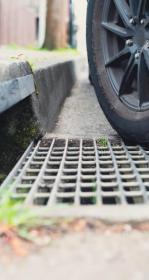
"Unique as Snowflakes": Understanding Tire Particles
Techniques to isolate and identify tire particles will pave the way for better microplastic pollution research and management.
Tue, Mar 25 2025
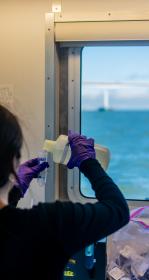
Sampling the Storm: Tracking PCBs in Bay Area Waterways
The Bay's industrial history is preserved in its mud. Buried in the soft, silty clay are legacy contaminants from factories, shipyards, and military activities. These chemicals stick around in the environment long after regulations to limit their production and use were imposed.
Sat, Mar 1 2025
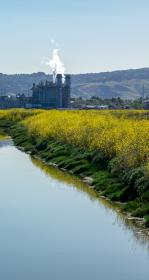
Over a Decade of Science Guiding Nutrient Management Strategy in the Bay
For over a decade, SFEI's Nutrient Management Strategy (NMS) team has equipped decision-makers with the tools to evaluate and respond with targeted interventions, shaping future nutrient management efforts in the Bay. Learn more about this scientific foundation for data-driven management strategies.

Wed, Feb 5 2025
SFEI is studying dryer emissions to find out if clothing dryers are a significant source of microplastic pollution in the San Francisco Bay. The study will measure the dryer emissions from single-family homes, laundromats, apartment buildings, and other shared laundry facilities.

Tue, Nov 19 2024 - Tue, Feb 25 2025
Out now: 2024 Pulse of the Bay
Contaminants of emerging concern (CECs) take center stage in the 2024 Pulse of the Bay, the signature publication of the Regional Monitoring Program for Water Quality in San Francisco Bay (RMP).

Tue, Nov 19 2024 - Wed, Feb 19 2025
Forever chemicals in household products contribute to Bay pollution
SFEI partnered with Bay Area Clean Water Agencies (BACWA) to implement a collaborative, cost-effective, and innovative investigation of PFAS in municipal wastewater in the San Francisco Bay region.

Wed, Aug 7 2024
Klamath Dam Removal Video Goes Viral
Of the thirteen presentations at the Klamath Basin Monitoring Program (KBMP) meeting in May, a recording of one providing updates on Klamath Dam Removal went viral.

Sun, Oct 15 2023
Vehicle Tires Threaten Water Quality
Update: On October 1, 2023: California Department of Toxic Substance Control (DTSC) 6PPD regulations became effective, making it the first government in the world to regulate the chemical content of vehicle tires to protect salmon. DTSC is requiring tire manufacturers to identify alternatives to the tire preservative that is the source of the chemical toxic to coho salmon.
Tue, Oct 3 2023
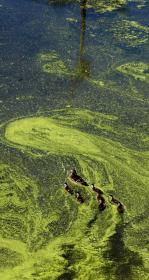
New $3 million grant to support harmful algae monitoring in the San Francisco Estuary
NOAA recently announced that it is awarding a $3-million grant, through its Monitoring and Event Response Research Program (MERHAB) to support the development of a harmful algal bloom (HAB) monitoring program for the San Francisco Estuary. The project, led by scientists at the San Francisco Estuary Institute (SFEI), US Geological Survey, and California Department of Water Resources (DWR), will leverage on-going research and monitoring activities in the Bay and Delta to build a robust system-wide HAB monitoring program for the Estuary.
Thu, Jan 26 2023
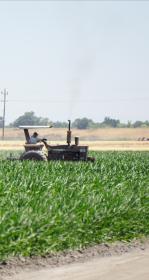
California moves towards sustainable pest management, phase out of highest-risk pesticides by 2050
On January 26, the Secretaries of the California Environmental Protection Agency (CalEPA) and California Department of Food and Agriculture (CDFA) joined leaders from a diverse range of backgrounds to unveil a roadmap of ambitious goals and actions to accelerate California’s systemwide transition
Thu, Jan 19 2023
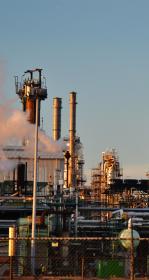
Scientists Advise a Major Shift in Chemicals Management in the U.S. and Canada
A new approach is essential to help governments and businesses eliminate harmful chemicals from daily use and exposure, according to a paper published today in Environmental Science & Technology.

Mon, Apr 18 2022
The Wetland Regional Monitoring Program for SF Estuary enters significant new phase
The Wetlands Regional Monitoring Program or WRMP is a broad, multi-organizational effort designed to produce coordinated and rigorous science about the baylands in the San Francisco Bay area. Through the power of diverse partnerships, a broad network of stakeholders are working rapidly to protect and restore wetlands that can provide flood protection, tribal, community and recreational benefits, water quality improvement, wildlife habitat, and other benefits for surrounding communities. To meet a regional target of 100,000 acres restored by 2030, close coordination is needed between managers, scientists, community groups, tribal partners, and regulators. However, this project-by-project approach to restoration monitoring has left our state, regional, and local decision makers effectively insensitive to the overall regional conditions that might bear direct influence over restoration success and failure. As the effects of climate change and sea level rise generate their own set of challenges, the WRMP will improve the success of wetland restoration projects by putting in place regionally coordinated monitoring that will increase the impact, utility and application of monitoring to inform adaptive management.

Fri, Feb 4 2022
Forum on PFAS elevates the perspectives of local fishing communities
Known as “forever chemicals” due to their persistence in the environment, per- and polyfluoroalkyl substances (PFAS) are a broad class of fluorine-rich specialty chemicals. Thousands of different PFAS are registered for use in consumer, commercial and industrial applications.
Thu, Jul 29 2021
SFEI Experts Assist California’s Safer Consumer Products Program
Recent studies by the San Francisco Estuary Institute (SFEI) and the Regional Monitoring Program (RMP) have pinpointed chemical and microplastic contami