Highlights
- Over the last 20 years the Regional Monitoring Program for Water Quality in San Francisco Bay has grown into a world leader in studying under-regulated and poorly understood contaminants.
- The efforts have led to groundbreaking studies about PFAS ("forever chemicals”), flame retardants, microplastics, pesticides, and tire chemicals. The findings shaped dozens of regulations and policies in California and across the country.
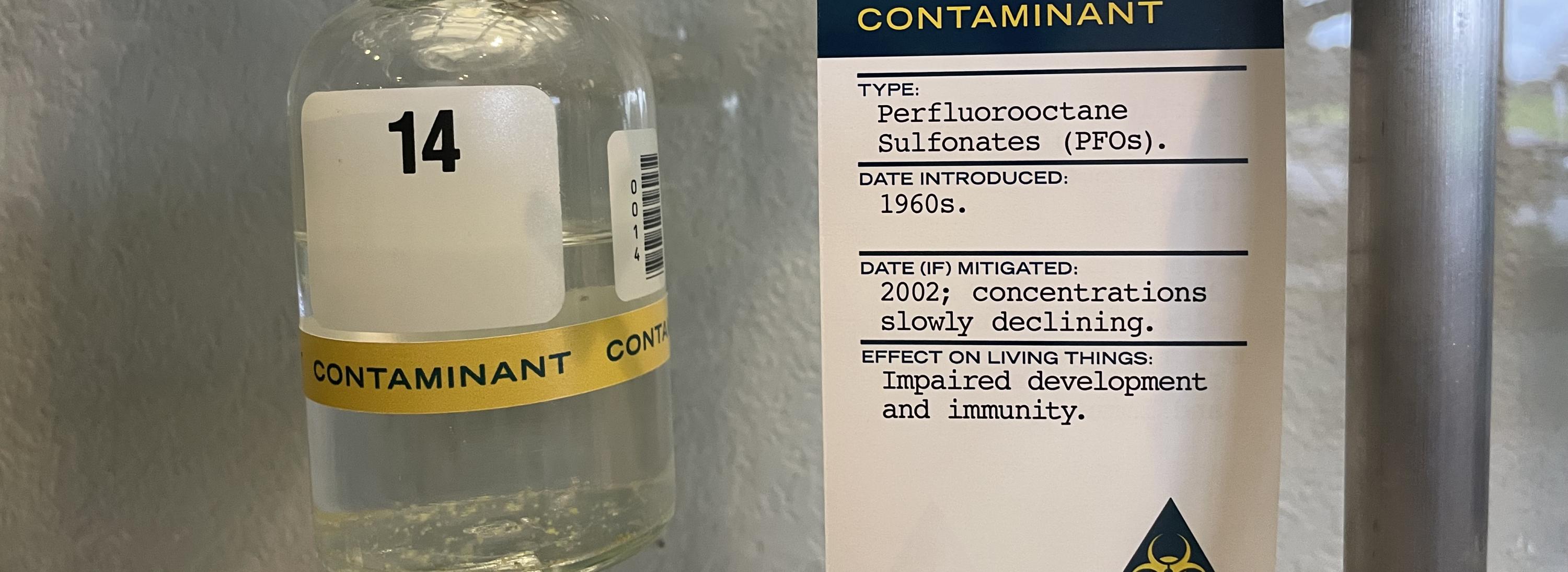
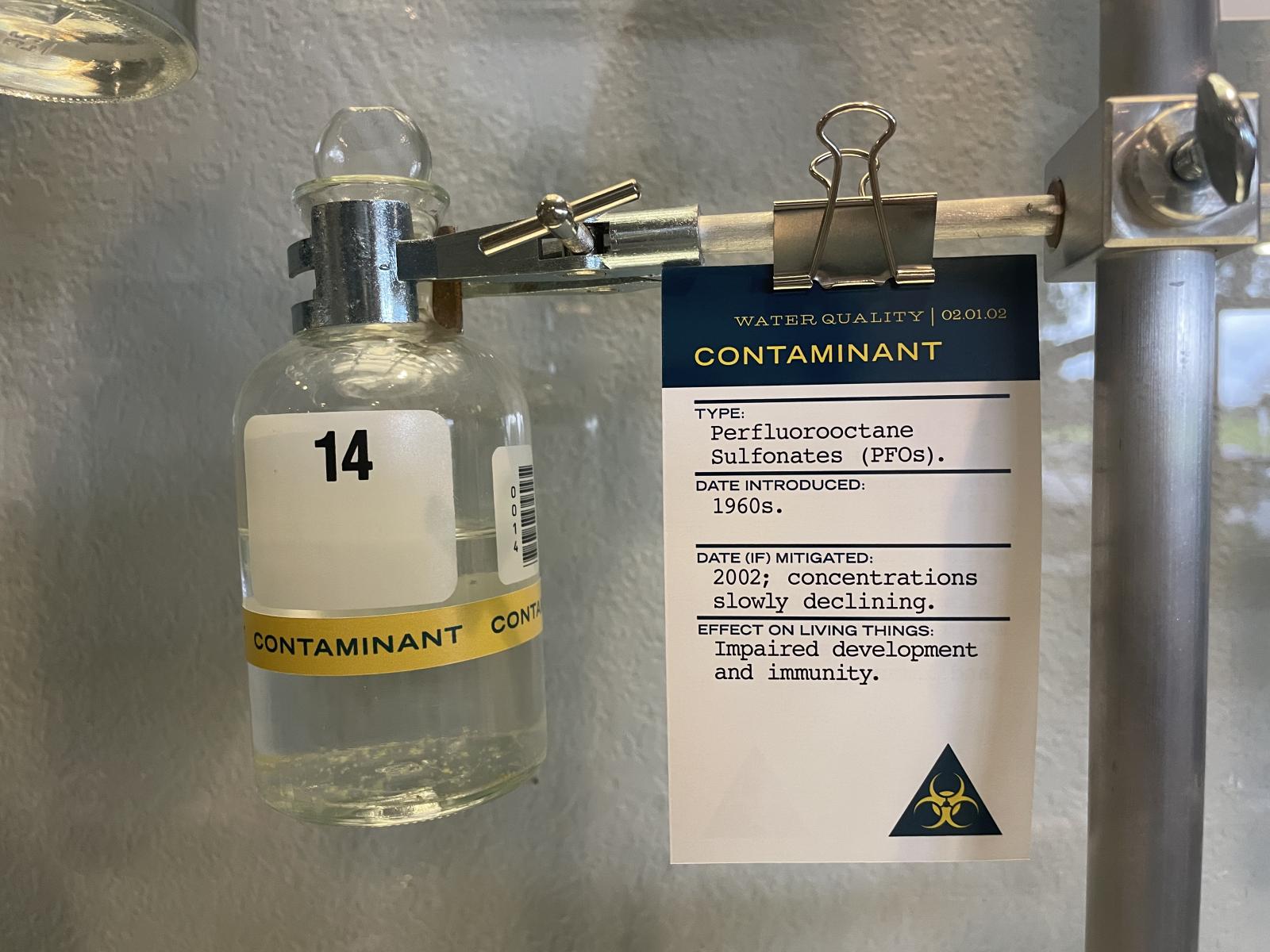
The San Francisco Estuary Institute (SFEI) lobby displays a high case with two dozen glass bottles that appear plucked from a mad scientist’s lab. The liquid in many bottles looks clear; others have visible tinges of oily orange, bright green, or mouthwash-blue. Placards note a water quality contaminant contained in each, from trash to mercury to biotoxins.
But a closer look reveals many bottles with a more unnerving label: “unknown.”
These represent the emerging contaminants: chemicals that could threaten water quality, but are not well-studied in the environment or fully regulated. Most water quality monitoring focuses on "legacy contaminants," which were recognized as threats to human or ecological health only after they accumulated enough in ecosystems to cause harm in the 20th century. Legacy contaminants like the pesticide DDT, which was banned in 1972, have forced society to undertake costly efforts to address the pollution. DDT can still be detected in California ecosystems today. Studying emerging contaminants in San Francisco Bay, says Lead Scientist Rebecca Sutton, is an effort to find “the next DDT” more quickly—before a chemical causes widespread and hard-to-reverse damage for people and ecosystems.
Since the Bay’s Regional Monitoring Program for Water Quality (RMP) first began focusing on emerging contaminants in 2006, Sutton and the SFEI team have grown into a world leader in the field. To mark the progress of the last 20 years, scientists, regulators, and experts gathered on Earth Day to reflect on how far the Bay has come—and how it can guard against future chemical threats.
Looking for the Unknown
As an early-career chemist around the turn of the millennium, Daniel Oros would often stay up late in the Berkeley library, poring over graphs that amounted to chemical fingerprints from San Francisco Bay water samples. The RMP had hired him to investigate a question that was unanswerable for most of the 20th century: what chemicals could appear in the environment from a broad scan, instead of searching for a limited list of known chemicals?
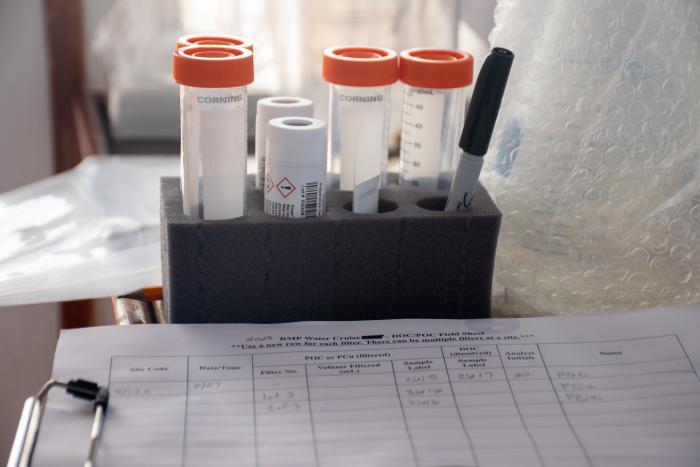
The graphs came from bombarding miniscule droplets of the samples with electrons to fracture the chemicals they contained. This revealed patterns of predictable molecular signatures called mass spectra. At the time, the water was shipped out of state to one of the few labs able to run these analyses.
“Nobody was doing that at the time, and we didn't know what to expect to find,” he recalls.
Oros compared the printouts to known mass spectral profiles. He sorted the graphs into piles, and ended up with one that dwarfed the others: unknowns. It was a six-inch thick stack of paper—hundreds of human-made chemicals in San Francisco Bay not yet catalogued. The publication he produced in 2002 began by declaring: “Effective sustainable management of the San Francisco Estuary requires [identifying] chemical contaminants before they become legacies for future generations.”
Around the same time, some Bay Area wastewater agencies became concerned with a growing list of chemicals found in wastewater that had little environmental data, let alone regulation. They suspected that some might be passing through their treatment plants, recalls Karin North, now Assistant Director of Public Works for Palo Alto and an RMP Steering Committee co-chair.
“We can’t control what’s coming into our facility, but our job is to protect the Bay and to make sure that we're discharging clean water,” North says.
By 2006, the RMP was in agreement: they would dedicate funding to identify and study the “unknowns” to protect the Bay in the long term. A small cohort of experts in the field agreed to advise the study design, and in 2006, the Emerging Contaminants Workgroup (ECWG) was formed.
Building Momentum
Right away, the ECWG faced a pressing pollutant that had recently emerged as a concern for human and ecological health. Toxic flame retardants called PBDEs had been widespread in California's furniture for decades, and had infiltrated the Bay's water and wildlife. By the time the RMP began to focus on emerging contaminants, San Francisco Bay was a global hotspot for PBDE pollution, and California was banning the chemicals. But by the early 2010s, RMP samples from cormorant eggs, mussels, harbor seals, and non-living parts of the Bay revealed something surprising: within a decade of the bans, PBDE levels were already plummeting in the Bay.
“It was a pleasant surprise that PBDEs declined so quickly in response to the bans and phaseouts,” says RMP Lead Scientist Jay Davis. “Fortunately the RMP and ECWG were poised to thoroughly and conclusively document the rapid improvement.” The recovery caught national attention as an example of effective environmental protection.
“It's amazing to me how many emerging contaminant research projects have started here in San Francisco, but have expanded to have worldwide relevance in scope.”
Lee Ferguson, RMP science advisor and Environmental Analytical Chemist at Duke University
It wasn’t the only RMP discovery on emerging contaminants to ripple far beyond the Bay. In 2015, a small pilot study found that San Francisco Bay contained large amounts of microplastics, including microbeads that likely originated from products like body washes, scrubs, and toothpastes. The findings led California, and then the nation, to ban plastic microbeads from personal care products. (The RMP soon after founded a separate workgroup to focus only on microplastics.)
Five years later, ECWG scientists made headlines again as part of the team that identified the chemical culprit behind mass die-offs of coho salmon after rainstorms in the Puget Sound. The mystery had plagued experts for decades. Stormwater data from Washington and San Francisco Bay allowed the scientists to isolate a single chemical that came from tires, present in both places, that was acutely toxic to coho. Regulations on the antioxidant ingredient in tires were soon passed at the state and national levels.
Some ECWG work had outcomes that were quieter, but perhaps no less significant. In 2019, California’s Department of Pesticide Regulation cited RMP findings on levels of popular flea and tick medications in wastewater to establish the first statewide wastewater monitoring program for pesticides in the country. It was a major departure from thinking of pesticides as only a problem in agriculture and outdoor runoff. That dataset also contributed to California adjusting how it decides whether to approve a new pesticide.
By the 2020s, ECWG studies had influenced regulations removing PFAS (“forever chemicals”) in cosmetics, making pharmaceuticals easier to dispose of safely, and amending standards for laundry products, flame retardants, pesticides, and more. Many of the changes reduce chemicals in everyday products, which can protect human health as well as the environment the chemicals eventually flow to. In all, the workgroup’s findings influenced about one policy or regulatory decision per year in its second decade.
“There are many places that have contamination problems, many places that have excellent scientists, and many places that have more money than San Francisco Bay,” says David Sedlak, the former Editor in Chief of Environmental Science & Technology and an early external science advisor to the workgroup. “But in my experiences around the world, there are almost no other communities of scientists studying regional problems that have been as successful at having impacts on society.”
The Science Behind the Success
The ECWG began with under $80,000 per year to untangle which of the hundreds of thousands of registered chemicals in modern society might harm the Bay. The amount would barely cover a single study today, even adjusted for inflation. To make the task harder, few places beyond academic laboratories could analyze emerging contaminants in the ways they needed. Many early samples had to be shipped to Canada. The team also had to think beyond unmasking the identities of mystery chemicals; for the data to help protect the Bay, they needed to learn how emerging contaminants got there in the first place and connect them back to their sources upstream.
“The RMP was at that point a relatively small organization,” recalls Meg Sedlak, the RMP Program Manager from 2004 to 2014. “But I think it had a lot of horsepower to get a lot of things done because it was very strategic in what it chose.”
Working in their favor was the structure of the RMP, which brings together both regulators and the regulated (groups like wastewater and stormwater agencies) as well as SFEI scientists to investigate Bay water quality. External academic experts—including scientists at the tops of their field worldwide—also give feedback at every stage of the studies, including shaping what questions to ask, and often partnered with the RMP on joint studies.
“It was a dream team of advisers, and also stakeholders who were genuinely curious and passionate about being proactive about what chemicals could cause effects in the Bay,” says David Sedlak.
Many cooks in the kitchen, in the case of the ECWG, was a core ingredient for making the science high-impact. JT Teerlink, the deputy director of the California Department of Pesticide Regulation, believes that thoughtful conversations with various state agencies were also important.
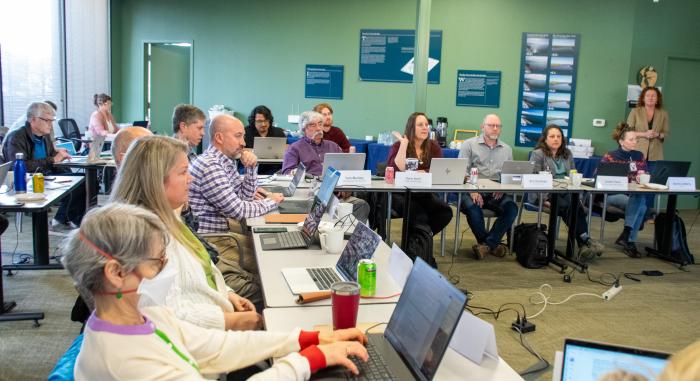
“The ECWG is particularly skilled at taking their limited funds and designing small-in-scope studies that truly address a data gap,” she says. “Pulling so many people into the conversation is really where their strength lies.”
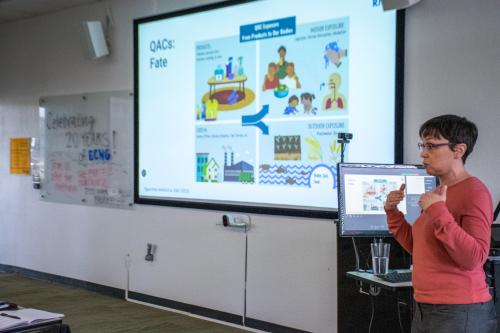
That conversation can be witnessed at the workgroup’s annual two-day meeting. In 2026, almost a hundred people convened in person and on Zoom to listen to the latest findings and strategize about which studies to prioritize in the upcoming year. The room was full of representatives from the region’s wastewater and stormwater agencies, which transport many emerging contaminants from source products and the landscape to the Bay, as well as Water Board and EPA staff, state agency members, external experts, and anyone else interested. Amid the vigorous scientific debate over the merits of various study approaches to unpronounceable chemicals, there was clear camaraderie between the attendees. There was even occasional levity, like Sutton launching a presentation on forever chemicals with a lighthearted warning about the oncoming alphabet soup of chemical names—and alphabet crackers to pass around.
Lee Ferguson, an external expert who has advised the ECWG since its second year, is amazed at how far the group has come since the early years, when SFEI had only one scientist dedicated full-time to emerging contaminant studies.
“Emerging contaminants are still relevant because we keep finding new ones, and we keep being surprised,” says Ferguson. “But SFEI and the ECWG are really well poised to anticipate emerging contaminants because of the deep knowledge base that they have. I feel more confident about the protection of the Bay in the future because of all this work over the last 20 years.”

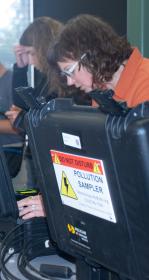
When rainstorms wash contaminants into the Bay, scientists can only sample stormwater in a few places at once. Three years of inventing and testing have led to a solution in the form of 15 briefcase-sized robots, with names like “Captain Capture” and “Missus Sippy,” to slurp up samples without human supervision onsite.

Out now: 2024 Pulse of the Bay
Contaminants of emerging concern (CECs) take center stage in the 2024 Pulse of the Bay, the signature publication of the Regional Monitoring Program for Water Quality in San Francisco Bay (RMP).
RMP Documents Decline of PBDEs in the Bay
The Regional Monitoring Program for Water Quality in San Francisco Bay (RMP) recently published a technical report, authored by Dr.