Science-driven strategies for nutrient management and a resilient Bay
In 2022, the San Francisco Bay experienced the largest harmful algal bloom (HAB) in Bay Area history (California Ocean Protection Council, 2024). Heterosigma akashiwo, a species of microscopic algae responsible for “red tides,” spread like wildfire throughout the Bay fueled by excess nitrogen. The bloom persisted for weeks and killed thousands of fish. The H. akashiwo bloom was a turning point in the Bay's resilience to nutrient loading.
Nitrogen is an essential nutrient—but it's possible to have too much of a good thing. Too many aquatic plants and algae can grow out of control, consuming more of their fair share of oxygen and creating suffocating low-oxygen conditions.
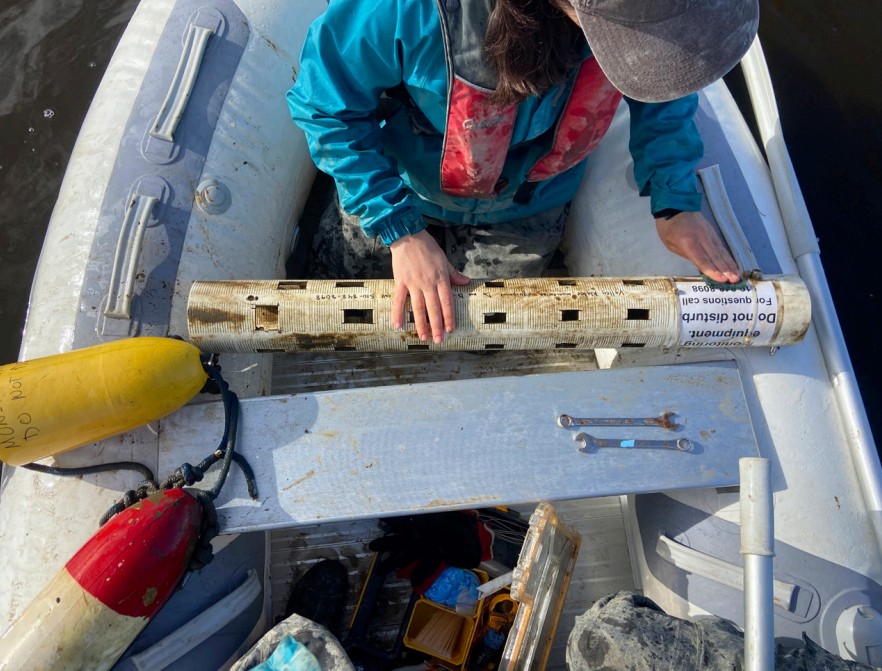
Bobbing in the Bay, SFEI sensors scan the water for nutrient indicators. Over weeks and months, patterns emerge from continuous data streams, revealing seasonal and long-term trends in nutrient loads. SFEI's Nutrient Management Strategy (NMS) team partnered with USGS to create models from these data to detect the warning signs of a bloom and understand the long-term ecological impacts of HABs and the environmental conditions that trigger them. These models can also simulate blooms like H. akashiwo from its onset to its collapse.
For over a decade, SFEI's Nutrient Management Strategy (NMS) team has equipped decision-makers with the tools to evaluate and respond with targeted interventions, shaping future nutrient management efforts in the Bay. The NMS team's collaborative governance is crucial for building the scientific foundation for data-driven management strategies, fortifying the Bay's natural defenses against nutrient overloading.