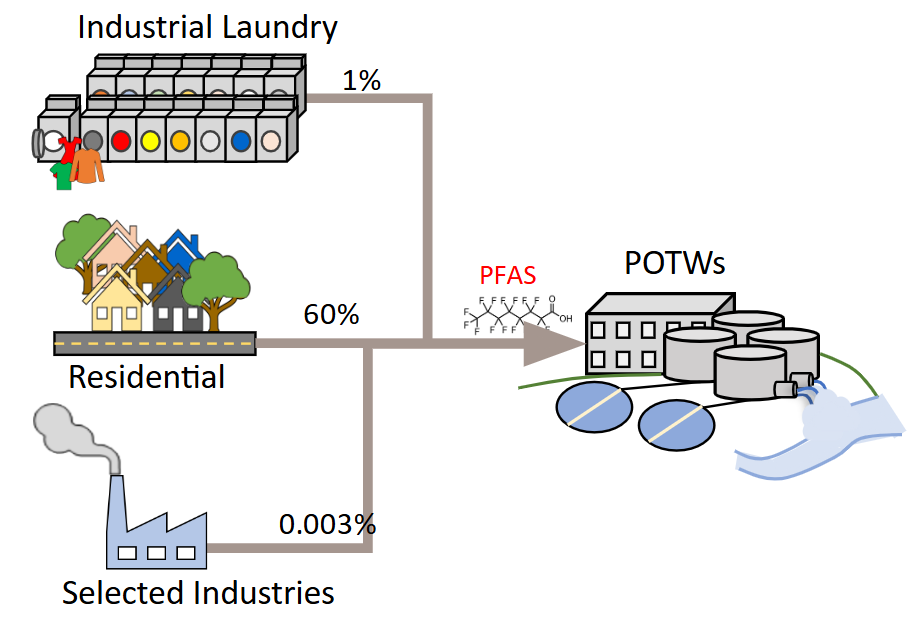
SFEI partnered with Bay Area Clean Water Agencies (BACWA) to implement a collaborative, cost-effective, and innovative investigation of PFAS in municipal wastewater in the San Francisco Bay region. Our investigation points to discharges from homes as major sources of these toxic contaminants to wastewater.
Short for per- and polyfluoroalkyl substances, PFAS are a broad class of fluorine-rich compounds that are widely used in consumer and industrial products and pose significant risks to humans and wildlife. PFAS are known as “forever chemicals” because they do not degrade in the environment and build up in the bodies of people and wildlife over time. Exposure to trace amounts of PFAS can cause serious health problems in people, including cancer, infertility, developmental delays in children, hormone disruption, high cholesterol, and immune system problems such as decreased vaccine response. Despite these risks, this class of synthetic compounds remains in wide use in a broad variety of consumer and industrial products, leading to contamination in the Bay and globally.
Our evaluation of residential discharges to the sewer systems upstream of treatment facilities suggests that consumer products in our homes account for a large majority of the PFAS received by wastewater facilities. This observation can inform state and federal strategies to address PFAS in wastewater, which will need to consider the broad uses of PFAS in household products.
Read more in the report and scientific journal article.



New Bay PFAS Data Show Reasons for Optimism and Concern
Monitoring for PFAS, or forever chemicals, has come a long way in the 16 years since the Regional Monitoring Program for Water Quality in San Francisco Bay (RMP) first tested water and sediment from the Bay for the toxic compounds. Forever chemicals are toxic and one of the most concerning under-regulated contaminants in San Francisco Bay.

Fishing for "Forever Chemicals" In the Press: SFEI Study in Dozens of Media Outlets
Dozens of media outlets picked up our study that confirmed PFAS (“forever chemicals”) are widespread in ten species of popular fish to eat from San Francisco Bay, especially the South Bay.