A day in the life of SFEI's stormwater sampling team
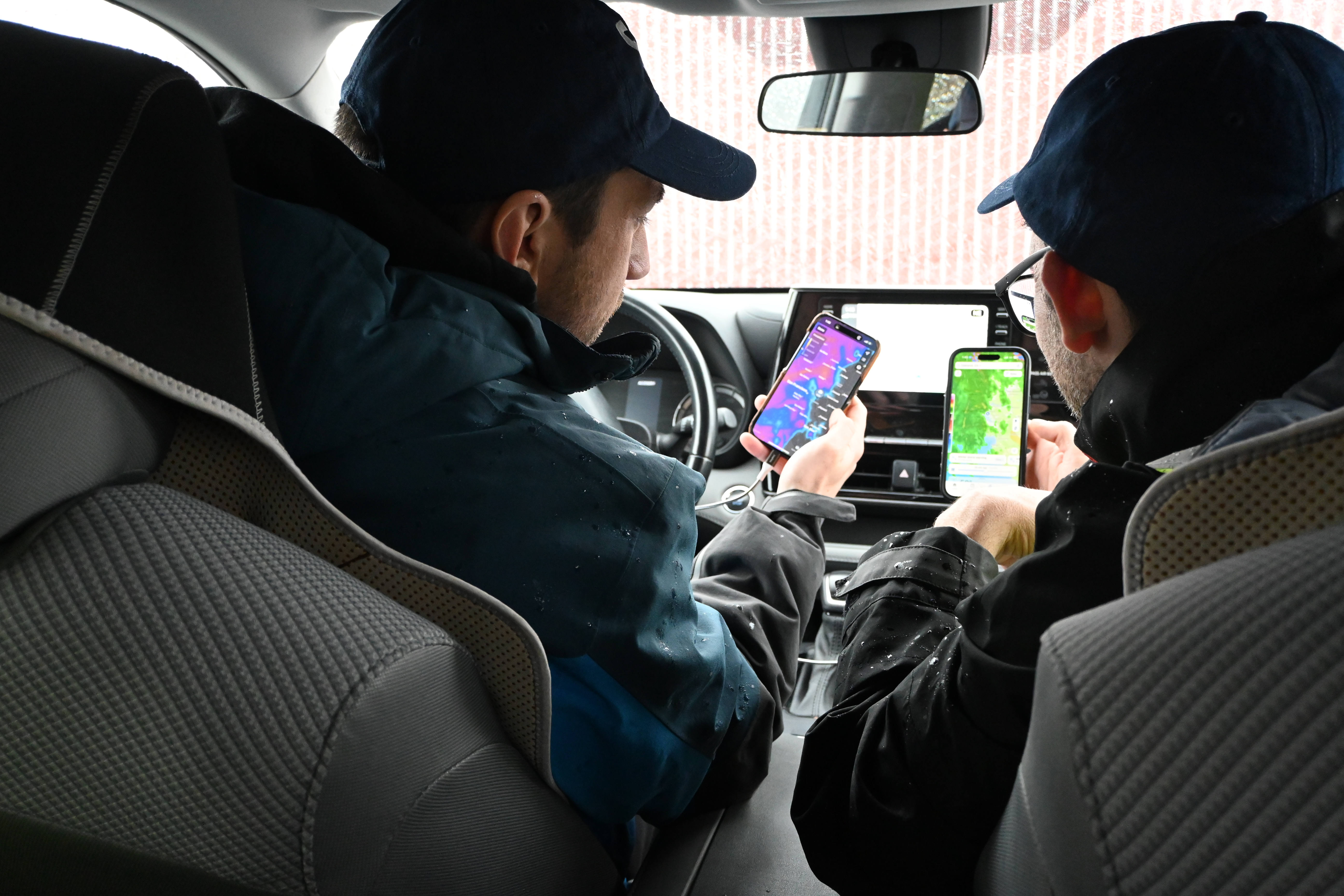
Scientists Kyle Stark and David Peterson sit in a parking lot off I-880, near Oakland International Airport, watching a forecast map and waiting for rain. Storm chasing is often a waiting game. Today, the Bay Area is only expected to receive half an inch. ”We usually don't get out of bed for anything less than an inch of rain," says Kyle, an environmental scientist at SFEI. But with a dry start to March and the rainy season coming to a close, they'll make an exception.
Raindrops start to pepper the windows, and a film of motor oil, detergents, and urban dust appears on the creek's surface, announcing the arrival of urban stormwater runoff. But the pollutants they're after travel below the surface. Polychlorinated Biphenyls (PCBs) are toxic, human-made chemicals with a long legacy in San Francisco Bay.
The Bay's industrial history is preserved in its mud. Buried in the soft, silty clay are legacy contaminants from factories, shipyards, and military activities. These chemicals stick around in the environment long after regulations to limit their production and use were imposed. Unlike the hundreds of un- and under-regulated contaminants in Bay Area stormwater, there is a well-established and resounding concern about PCBs.
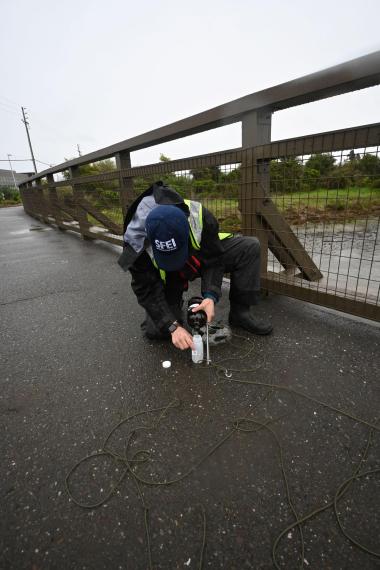
Just about a foot off the bottom of the channel bed—this is where the action is. David and Kyle lower sampling bottles over bridge railings into the surging creeks below. Donald Yee, a senior environmental scientist at SFEI, designed the sampling contraption so bottles flip up to collect samples at the same elevation above a channel bed every time. PCBs don't stay suspended in the water column. Instead, they prefer to bind to sediment grains and settle to the bottom of slow-moving channels, calm bays, and other low-energy environments.
The team samples six sites around San Leandro Bay, each representing a different watershed. You can think of a watershed like a bowl—a drop of water landing anywhere in a bowl will collect at the bottom. Similarly, a raindrop falling anywhere in a watershed will drain downhill to a single outlet. Rain that falls on streets, sidewalks, parking lots, and other impervious surfaces washes into storm drains, flowing untreated into streams (unlike wastewater, which makes a stop at a treatment plant before being discharged into the Bay).
After sampling into the evening, the team stashes their samples on ice, ready to be shipped to laboratories to be analyzed for PCBs and suspended sediments. SFEI will use the data from this round of sampling to improve models that track PCB movement from surrounding watersheds into the San Francisco Bay. As a dense urban community with over seven million residents around the largest estuary on the West Coast, the Bay Area is the perfect laboratory for studying urban contaminants in an aquatic environment.