
Highlights
- Stormwater runoff is the rainwater that washes off landscapes, including cities, and flows towards water bodies. It’s a major pathway for many contaminants to reach San Francisco Bay.
- SFEI’s stormwater monitoring team has grown and is innovating techniques to further expand its sampling abilities.
- SFEI’s studies of microplastics, forever chemicals, and other emerging contaminants have been influential in the Bay Area and globally.
As stormwater sampling across the San Francisco Bay Area reveals more poorly regulated chemicals, those who want clean water in the Bay face a tricky question: what can be done about it?
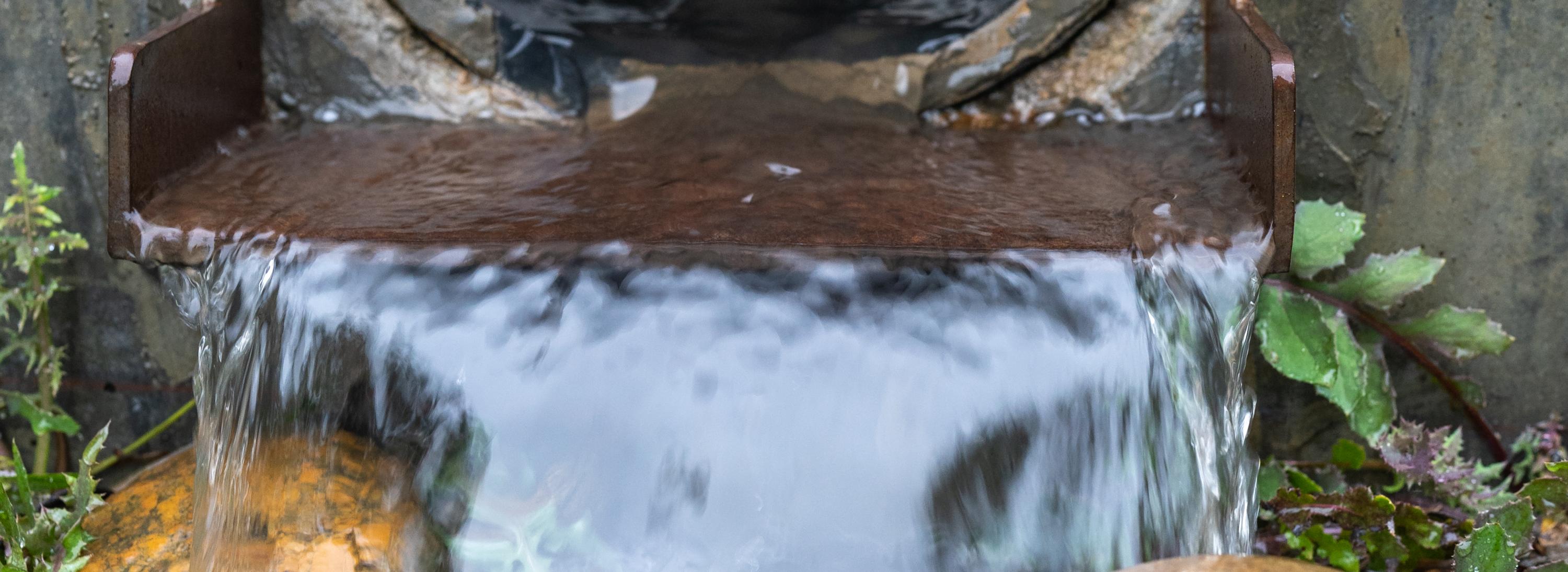
A raindrop falling over a Bay Area city or suburb might land on a dizzying number of human-made surfaces: artificial turf, roofs, cars, pavement, windows, solar panels, construction sites, and many others. By the time water heads toward San Francisco Bay as stormwater runoff, it can collect hundreds of chemicals from these painted, treated, or worn-down surfaces. In all Bay Area cities except portions of San Francisco, stormwater flows straight to the Bay.
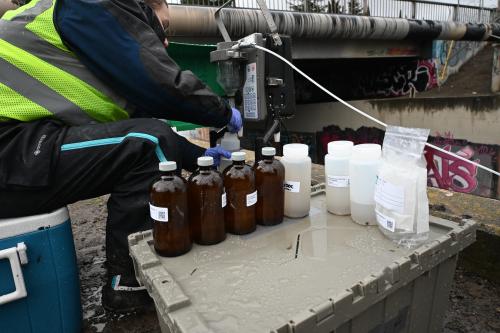
"The fundamental challenge of stormwater is that the scale is just really big,” says Karen Cowan, the executive director of the nonprofit California Stormwater Quality Association. “It's the world we live in, for all practical purposes."
Over 100 municipalities manage thousands of stormwater outflows to the Bay, ranging from small cities to counties with populations in the millions. Because those municipalities collaborate with SFEI and other experts as part of the Regional Monitoring Program for Water Quality in San Francisco Bay (RMP), their approach to studying the chemicals in stormwater is both scientific and driven by real-world concerns.
“It's not an ivory tower conversation that's happening,” says Chris Sommers, the program manager for the Santa Clara Valley Urban Runoff Pollution Prevention Program and an RMP committee member. That real-world focus is unusual for the poorly understood and often unregulated chemicals known as “emerging contaminants”. There are few other programs in the world with dedicated stormwater monitoring for emerging contaminants—and possibly none.
Everything, Everywhere, All At Once?
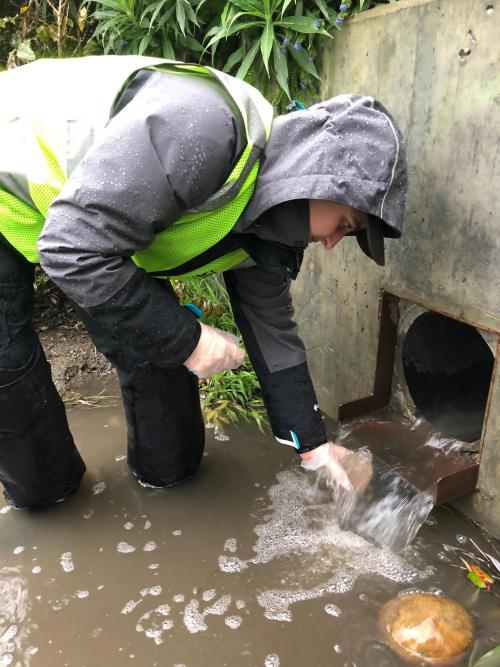
In the early years of studying pollutants like mercury in the Bay Area, scientists followed a certain process. For each substance, determine what levels in the environment could harm people or wildlife. Identify if the Bay surpassed that level. Learn what pathways (like stormwater) carried the most pollution. Only then did scientists shift their focus to analyzing specific solutions, often by finding and cleaning up the worst-offender sources.
Lester McKee, who led SFEI’s earliest stormwater monitoring with the RMP, says that process unravels for emerging contaminants because many of these chemicals are still common in new products used outdoors.
“Rather than waiting until it's a problem in the future, we're trying to figure out how bad it is at the same time as what the sources are, and all the other questions,” he says.
That means examining not just what’s in stormwater, but where it’s coming from. More and more, the RMP is looking upstream for answers.
Rather than waiting until it's a problem in the future, we're trying to figure out how bad it is at the same time as what the sources are, and all the other questions.
“If there's a problem, we want to know about it,” says Sommers. “We want to figure out whether we should be doing something different. I think that's the general mindset of Bay Area communities.”
Some emerging contaminants, like car tire chemicals, have clear sources. But others, like PFAS (known as “forever chemicals”), are in hundreds of products, and so widespread in the Bay Area’s urban stormwater that tracing them upstream is a yearslong undertaking.
“Our Clean Water Act approach of ‘we'll figure out which pipe it's coming from, and then tell people to take it out of the pipe,’ doesn't work when the pollution is coming from consumer products,” says SFEI Senior Scientist Kelly Moran. “A stormwater management agency can’t say what should be in a vehicle or what kind of paint people should use on their homes.” Only the state or federal government can require source control, like chemical bans in specific products.
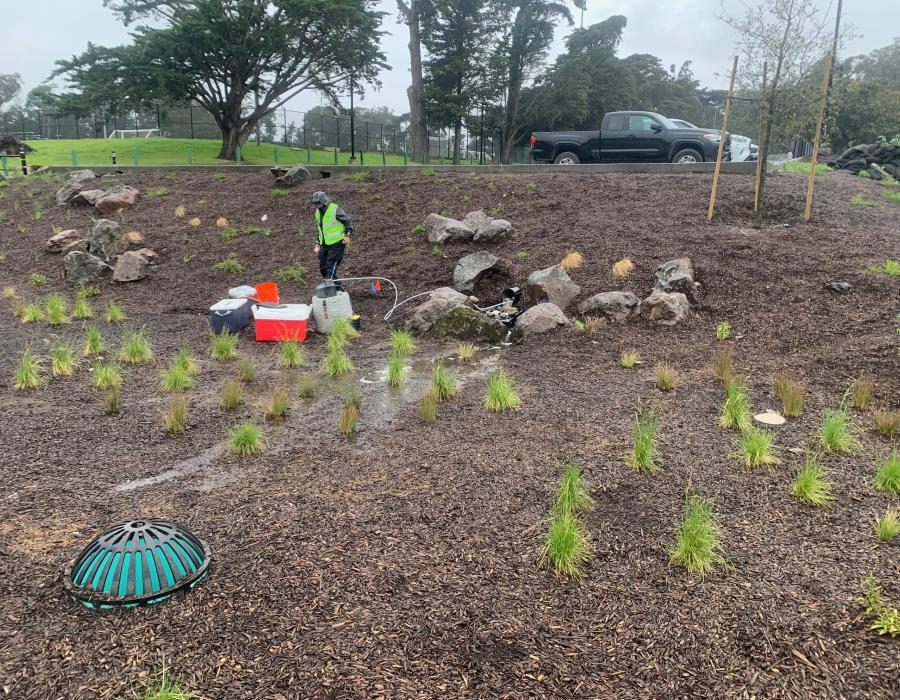
Instead, Bay Area stormwater managers encourage clean outdoor practices at businesses and homes, like containing wastes, covering and containing outdoor storage, picking up pet waste, using commercial car washes, draining swimming pools to the sewer system, and quickly sweeping up outdoor spills instead of washing them to the drain with a hose. Another strategy to reduce the contaminants entering the Bay is routing stormwater runoff through rain gardens and other types of “green” infrastructure. Rain gardens trap older industrial pollutants called PCBs, and early research shows promise for many emerging contaminants as well, including microplastic tire particles.
Rebecca Sutton, the RMP’s lead scientist for emerging contaminants, says that the region’s stormwater managers “have a really good collaborative attitude” about investigating chemicals in the runoff they manage.
“They know they're not the ones adding these chemicals—it’s all of us in the communities using these products, and it's the product formulators," she adds.
We can imagine the environment as a large bathtub that fills up as pollution enters and drains with cleanup efforts and as chemicals break down. For chemicals still in active use, the Bay ecosystem is a bathtub with the tap turned wide open. If certain chemicals approach levels that threaten the health of people or wildlife—if the Bay bathtub is close to overflowing—then turning the tap off means not putting more of those substances in the outdoor environment in the first place.
"Rain won't stop. We need flood control and we need to be able to move water through our ecosystems,” says Cowan. “But if we have things in stormwater that we don't want, in concentrations we don't want, we have to figure out how we fix it. That means source control.”
This is the final part of a special feature series on stormwater. Read the first two parts of “The Storm Chasers” to learn more about discovering next-generation pollutants in stormwater (Part 1) and innovations with stormwater sampling robots (Part 2).

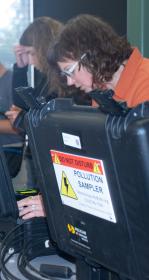
When rainstorms wash contaminants into the Bay, scientists can only sample stormwater in a few places at once. Three years of inventing and testing have led to a solution in the form of 15 briefcase-sized robots, with names like “Captain Capture” and “Missus Sippy,” to slurp up samples without human supervision onsite.
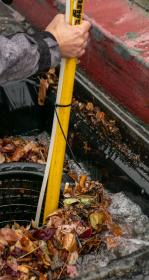
The Storm Chasers: What Stormwater Reveals About Pollution In San Francisco Bay
SFEI’s stormwater monitoring team has grown and is innovating techniques to further expand its influential studies. Part one of a special feature series on stormwater.

Out now: 2024 Pulse of the Bay
Contaminants of emerging concern (CECs) take center stage in the 2024 Pulse of the Bay, the signature publication of the Regional Monitoring Program for Water Quality in San Francisco Bay (RMP).