Browse Our Stories
Tue, Oct 10 - Wed, Oct 11 2017
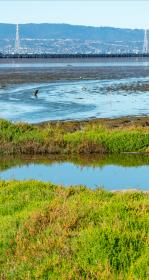
Flood Control 2.0 Wins an Outstanding Environmental Project Award!
The Flood Control 2.0 project team was presented with an Outstanding Environmental Project Award at the 13th Biennial State of the Estuary Conference in Oakland, CA.
Tue, Sep 12 2017
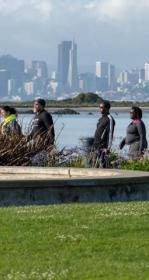
Science Support for Resilient By Design Competition
The challenges of accelerating sea level rise and aging shoreline infrastructure are creating a once-in-a-century opportunity to redesign the Bay shore.
Fri, Sep 1 2017
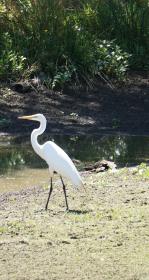
The Healthy Watersheds Resilient Baylands project kicks off
The Healthy Watersheds Resilient Baylands project kicked off this summer.

Wed, Aug 2 2017
Announcing the release of Re-Oaking Silicon Valley: Building Vibrant Cities with Nature
Could restoring lost ecosystems to cities play a role in building ecological resilience across landscapes? In Re-oaking Silicon Valley, a new report by SFEI, we explore this opportunity in our region.
Thu, Jun 29 2017
SFEI’s Re-oaking Silicon Valley appears as a feature in Estuary News magazine
Over the past century, oaks have been lost from fertile valleys across California to make way for agriculture, and then for cities.
Thu, Jun 22 2017
A multi-partner project to create placed-based sea-level rise adaptation strategies
As sea level rise accelerates in the San Francisco Bay, scientists, planners, and decision makers will need to re-envision and adapt our complex shoreline to provide ecological and social resilience. Although there are many efforts currently underway in the region to assess climate change vulnerabilities, the region lacks a coherent science-based framework for guiding and evaluating climate adaptation strategies appropriate to our diverse shoreline settings.
Thu, Jun 22 2017
The Resilience Atlas is an interactive mapping platform that visualizes the past, present and future conditions of the Bay’s edge and surrounding watersheds by combining layers of information, such as shoreline infrastructure, shoreline change over time, and sea level rise.
Thu, Jun 22 2017
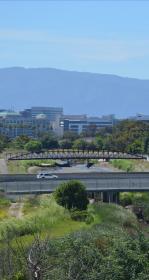
SFEI and several agency partners recently completed a multi-year, EPA funded project called Flood Control 2.0. The goal of the project was to develop information that is useful for integrating habitat restoration into flood management at the Bay edge. Project outputs are now available at floodcontrol.sfei.org.

Thu, Jun 22 2017
South Bay Landscape Vision Workshop
On June 7, SFEI, in partnership with the Santa Clara Valley Water District and South Bay Salt Ponds Restoration Project, hosted a landscape “visioning” workshop in San Jose.
Mon, Mar 20 2017
Tijuana River Valley Histrical Ecology Investigation Published
The Tijuana River Valley Historical Ecology Investigation—completed in January 2017—synthesized hundreds of historical maps, photographs, and texts to reconstruct the ecological, hydrological, and geomorphic conditions of the Tijuana River valley
Mon, Mar 20 2017
Sycamore Alluvail Woodland Habitat Mapping and Regeneration Study Released
California sycamore (Platanus racemosa) is an iconic native tree species found in California and northern Baja California.
Fri, Feb 10 - Fri, Feb 24 2017
Our partnership with Google to enhance the ecological resilience of urban landscapes is featured in a story by Fast Company, a Google Blog post, and an accompanying video.
Tue, Jan 10 2017
Lower Walnut Creek Vision Just Released!

Thu, Dec 15 2016 - Tue, Jan 31 2017
New data layers and Landscape Profile mode added to EcoAtlas
New data layers and Landscape Profile mode have been added to EcoAtlas (ecoatlas.org), an online tool for visualizing the abundance, diversity, and condition of wetlands, along with the project activities that are affecting the landscape. Enhancements include:
Mon, Dec 12 2016
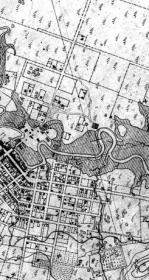
Ventura County Historical Ecology Study Helping Save Santa Clara River Watershed
Peter Brand of the State Coastal Conservancy discusses the role of Historical Ecology and other research in bringing together stakeholders to help save the Santa Clara River.
Sun, Nov 27 - Wed, Nov 30 2016
SFEI study cited in SF Chronicle news story about creosote pilings in the Bay
Filipa A. Ioannou's Chronicle article sounds an alert over the health risks posed by decaying creosote pilings in the Bay, with particular attention on the adverse effects on pacific herring, which she notes is a keystone species.
Mon, Nov 14 2016
"A Delta Renewed" report released at the 2016 Bay-Delta Science Conference
The San Francisco Estuary Institute (SFEI) released A Delta Renewed – A Guide to Science-Based Ecological Restoration in the Sacramento-San Joaquin Delta.
Mon, Nov 7 2016
How Creeks Meet the Bay: Current Sediment Dynamics
The transition zones between our watersheds and the Bay are often occupied by flood control channels that provide a variety of societal and environmental services but often require sediment removal to maintain flood conveyance capacity.
Sun, Oct 30 2016
Robin Grossinger interviewed at Grace Cathedral for a discussion about adapting to climate change
On Sunday, October 30 from 9:30 to 10:30 a.m., SFEI’s Robin Grossinger appeared on a weekly, hour-long discussion series called The Forum.

Tue, Oct 25 2016
The Delta as Changing Landscapes - Presentation by Letitia Grenier
The Delta Science Program, CDFW Watershed Restoration Grants Branch, and the Surface Water Ambient Monitoring Program will jointly host a Delta Science Brown Bag seminar on October 25th
Tue, Sep 27 2016
South Bay sea level rise workshop features SFEI science
The Bay Area Ecosystems and Climate Change Consortium (BAECCC) and UC Berkeley's The Climate Readiness Insitute convened a workshop entitled
Tue, Jul 19 2016
San Francisquito Creek Baylands Landscape Change Analysis
SFEI recently completed a landscape change analysis of lower San Francisquito Creek in the South Bay.
Tue, Jul 19 - Wed, Aug 31 2016
How to “ReWild” San Diego’s Mission Bay
SFEI's Resilient Landscape Program recently completed a "reconnaissance" historical ecology study of San Diego's Mission Bay.
Tue, Jul 19 2016
Native languages map of the Bay for the Exploratorium
The Exploratorium is displaying a map and essay developed by SFEI depicting the diversity, distribution, and people associated with the indigenous languages of the Bay Region.
Fri, Jul 1 2016
Native languages map of the Bay for the Exploratorium
The Exploratorium is displaying a map and essay developed by SFEI depicting the diversity, distribution, and people associated with the indigenous languages of the Bay Region.
Wed, Jun 8 2016
Warner Chabot details the value of wetlands in an appearance on American Public Media's Marketplace
Interviewed by Molly Webster, host of Marketplace, SFEI's Executive Director Warner Chabot describes how the San Francisco Bay Area must work with natural processes, rather than against these processes, to ensure the health and safety of coastal environments.
Mon, Apr 18 - Tue, Apr 19 2016
SFEI featured in LA Times about earthquake risk to San Francisco
A recent story in the LA Times by Ron Lin underscores the newly identified threat that earthquakes pose to the San Francisco Bay waterfront. Under certain circumstances, the sea wall that currently protects the Embarcadero and its surrounding infrastructure could be dramatically compromised during a strong enough seismic event. The results could be capastrophic to a key driver of San Francisco's economy. And the fix to the vulnerability would be expensive at $3 billion.
Thu, Apr 7 2016
Now Available: SF Bay Shore Inventory: Mapping for Sea Level Rise Regional Dataset
SFEI and the San Francisco Estuary Partnership are proud to announce the release of the SF Bay Shore Inventory: Mapping for Sea Level Rise.
Sat, Mar 5 2016
CRAM BBE module now available!
With funding from the State Coastal Conservancy, SFEI staff developed the eCRAM data entry forms for uploading BBE assessments into the CRAM database.
Sat, Mar 5 - Sat, Apr 30 2016
How do you know if the ecological conditions of your wetland project are aligned with expected rates of improvement?