Review our work products
We provide easy access to thousands of SFEI’s reports, journal articles, books, conference papers/proceedings, factsheets, hearing summaries, maps, and more.
These printable and downloadable materials connect our science to action, cover a broad range of topics, and have many applications. This library is searchable and filterable. If you have difficulty finding the information you are looking for, please contact us at [email protected].
Programs & Topics
Select the program or topic of your interest among the nested filters below.
Author(s): Anna Mahony | Miguel Méndez | Rebecca Sutton | Patrick McNamara | William Arnold
2026
Quaternary ammonium compounds (QACs) are widely used and have numerous routes to the environment. This work assessed the levels of QACs in surface waters that receive treated wastewater effluent. Samples were collected over a 27 months period from eight different surface…
Author(s): Jennifer Dougherty | Kayli Paterson | Melissa Gonzalez | Edward Kolodziej | Diana Lin | Alicia Gilbreath | Elisabeth Rødland | Win Cowger | Hazel Vaquero | Andrea Amend | Rebecca Sutton
2026
The performance capabilities of bioretention systems for a range of stormwater constituents remain lightly characterized, particularly for emerging organic contaminants. To address this gap, we evaluated concentration- and load-based treatment outcomes at four urban…
Author(s): Ezra Miller | Sierra Garcia | Ruth Askevold | Jennifer Symonds | Rebecca Sutton
2026
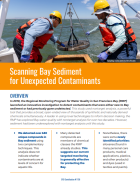
In 2018, the Regional Monitoring Program for Water Quality in San Francisco Bay (RMP) launched an innovative investigation to detect contaminants that were either new to Bay sediment or had previously gone undetected. This study used nontarget analysis, a powerful tool that…
Author(s): Anna Mahony | Tyler Clair | Miguel Méndez | Patrick McNamara | William Arnold
2025
Quaternary ammonium compounds (QACs) are high production volume chemicals used in consumer and industrial products, including disinfectants. Influent, effluent, and biosolid samples were collected from 12 wastewater treatment plants (WWTPs) from 2020 to 2023 and analyzed for…
Regional Framework for the Next Generation of Urban Greening
Author(s): Lauren Stoneburner | Melissa Foley | Cate Jaffe | Kendall Harris
2025
The Regional Framework for the Next Generation of Urban Greening (“the Framework”) provides a roadmap for this alignment, offering nine essential steps to help practitioners navigate the complex, cross-cutting challenges of urban greening. Each step is supported by practical…
Author(s): Miguel Méndez | Jay Davis | Ezra Miller | Richard Grace | Rebecca Sutton
2025
Consumption of contaminated food, especially seafood, is a key source of human perfluoroalkyl and polyfluoroalkyl
substances (PFAS) exposure. Here, we examine the occurrence of PFAS in shiner surfperch (Cymatogaster aggregata), striped bass (Morone saxatilis…
Integrated Watershed Modeling and Monitoring Framework to Support the Regional Monitoring Program
Author(s): Lester McKee | Kelly Moran | Jay Davis
2025
The Regional Monitoring Program (RMP) is transitioning from a watershed program predominantly using monitoring data and data-driven load estimation methods to support management decisions on polychlorinated biphenyls (PCBs) and mercury (Hg) to an integrated modeling and…

Screening Bay Area Stormwater for Emerging Contaminants: Summary for Managers
Author(s): Rebecca Sutton | Pedro Avellaneda | Miguel Méndez | Jennifer Dougherty | Alicia Gilbreath
2024
As part of a maturing science strategy, the Regional Monitoring Program for Water Quality in San Francisco Bay (RMP) focuses on monitoring and modeling of emerging contaminants in major pathways in an effort to track Bay contaminants back to their sources and better inform…
Author(s): Jennifer Dougherty | Diana Lin | Ezra Miller | Rebecca Sutton | Samantha DiLoreto | Kirsten Overdahl | Bernadette Vogler | Lee Ferguson
2024
Ethoxylated surfactant compounds are a broad class of non-ionic surfactants that include alkylphenol ethoxylates (APEOs) and alcohol ethoxylates (AEs). Together, APEOs and AEs are used in a wide range of consumer and industrial applications as emulsifiers, wetting agents,…
Author(s): Rebecca Sutton | Ezra Miller | Miguel Méndez | Adam Wong | Kayli Paterson | Jennifer Dougherty | Diana Lin
2024
Over 350,000 chemicals and mixtures of chemicals have been registered for production and use worldwide. A portion of these may meet the definition of contaminants of emerging concern (CECs), chemicals that are unregulated or under-regulated, not commonly monitored in…

Author(s): Jennifer Dougherty | Miguel Méndez | Ezra Miller | Rebecca Sutton
2024
Chlorinated paraffins are a class of mixtures of chlorinated hydrocarbons that are produced and used globally at high volumes for various consumer and industrial applications. Chlorinated paraffins are composed of short-chain (SCCPs), medium-chain (MCCPs), and long-chain…
Author(s): Katherine Peter | Alicia Gilbreath | Melissa Gonzalez | Zhenyu Tian | Adam Wong | Donald Yee | Ezra Miller | Pedro Avellaneda | Da Chen | Andrew Patterson | Nicole Fitzgerald | Christopher Higgins | Edward Kolodziej | Rebecca Sutton
2024
In urban to peri-urban watersheds such as those surrounding San Francisco Bay, stormwater runoff is a major pathway by which contaminants enter aquatic ecosystems. We evaluated the occurrence of 154 organic contaminants via liquid chromatography coupled to tandem mass…
Study of Per- and Polyfluoroalkyl Substances in Bay Area POTWs: Final Report
Author(s): Diana Lin | Miguel Méndez | Kayli Paterson
2024
Per- and polyfluoroalkyl substances (PFAS) are a broad class of fluorine-rich specialty chemicals with many uses across consumer, commercial, and industrial applications and products. The carbon-fluorine bonds that define this class afford PFAS stability during use and…
Author(s): Anna Mahony | William Arnold | Miguel Méndez | Ezra Miller | Rebecca Sutton
2024
Quaternary ammonium compounds (QACs) are surfactants widely used in a variety of consumer products, particularly as antimicrobials. The COVID-19 pandemic has increased use of products containing QACs. This is of concern because QACs can be toxic to aquatic life at low…
Author(s): Paul Mayer | Kelly Moran | Ezra Miller | Susanne Brander | Stacey Harper | Manuel Garcia-Jaramillo | Victor Carrasco-Navarro | Kay Ho | Robert Burgess | Leah Hampton | Elise Granek | Margaret McCauley | Jenifer McIntyre | Edward Kolodziej | Ximin Hu | Antony Williams | Barbara Beckingham | Miranda Jackson | Rhea Sanders-Smith | Chloe Fender | George King | Michael Bollman | Sujay Kaushal | Brittany Cunningham | Sara Hutton | Jackelyn Lang | Heather Goss | Samreen Siddiqui | Rebecca Sutton | Diana Lin | Miguel Mendez
2024
About 3 billion new tires are produced each year and about 800 million tires become waste annually. Global dependence upon tires produced from natural rubber and petroleum-based compounds represents a persistent and complex environmental problem with only partial and often…
Author(s): Analise Lindborg | Kirsten Overdahl | Bernadette Vogler | Diana Lin | Rebecca Sutton | P.L. Ferguson
2023
Ethoxylated surfactants are ubiquitous organic environmental contaminants that have received continued attention over the past several decades, particularly as manufacturing rates increase worldwide and as toxicity concerns grow regarding alcohol ethoxylates. Presence of…
Concentrations of Select Commonly Used Organic UV Filters in San Francisco Bay Wastewater Effluent
Author(s): Miguel Méndez | Ezra Miller | Diana Lin | Djordje Vuckovic | William Mitch
2023
Ultraviolet (UV) radiation filters are chemicals designed to absorb or reflect harmful solar radiation, and are used in products as diverse as personal care products (e.g., sunscreens, lotions, and cosmetics) and industrial products (e.g., insecticides, plastics, and paints)…
Optimizing Chemicals Management in the United States and Canada through the Essential-Use Approach
Author(s): Simona Bǎlan | David Andrews | Arlene Blum | Miriam Diamond | Seth Fernández | Elizabeth Harriman | Andrew Lindstrom | Anna Reade | Lauren Richter | Rebecca Sutton | Zhanyun Wang | Carol Kwiatkowski
2023
Chemicals have improved the functionality and convenience of industrial and consumer products, but sometimes at the expense of human or ecological health. Existing regulatory systems have proven to be inadequate for assessing and managing the tens of thousands of chemicals in…
Author(s): Djordje Vuckovic | Jessica MacDonald | Diana Lin | Miguel Méndez | Ezra Miller | William Mitch
2023
Research in the United States evaluating ecotoxic risk to receiving waters posed by contaminants occurring in wastewater discharges typically has focused on measurements of pharmaceuticals and personal care products (PPCPs), with limited evaluations of UV filters…
Quaternary Ammonium Compounds: A Chemical Class of Emerging Concern
Author(s): William Arnold | Courtney Carigan | Gino Cortopassi | Sandipan Datta | Jamie DeWitt | Anne-Cooper Doherty | Rolf Halden | Homero Harari | Erica Hartmann | Terry Hrubec | Shoba Iyer | Carol Kwiatkowski | Jonas LaPier | Dingsheng Li | Li Li | Jorge Ortiz | Amina Salamova | Ted Schettler | Ryan Seguin | Anna Soehl | Rebecca Sutton | Libin Xu | Guomao Zheng | Arlene Blum | Jennifer Branyan | Thomas Bruton
2023
Quaternary ammonium compounds (QACs), a large class of chemicals that includes high production volume substances, have been used for decades as antimicrobials, preservatives, and antistatic agents and for other functions in cleaning, disinfecting, personal care products, and…
Tire Wear: Emissions Estimates and Market Insights to Inform Monitoring Design
Author(s): Kelly Moran | Alicia Gilbreath | Miguel Méndez | Diana Lin | Rebecca Sutton
2023
Every vehicle on the road sheds tiny particles from its rubber tires into the environment. Tire wear is one of the top sources of microplastic releases to the environment. Tire wear also disperses tire-related chemicals into the environment. SFEI studies supported by the…
Bisphenols in San Francisco Bay: Wastewater, Stormwater, and Margin Sediment Monitoring
Author(s): Miguel Mendez | Ezra Miller | Jia Liu | Da Chen | Rebecca Sutton
2022
Bisphenols are a class of synthetic, mobile, endocrine-disrupting chemicals. Bisphenol A (BPA), the most well-studied bisphenol, is produced and used in vast quantities worldwide—especially in polycarbonate plastics and as a polymer additive. Recently, some manufacturers have…
A living tool for the continued exploration of microplastic toxicity
Author(s): Leah Hampton | Hannah De Frond | Ludovic Hermabessiere | Ezra Miller | Vera de Ruijter | Andrea Faltynkova | Syd Kotar | Laura Monclús | Samreen Siddiqui | Johannes Völker | Susanne Brander | Albert Koelmans | Chelsea Rochman | Martin Wagner | Alvine Mehinto | Heili Lowman | Scott Coffin | Emily Darin
2022
Throughout the past decade, many studies have reported adverse effects in biota following microplastic exposure. Yet, the field is still emerging as the current understanding of microplastic toxicity is limited. At the same time, recent legislative mandates have required…
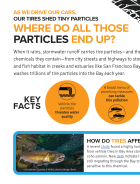
Microplastics from Tire Particles in San Francisco Bay Fact Sheet
Author(s): Kelly Moran | Ruth Askevold
2022
As we drive our cars, our tires shed tiny particles
When it rains, stormwater runoff carries tire particles—and the toxic chemicals they contain—from city streets and highways to storm drains and fish habitat in creeks and estuaries like San Francisco…
Author(s): Ila Shimabuku | Da Chen | Yan Wu | Ezra Miller | Jennifer Sun | Rebecca Sutton
2022
Organophosphate esters (OPEs) and bisphenols are two classes of industrial chemicals that are ubiquitously detected in environmental matrices due to high global production and widespread use, particularly in the manufacture of plastic products. In 2017, water…
Author(s): Miguel Mendez | Martin Trinh | Ezra Miller | Diana Lin | Rebecca Sutton
2022
Per- and polyfluoroalkyl substances (PFAS), a family of thousands of synthetic, fluorine-rich compounds commonly referred to as “forever chemicals,” are known for their thermal stability, non-reactivity, and surfactant properties. These unique compounds have widespread uses…
Author(s): Leah Hampton | Hans Bouwmeester | Susanne Brander | Scott Coffin | Matthew Cole | Ludovic Hermabessiere | Alvine Mehinto | Ezra Miller | Chelsea Rochman | Stephen Weisberg
2022
To assess the potential risk of microplastic exposure to humans and aquatic ecosystems, reliable toxicity data is needed. This includes a more complete foundational understanding of microplastic toxicity and better characterization of the hazards they may present. To expand…
Risk-based management framework for microplastics in aquatic ecosystems
Author(s): Alvine Mehinto | Scott Coffin | Albert Koelmans | Susanne Brander | Martin Wagner | Leah Hampton | Allen Burton | Ezra Miller | Todd Gouin | Stephen Weisberg | Chelsea Rochman
2022
Microplastic particles (MPs) are ubiquitous across a wide range of aquatic habitats but determining an appropriate level of risk management is hindered by a poor understanding of environmental risk. Here, we introduce a risk management framework for aquatic ecosystems that…
Author(s): Craig Jones | Jay Davis | Donald Yee
2022
This report presents a strategy and multi-year workplan for modeling polychlorinated biphenyls (PCBs), contaminants of emerging concern (CECs), and sediment in San Francisco Bay (the Bay). Robust in-Bay fate modeling is needed to address priority management questions that…
Author(s): Miaomiao Wang | Juliet Kinyua | Ting Jiang | Meg Sedlak | Lester McKee | Richard Fadness | Rebecca Sutton | June-Soo Park
2022
The combustion of structures and household materials as well as firefighting during wildfires lead to releases of potentially hazardous chemicals directly into the landscape. Subsequent storm-water runoff events can transport wildfire-related contaminants to downstream…
Author(s): Melissa Foley | Rebecca Sutton | Donald Yee | Paul Salop
2021
This report details plans associated with the annual Regional Monitoring Program for Water Quality in the San Francisco Estuary (RMP) water cruise. The RMP water sampling program was redesigned in 2002 to adopt a randomized sampling design at thirty-one sites in place of the…
Author(s): Kirsten Overdahl | Rebecca Sutton | Jennifer Sun | Noelle DeStefano | Gordon Getzinger | Lee Ferguson
2021
A comprehensive, non-targeted analysis of polar organic pollutants using high resolution/accurate mass (HR/AM) mass spectrometry approaches has been applied to water samples from San Francisco (SF) Bay, a major urban estuary on the western coast of the United States, to…
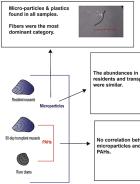
Author(s): Natasha Klasios | Hannah De Frond | Ezra Miller | Meg Sedlak | Chelsea Rochman
2021
Microplastics are an emerging contaminant of high environmental concern due to their widespread distribution and availability to aquatic organisms. Filter-feeding organisms like bivalves have been identified as particularly susceptible to microplastics, and because of this,…
PCBs in Shiner Surfperch in Priority Margin Areas of San Francisco Bay
Author(s): Jay Davis | Nina Buzby
2021
Conceptual models developed for selected San Francisco Bay margin areas (referred to as priority margin units, or PMUs) have identified shiner surfperch as a crucial indicator of PCB impairment, due to their explicit inclusion as an indicator species in the PCBs TMDL,…
A Synthesis of Microplastic Sources and Pathways to Urban Runoff
Author(s): Kelly Moran | Ezra Miller | Miguel Mendez | Shelly Moore | Alicia Gilbreath | Rebecca Sutton | Diana Lin
2021
California Senate Bill 1263 (2018) tasks the Ocean Protection Council (OPC) with leading statewide efforts to address microplastic pollution, and requires the OPC to adopt and implement a Statewide Microplastics Strategy related to microplastic materials that pose an emerging…
A ubiquitous tire rubber-derived chemical induces acute mortality in coho salmon
Author(s): Zhenyu Tian | Haoqi Zhao | Katherine Peter | Melissa Gonzalez | Jill Wetzel | Christopher Wu | Ximin Hu | Jasmine Prat | Emma Mudrock | Rachel Hettinger | Allan Cortina | Rajshree Biswas | Flávio Kock | Ronald Soong | Amy Jenne | Bowen Du | Fan Hou | Huan He | Rachel Lundeen | Alicia Gilbreath | Rebecca Sutton | Nathaniel Scholz | Jay Davis | Michael Dodd | Andre Simpson | Jenifer McIntyre | Edward Kolodziej
2021
In U.S. Pacific Northwest coho salmon (Oncorhynchus kisutch), stormwater exposure annually causes unexplained acute mortality when adult salmon migrate to urban creeks to reproduce. By investigating this phenomenon, we identified a highly toxic quinone transformation product…
Author(s): Ezra Miller | Miguel Mendez | Ila Shimabuku | Nina Buzby | Rebecca Sutton
2020
This 2020 CEC Strategy Update is a brief summary document that describes the addition of recently monitored CECs to the tiered risk-based framework. Reviews of findings relevant to San Francisco Bay are provided, as is a discussion of the role of environmental persistence in…
Author(s): Matthew Heberger | Rebecca Sutton | Nina Buzby | Jennifer Sun | Diana Lin | Miguel Mendez | Michelle Hladik | James Orlando | Corey Sanders | Edward Furlong
2020
The Regional Monitoring Program for Water Quality in San Francisco Bay (RMP) has recently focused attention on better characterization of contaminants in nearshore “margin” areas of San Francisco Bay. The margins of the Lower South Bay are mudflats and shallow regions that…
Microparticles, Microplastics, and PAHs in Bivalves in San Francisco Bay
Author(s): Ezra Miller | Natasha Klasios | Diana Lin | Meg Sedlak | Rebecca Sutton | Chelsea Rochman
2020
California mussels (Mytilus californianus and hybrid Mytilus galloprovincialis / Mytilus trossulus) and Asian clams (Corbicula fluminea) were collected at multiple sites in San Francisco Bay. Mussels from a reference area with minimal urban influence were also deployed in…
Multi-box mass balance model of PFOA and PFOS in different regions of San Francisco Bay
Author(s): Francisco Soberón | Rebecca Sutton | Meg Sedlak | Donald Yee | Marta Schuhmacher | June-Soo Park
2020
We present a model to predict the long-term distribution and concentrations of perfluorooctanoic acid (PFOA) and perfluorooctanesulfonic acid (PFOS) in estuaries comprising multiple intercommunicated sub-embayments. To that end, a mass balance model including rate constants…
Neonicotinoids and Their Degradates in San Francisco Bay Water
Author(s): Nina Buzby | Diana Lin | Rebecca Sutton
2020
In the summer of 2017, open Bay water samples were collected during the RMP Status and Trends Water Cruise. Samples were analyzed for 19 neonicotinoids and metabolites. The only neonicotinoid detected was imidacloprid, an active ingredient used in both urban and agricultural…
Author(s): Jennifer Sun | Rebecca Sutton | Lee Ferguson | Kirsten Overdahl
2020
In 2016, the RMP launched a novel investigation to detect new or unexpected contaminants in Bay waters, as well as treated sewage (or wastewater) discharged to the Bay. This study used non-targeted analysis, a powerful tool that provides a broad, open-ended view of thousands…
Author(s): Rebecca Sutton | Da Chen | Jennifer Sun | Denise Greig | Yan Wu
2019
Flame retardant chemical additives are incorporated into consumer goods to meet flammability standards, and many have been detected in environmental matrices. A uniquely wide-ranging characterization of flame retardants was conducted, including…
Occurrence and Sources of Pesticides to Urban Wastewater and the Environment
Author(s): Rebecca Sutton | Yina Xie | Kelly Moran | Jennifer Teerlink
2019
Municipal wastewater has not been extensively examined as a pathway by which pesticides contaminate surface water, particularly relative to the well-recognized pathways of agricultural and urban runoff. A state-of-the-science review of the occurrence and fate of current-use…
Author(s): Yan Wu | Hongli Tan | Rebecca Sutton | Da Chen
2017
The present study provides the first comprehensive investigation of polyhalogenated carbazoles (PHCZ) contamination in an aquatic ecosystem. PHCZs have been found in soil and aquatic sediment from several different regions, but knowledge of their bioaccumulation and…
Author(s): Akash Sadaria | Rebecca Sutton | Kelly Moran | Jennifer Teerlink | Jackson Brown V | Rolf Halden
2017
Urban pest control insecticides, specifically fipronil and its four major degradates (fipronil sulfone, sulfide, desulfinyl, and amide) and imidacloprid, were monitored during drought conditions in eight San Francisco Bay wastewater treatment plants (WWTPs). In influent and…
Author(s): Erika Houtz | Rebecca Sutton | June-Soo Park | Meg Sedlak
2016
In late 2014, wastewater effluent samples were collected from eight treatment plants that discharge to San Francisco (SF) Bay in order to assess poly- and perfluoroalkyl substances (PFASs) currently released from municipal and industrial sources. In addition to direct…
Author(s): Rebecca Sutton | Jackson Brown V
2016
RMP stakeholders are pursuing cost-effective solutions to contamination of the SF Bay through measures that prevent, rather than clean up contamination. Early identification of problem CECs and quick action to prevent their spread is the best way to protect water quality in…
Author(s): Rebecca Sutton | Meg Sedlak
2015
About this Update
The Regional Monitoring Program for Water Quality in San Francisco Bay (RMP) has been investigating contaminants of emerging concern (CECs) since 2001.…