The CECs Challenge
Tens of thousands of chemicals and mixtures of chemicals are registered for production and use worldwide. Many are contaminants of emerging concern (CECs), broadly defined as chemicals that are un- or under-regulated, not commonly monitored in the environment, and have the potential to enter the environment and harm ecological or human health. Limited resources and lack of data on exposure and risk make it challenging to prioritize CECs for monitoring and management to protect aquatic ecosystems. In addition, limited information on sources or uses of CECs makes it hard for policymakers to effectively prevent pollution. As a result, determining which of the thousands of CECs pose the greatest threats to the San Francisco Bay ecosystem is a formidable challenge.
Our Approach
The Regional Monitoring Program for Water Quality in San Francisco Bay (RMP) has monitored CECs since 2001. In 2006, the RMP established the Emerging Contaminants Workgroup, which includes representatives from stakeholder groups, local scientists, and an advisory panel of expert researchers that work together to protect the health of the Bay by addressing the workgroup’s guiding management questions:
- Which CECs have the potential to adversely impact beneficial uses in San Francisco Bay?
- What are the sources, pathways, loadings, and processes leading to the presence of CECs in the Bay?
- What are the physical, chemical, and biological processes that may affect the transport and fate of CECs in the Bay?
- Have levels of CECs changed over time in the Bay or pathways? What are potential drivers contributing to change?
- Are the concentrations of CECs predicted to increase or decrease in the future?
- What are the effects of management actions?
Thanks to the region’s sustained focus, San Francisco Bay is now one of the most well-studied aquatic ecosystems in the world, and has become a hub of CECs science and management.
Strategy for Future Investigations

The RMP has developed a multi-faceted strategy for cost-effective CEC identification and monitoring prioritization to support management efforts and minimize impacts to the Bay. First, for CECs known to occur in the Bay, the RMP establishes priorities using a tiered risk-based framework that guides future monitoring studies for these contaminants. Findings from these studies, in turn, provide key data to update evaluations of potential risk for each contaminant or class. Second, the RMP focuses on monitoring and modeling in contaminant pathways, such as municipal wastewater effluent and urban stormwater runoff, to inform source identification and control strategies. Third, the RMP uses novel approaches, including nontarget analysis and new approach methodologies for hazard assessment, to identify additional CECs to examine. Finally, RMP staff review findings from other regions to identify new CECs for which no Bay occurrence data yet exist.
Periodic revision of the Strategy is essential given the rapid evolution of the science surrounding CECs. The RMP CEC Strategy was first published in 2013 and later revised in 2017 as part of a continuous effort to refine approaches for supporting the management of CECs in San Francisco Bay. Discrete updates relaying new science are provided as well. The newest revision, to be completed in 2024, describes the RMP’s multi-faceted approach to addressing the challenge of CECs, designed to be flexible and adaptive to new data from both the RMP and other sources.
The RMP’s strategy for cost-effective CEC identification and monitoring prioritization supports management efforts to minimize impacts to the Bay:
- For CECs known to occur in the Bay, the RMP establishes priorities using a tiered risk-based framework that guides future monitoring studies. Findings from these studies provide key data to update evaluations of potential risk for each contaminant or class.
- The RMP focuses on monitoring and modeling contaminant pathways, like municipal wastewater discharge (effluent) and urban stormwater runoff, to identify sources and control strategies.
- The RMP uses novel approaches, including nontarget analysis and new approach methodologies for hazard assessment, to identify additional CECs.
- RMP staff review findings from other regions to identify new CECs for which no Bay occurrence data yet exist.
Because the science surrounding CECs is constantly evolving, the RMP CEC Strategy is revised periodically. It was first published in 2013 and revised in 2017 to refine approaches for supporting CECs management in San Francisco Bay. The newest revision, completed in 2024, describes the RMP’s multi-faceted approach to addressing the challenge of CECs, designed to be flexible and adaptive to new data from both the RMP and other sources.
Priority Contaminants for Bay Health
Diligent surveillance using state-of-the-art analytical techniques has identified two classes of emerging contaminants of high concern for the Bay:
- PFAS—persistent, fluorine-rich, stain and water-repelling “forever chemicals” that are widely used in industrial and consumer products
- Organophosphate Esters—flame retardants and ingredients in plastics
Additional contaminants of moderate concern for the Bay include:
- 6PPDQ—derived from vehicle tires and highly toxic to salmon
- Bisphenol A and related compounds—plastic additives
- Carbendazim—an ingredient in paints, now commonly observed in urban streams and the Bay
- Fipronil and imidacloprid—urban insecticides used for pet flea control, ants, and termites
- Microplastics—tiny pieces of plastic from synthetic clothing, vehicle tires, and a variety of other sources
Review the latest strategy documents for up-to-date science on these and many other contaminants of emerging concern in San Francisco Bay.









Over 350,000 chemicals and mixtures of chemicals have been registered for production and use worldwide.
The theme of the 2024 Pulse is "Contaminants of Emerging Concern." The 2013 edition of the Pulse was the first to focus on contaminants of emerging concern (CECs), with the goal of providing an overview of past RMP work, future plans, and a guide to the many chemi

This 2020 CEC Strategy Update is a brief summary document that describes the addition of recently monitored CECs to the tiered risk-based framework.
All Aboard for Water Quality Sampling
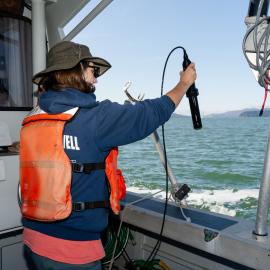
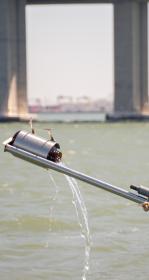
Hundreds of bottles of Bay water. Thousands of chemicals. Five dawn-to-dusk days all over San Francisco Bay. Every two years, the Regional Monitoring Program embarks on a mission to sample water from the surface of the Bay for water quality measurements and pollutants. Explore our 2025 efforts.