Data Synthesis and Risk Screening of Key Classes
Hidden in the mud and water of ecosystems throughout California are thousands of chemical compounds with unknown risk to ecosystems, wildlife, and people. To support the State and Regional Water Boards new Constituents of Emerging Concern Program, we developed a data synthesis and risk screening for contaminants of emerging concern (CECs) in state waters. Our research informed government monitoring and management.
This project aimed to:
1) compile and evaluate the significance of available CECs water quality data in California through screening via a tiered risk-based framework; and
2) identify priorities for monitoring and management of CECs in freshwater, estuarine, and marine settings in California.
Our proof of concept for this approach gave the Water Boards a model to move forward with broader implementation as part of the statewide Constituents of Emerging Concern Program.

Our Approach
CECs include thousands of chemicals. For this project, we focused on key classes of CECs defined either by chemical properties, structure, or how they’re used. We chose the classes based on discussions with experts and stakeholders representing regulatory agencies, regulated stakeholders, nongovernmental (advocacy) organizations, scientific institutes, and State and Regional Water Board staff. We also compiled data on aquatic ecosystems for the state from multiple public databases, supplemented with peer-reviewed literature.
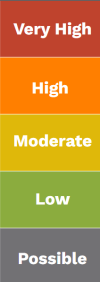
This evaluation focused on ecological risks, with additional consideration of human health risks from eating sport fish and shellfish. Ecological risk quotients were calculated for each compound in each matrix (within animals, water, sediment, etc.) and setting (e.g., freshwater, estuarine water). Compounds or classes were assigned to risk tiers (Low, Moderate, High, or Very High Concern) based on the highest risk quotients. We assigned chemical groups with uncertain occurrences or toxicity to a Possible Concern category. We also provided a brief review of global scientific efforts to identify and analyze new CECs and assess risks to wildlife and humans.
We used the risk screening results to recommend monitoring and management actions to the Water Boards for each class. Contaminant properties like persistence in the environment and bioaccumulation also informed our recommendations, as well as changes in chemical production and use and current management actions.