Browse Our Stories
Tue, Apr 30 2024 - Sat, Jan 31 2026
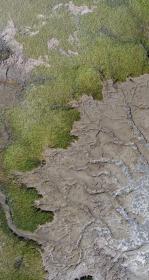
Tracking Coastal Habitat Change Over Time: Considerations for a Statewide Mapping Program
Managing California’s coastal habitats and tracking progress requires up-to-date and comprehensive mapping. So far, that mapping has only happened periodically, and often in a piecemeal manner. We summarized options for routinely mapping coastal wetlands, beaches and dunes, eelgrass, and rocky intertidal coastal habitats statewide in a new report for California’s Ocean Protection Council.

Tue, Mar 12 2024
ASLA-NCC Lunch with Leaders Connecting Biodiversity and Health
Join us for a lunch webinar on March 20th, 2024, where Vanessa Lee (Associate Environmental Scientist), Karen Verpeet (Resilient Landscapes Program Managing Director), and Kelly Iknayan (Senior Scientist) will speak to members of the ASLA Norther

Sun, Mar 10 2024
Sustainability and resilience expert Laura Feinstein to lead the SFEI Resilient Landscapes Program
The San Francisco Estuary Institute (SFEI) is excited to announce Laura Feinstein as the new Director of the Resilient Landscapes Program. Laura brings many years of experience at the science-policy interface and a love for the natural and urban communities of the San Francisco Bay Area and Delta region. As Director, she will lead SFEI’s interdisciplinary Resilient Landscapes team of 30+ staff with an annual budget of over $5 million.
Sat, Mar 9 2024
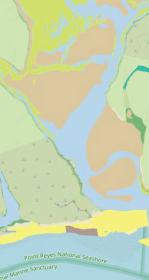
Enhanced Landscape Profile Modes in EcoAtlas deliver new insights
EcoAtlas is a mapping and geographic data visualization tool that continues to evolve to meet emerging needs. The toolset now includes new data layers and summaries to support the watershed planning, tracking, and reporting needs for the state.
Fri, Mar 8 2024
Storms drive emerging contaminants into the Bay
Rainfall washes contaminants from urban landscapes to San Francisco Bay, degrading water quality. In the latest RMP Update, we highlight the findings of a major multi-year screening study to quantify hundreds of emerging contaminants in stormwater.
Fri, Mar 8 2024
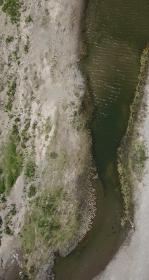
Vision from the Skies: Using UAS Surveys to Monitor a Key Restoration Project
At the McCosker Creek Restoration site, 3,000 linear feet of creek channel that previously had been flowing through underground culverts since the 1950s was daylighted and reconstructed. In addition, invasive and non native plants were removed and replaced with over 5,000 native plants.
Fri, Mar 1 2024
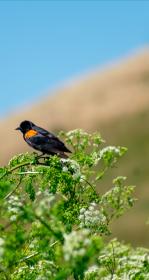
SFEI's Resilient Landscapes Program is excited to share a new publication in Ecology and Evolution from our Urban Nature team, Patterns in bird and pollinator occupancy and richness in a mosaic of urban office parks a
Wed, Feb 21 2024
Restoration Plan for the Laguna de Santa Rosa
The Laguna de Santa Rosa, an expansive freshwater wetland complex located in the Russian River watershed of Sonoma County, CA, is a vital ecological and cultural resource that has undergone considerable change over the past 150 years.

Fri, Jan 19 2024
The State released its SLR projections, and SFEI's Warner Chabot is featured in the comments
Future projections for sea level rise have been slightly reduced by the California Ocean Protection Council (OPC) in a report released by the agency today. The report projects an average rise of 9.6 inches by 2050, with the benefit of new data and expert interpretation.

Fri, Nov 17 2023
New Ecology for Health report forges tighter connections between human and ecological health
In KneeDeep Times, Nate Seltenrich reflects on the release of SFEI's latest report:
The same features in urban parks that support biodiversity can also benefit human health. Even biodiversity itself may help us — and the San Francisco Estuary Institute (SFEI) wants to see more of it. To that end, the nonprofit released an innovative report in September called Ecology for Health.
Tue, Oct 31 2023
SFEI’s Dr. Kelly Moran Receives 2023 Teng-chung Wu Pollution Prevention Award
On October 8, 2023, the San Francisco Bay Regional Water Quality Control Board presented the 2023 Teng-chung Wu Pollution Prevention Award to the Bay Area Pollution Prevention Group Pesticides Subcommittee. The award honors both the subcommittee and the staff who have led its activities. SFEI’s Dr. Kelly Moran helped found the subcommittee and led its work to prevent pesticides water pollution for more than a decade, turning over leadership to her associates Stephanie Hughes, and Tammy Qualls in 2021.
Sun, Oct 15 2023
Vehicle Tires Threaten Water Quality
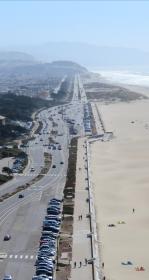
Update: On October 1, 2023: California Department of Toxic Substance Control (DTSC) 6PPD regulations became effective, making it the first government in the world to regulate the chemical content of vehicle tires to protect salmon. DTSC is requiring tire manufacturers to identify alternatives to the tire preservative that is the source of the chemical toxic to coho salmon.
Tue, Oct 3 2023
New $3 million grant to support harmful algae monitoring in the San Francisco Estuary
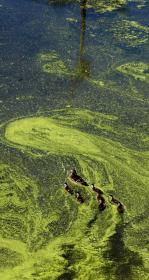
NOAA recently announced that it is awarding a $3-million grant, through its Monitoring and Event Response Research Program (MERHAB) to support the development of a harmful algal bloom (HAB) monitoring program for the San Francisco Estuary. The project, led by scientists at the San Francisco Estuary Institute (SFEI), US Geological Survey, and California Department of Water Resources (DWR), will leverage on-going research and monitoring activities in the Bay and Delta to build a robust system-wide HAB monitoring program for the Estuary.
Tue, Aug 29 2023
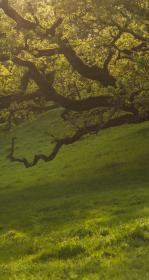
Restoration Plan for the Laguna de Santa Rosa Completed!
SFEI completed a Restoration Plan for the Laguna de Santa Rosa in the Russian River watershed. SFEI, Sonoma Water, and the Laguna de Santa Rosa Foundation worked with technical advisors, stakeholders, tribal representatives, and local landowners to develop the Restoration Plan that provides a restoration planning framework and conceptual designs for multi-benefit habitat restoration projects that support people and wildlife.
Wed, Jul 5 2023
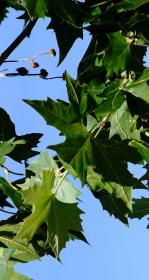
Recently completed “Sycamore Alluvial Woodland Restoration and Enhancement Suitability Study”
The “Sycamore Alluvial Woodland Restoration and Enhancement Suitability Study” addresses distribution and regeneration patterns and restoration strategies of sycamore alluvial woodland (SAW) habitat, a unique and relatively rare native vegetation community adapted to California’s intermittent riv
Thu, Jun 29 2023
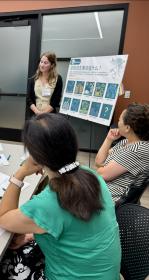
SFEI awarded over $7 million for Bay restoration and community partnerships
SFEI is the lead on three US Environmental Protection Agency Water Quality Improvement Fund grants totaling more than $7M.

Tue, May 9 2023
Scientists Raise Concerns About Popular COVID Disinfectants
The COVID-19 pandemic has boosted the unnecessary use of antimicrobial chemicals linked to health problems, ecological harm, and antimicrobial resistance, warn scientists in Environmental Science & Technology.
Thu, Jan 26 2023
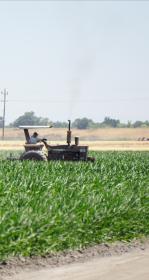
California moves towards sustainable pest management, phase out of highest-risk pesticides by 2050
On January 26, the Secretaries of the California Environmental Protection Agency (CalEPA) and California Department of Food and Agriculture (CDFA) joined leaders from a diverse range of backgrounds to unveil a roadmap of ambitious goals and actions to accelerate California’s systemwide transition
Thu, Jan 19 2023
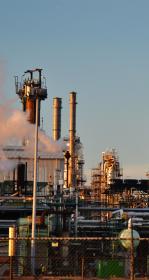
Scientists Advise a Major Shift in Chemicals Management in the U.S. and Canada
A new approach is essential to help governments and businesses eliminate harmful chemicals from daily use and exposure, according to a paper published today in Environmental Science & Technology.
Wed, Jan 18 2023
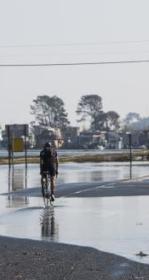
Groundwater Mapping Reveals New Vulnerabilities for the Bay Area
Featured in the Los Angeles Times, Mercury News, San Francisco Chronicle, San Francisco Examiner, KneeDeep Times, Marin Independent Journal, KQED, KALW, and ABC News, a new study sheds light on the hazards presented by rising groundwater. Pathways Climate Institute and SFEI have collaborated to produce maps that show where shallow groundwater, tied to sea-level rise, is an issue today and where it is likely to be a concern in the future as seas continue to rise.
Mon, Nov 14 2022
PFAS in San Francisco Bay Water
Scientists with the San Francisco Bay Regional Monitoring Program (RMP) detected PFAS, also known as “forever chemicals,” at parts per trillion concentrations in the waters of the Bay.
Mon, Oct 17 2022
SFEI's Recent Work with Unoccupied Aerial Systems (UAS)
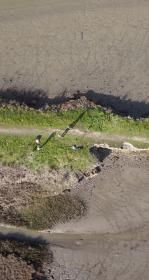
SFEI continues to leverage our Unoccupied Aerial Systems (UAS) capabilities to support conservation and monitoring efforts around the Bay. Two recent projects include monitoring for the Sears Point Restoration Project in San Pablo Bay, as well as conducting a number of flights to support the US Environmental Protection Agency (USEPA) filming of existing marshes and marsh restoration projects that help protect both communities and critical infrastructure.
Mon, Oct 17 2022
The SFEI Board of Director’s has evolved and grown in recent weeks. One member has transitioned and four new leaders have joined the Board. Two will represent BACWA (the Bay Area Clean Water Agencies), a

Thu, Oct 13 2022
The Pulse of the Bay aims to make the most important information available on water quality in the Bay accessible to water quality managers, decision-makers, scientists, and the public. The theme of the 2022 Pulse is "50 Years After the Clean Water Act." Nine different individuals or groups have contributed perspectives on progress to date and challenges ahead. This Pulse also includes summaries, with a historical perspective, on the major water quality parameters of concern in the Bay.
Mon, Oct 10 2022
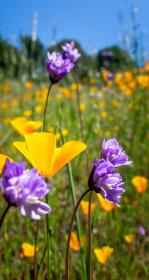
Introducing the Making Nature’s City Toolkit
In partnership with the International Union for the Conservation of Nature (IUCN) Urban Alliance, the San Francisco Estuary Institute (SFEI) has developed the Making Nature’s City Toolkit (makingnaturescity.org), an interactive, beautifully designed webs

Mon, Oct 3 2022
This 29th Annual Meeting marked the partial return to an in-person meeting after meeting virtually for the previous two years and was held on Monday October 3rd at the David Brower Center in Berkeley, CA.
Fri, Aug 26 2022
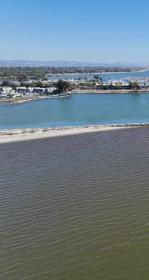
Harmful Algal Bloom identified in the San Francisco Bay
San Francisco Bay has been experiencing a major harmful algae bloom (HAB) event. Early signs of the developing bloom were reported in late July 2022 within the Oakland Estuary (between Alameda and Oakland).
Wed, May 18 - Thu, May 19 2022
Annual Policy Summit: How the SF Bay Area Will Become a National Model for Climate Adaptation
Fri, May 13 2022
Introducing the Landscape Scenario Planning Tool Version 2.0
In partnership with the Delta Stewardship Council, the San Francisco Estuary Institute has developed version 2.0 of the Landscape Scenario Planning Tool, a GIS-based analysis toolkit to evaluate user-designed land use and restoration scenarios for the Sacramento-San Joaquin Delta and Suisun Marsh