Review our work products
We provide easy access to thousands of SFEI’s reports, journal articles, books, conference papers/proceedings, factsheets, hearing summaries, maps, and more.
These printable and downloadable materials connect our science to action, cover a broad range of topics, and have many applications. This library is searchable and filterable. If you have difficulty finding the information you are looking for, please contact us at [email protected].
Programs & Topics
Select the program or topic of your interest among the nested filters below.
Integrated Watershed Modeling and Monitoring Framework to Support the Regional Monitoring Program
Author(s): Lester McKee | Kelly Moran | Jay Davis
2025
The Regional Monitoring Program (RMP) is transitioning from a watershed program predominantly using monitoring data and data-driven load estimation methods to support management decisions on polychlorinated biphenyls (PCBs) and mercury (Hg) to an integrated modeling and…
Author(s): Pedro Avellaneda | Lorenzo Flores | Lester McKee
2025
The San Francisco Bay Regional Watershed Spreadsheet Model (RWSM) was developed within the Regional Monitoring Program for Water Quality in San Francisco Bay (RMP) to estimate average annual regional and sub-regional scale pollutant loads to the Bay from stormwater. The RWSM…
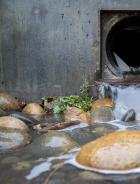
Screening Bay Area Stormwater for Emerging Contaminants: Summary for Managers
Author(s): Rebecca Sutton | Pedro Avellaneda | Miguel Méndez | Jennifer Dougherty | Alicia Gilbreath
2024
As part of a maturing science strategy, the Regional Monitoring Program for Water Quality in San Francisco Bay (RMP) focuses on monitoring and modeling of emerging contaminants in major pathways in an effort to track Bay contaminants back to their sources and better inform…
Author(s): Alicia Gilbreath | Lester McKee | Matthew Heberger | Kelly Moran
2024
The Sources, Pathways, and Loadings (SPL) Workgroup (WG) is one of the five active workgroups within the Regional Monitoring Program for Water Quality in San Francisco Bay (Bay; RMP). The Workgroup produces recommendations for collection, interpretation, and synthesis of data…

Author(s): Katherine Peter | Alicia Gilbreath | Melissa Gonzalez | Zhenyu Tian | Adam Wong | Donald Yee | Ezra Miller | Pedro Avellaneda | Da Chen | Andrew Patterson | Nicole Fitzgerald | Christopher Higgins | Edward Kolodziej | Rebecca Sutton
2024
In urban to peri-urban watersheds such as those surrounding San Francisco Bay, stormwater runoff is a major pathway by which contaminants enter aquatic ecosystems. We evaluated the occurrence of 154 organic contaminants via liquid chromatography coupled to tandem mass…
San Francisco Bay Watershed Dynamic Model (WDM) Progress Report, Phase 2
Author(s): Tan Zi | Alex Braud | Lester McKee | Melissa Foley
2022
The San Francisco Bay total maximum daily loads (TMDLs) call for a 50% reduction in mercury (Hg) loads by 2028 and a 90% reduction in PCBs loads by 2030. In support of these TMDLs, the Municipal Regional Permit for Stormwater (MRP) (SFBRWQCB, 2009, SFBRWQCB, 2015, SFBRWQCB,…
Author(s): Lester McKee | Alicia Gilbreath | Lisa Sabin
2022
Stormwater agencies in the San Francisco Bay Area are identifying watershed areas that are polluted with PCBs in order to prioritize management efforts to reduce impairment in the Bay caused by PCBs carried in stormwater. Water sampling during storms has been used to…
Author(s): Craig Jones | Jay Davis | Donald Yee
2022
This report presents a strategy and multi-year workplan for modeling polychlorinated biphenyls (PCBs), contaminants of emerging concern (CECs), and sediment in San Francisco Bay (the Bay). Robust in-Bay fate modeling is needed to address priority management questions that…
Author(s): Miaomiao Wang | Juliet Kinyua | Ting Jiang | Meg Sedlak | Lester McKee | Richard Fadness | Rebecca Sutton | June-Soo Park
2022
The combustion of structures and household materials as well as firefighting during wildfires lead to releases of potentially hazardous chemicals directly into the landscape. Subsequent storm-water runoff events can transport wildfire-related contaminants to downstream…
Pollutants of Concern Reconnaissance Monitoring Progress Report, Water Years 2015 - 2019
Author(s): Alicia Gilbreath | Jennifer Hunt | Lester McKee
2020
Reconnaissance monitoring for water years 2015, 2016, 2017, 2018 and 2019 was completed with funding provided by the Regional Monitoring Program for Water Quality in San Francisco Bay (RMP). This report is designed to be updated each year until completion of the study. At…
Author(s): Sarah Pearce | Lester McKee
2020
This report summarizes the precipitation, discharge, and sediment conditions observed from October 1, 2016 to September 30th, 2017 (Water Year (WY) 2017) in the Arroyo de la Laguna watershed, with a focus on the Arroyo Mocho watershed. This information was collected by the…
Optimal Selection and Placement of Green Infrastructure in Urban Watersheds for PCB Control
Author(s): Jing Wu | Pete Kauhanen | Jennifer Hunt | David Senn | Tony Hale | Lester McKee
2019
San Francisco Bay and its watersheds are polluted by legacy polychlorinated biphenyls (PCBs), resulting in the establishment of a total maximum daily load (TDML) that requires a 90% PCB load reduction from municipal stormwater. Green infrastructure (GI) is a multibenefit…
Author(s): Sarah Lowe | Pete Kauhanen
2019
This report describes the application of GreenPlan-IT’s Site Locator Tool to identify and rank candidate…
Author(s): Scott Dusterhoff | Sarah Pearce | Lester McKee | Carolyn Doehring | Julie Beagle | Katie McKnight | Robin Grossinger | Ruth Askevold
2017
Over the past 200 years, many of the channels that drain to San Francisco Bay have been modified for land reclamation and flood management. The local agencies that oversee these channels are seeking new management approaches that provide multiple benefits and promote…
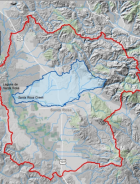
Author(s): Jing Wu | Pete Kauhanen | Sarah Lowe | Sarah Pearce | Josh Collins
2017
This summary memorandum presents technical recommendations to the 401 Certification and Waste Discharge Program (401 Program) of the State Water Resources Control Board (State Board) for a coherent, scientifically sound, repeatable, watershed approach to wetland restoration…
- 1. Wetland Beneficial Use Protection: Pilot Demonstration Project
- 2. Synthesis of Literature on Wetland Assimilation Capacities, Models, and Pollutant Loads...
- 3.A. Simulating Wetland Assimilation Capacity in the Lower Santa Rosa Creek Watershed Pilot Demonstration Area Using HSPF Model
- 3.B. Demonstration of a Watershed Approach to Wetland Restoration Planning Using GreenPlan-IT
- 4. Evaluating Wetland Beneficial Uses At Project and Watershed Scales
Author(s): Alicia Gilbreath | Lester McKee
2015
Urban runoff has been identified in water quality policy documents for San Francisco Bay as a large and potentially controllable source of pollutants. In response, concentrations of suspended sediments and a range of trace organic pollutants were intensively measured in dry…