Assessing the Bay’s Resilience to High Nutrient Loads
For decades, San Francisco Bay has experienced significant nutrient enrichment, largely from the region's 42 publicly-owned treatment works (POTWs), which process wastewater for the region’s 8 million people. Despite effective removal of other pollutants, POTWs release 50,000 kg of nitrogen daily into the Bay. While the Bay has historically resisted major impacts of nutrient enrichment, increasing phytoplankton levels and harmful algae occurrences raise concerns about its resilience.
The San Francisco Bay Nutrient Management Strategy (NMS) aims to understand nutrient impacts on the Bay, relying on an ever-evolving monitoring program, data synthesis, and numerical models to study nutrient sources, nutrient transformations, and water quality effects, guided by a 5-year plan to inform management decisions.
Understanding Nutrient Transport
Once introduced into the Bay, nutrients from wastewater and other sources disperse throughout the system via tides, wind, and currents, undergoing complex chemical reactions. Nutrient losses from the Bay occur through biological processes like denitrification and export to the Pacific Ocean. Effective nutrient management requires estimating nutrient transport and transformations, including understanding how individual sources impact nutrient concentrations spatially and temporally.
Nutrient Losses, Oxygen Levels, and Ecosystem Health
Despite substantial nutrient inputs, losses occur through phytoplankton-mediated transformations and transport pathways. The NMS investigates these cycles through intensive monitoring and synthesis, using advanced hydrodynamic and water quality models to test management scenarios and the consequences of future conditions.
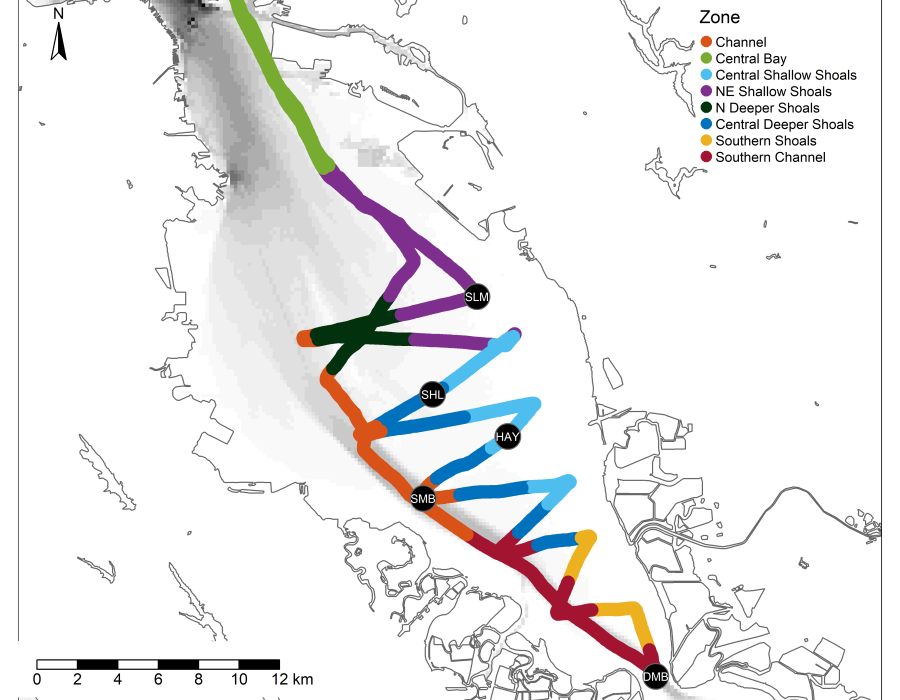
Phytoplankton dynamics are influenced by light availability and nutrients, with deep Bay channels maintaining low biomass except during stratification events, where lighter freshwater flows on top of denser saline seawater. Shallower parts of the Bay foster higher concentrations of phytoplankton biomass and can initiate larger algal blooms. Prolonged dissolved oxygen drops in some Lower South Bay sloughs underscore the ongoing need for research and management to address nutrient-related challenges in the Bay ecosystem.



ASSOCIATED STAFF