Browse Our Stories
Fri, Jun 26 2026
20 Years of Investigating Underregulated Chemicals
The Regional Monitoring Program for Water Quality in San Francisco Bay has grown into a world leader in studying under-regulated and poorly understood contaminants. The efforts have led to groundbreaking studies about forever chemicals, flame retardants, microplastics, pesticides, tire chemicals, and more—and inspired policy changes.
Fri, May 15 2026
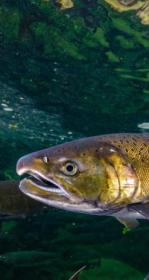
New Data on Salmon-Killing Chemical In San Francisco Bay
A new dataset on San Francisco Bay water includes some of the world's the first information about levels of the car tire chemical 6PPDQ in an estuary. Threatened steelhead trout may be susceptible to levels found in the Bay.
Fri, Mar 13 2026
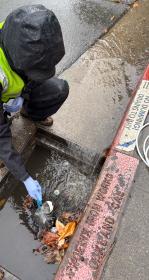
How Stormwater Studies Can Make the Bay Cleaner
As stormwater sampling across the San Francisco Bay Area reveals more poorly regulated chemicals, those who want clean water in the Bay face a tricky question: what can be done about it? The final part of a special feature series on stormwater monitoring.

Tue, Feb 17 2026
When rainstorms wash contaminants into the Bay, scientists can only sample stormwater in a few places at once. Three years of inventing and testing have led to a solution in the form of 15 briefcase-sized robots, with names like “Captain Capture” and “Missus Sippy,” to slurp up samples without human supervision onsite.

Thu, Feb 5 2026
Why The Fate of Antimicrobial Chemicals Matters for San Francisco Bay
Antimicrobial chemicals called QACs have soared in popularity since the COVID-19 pandemic, and are a possible threat to Bay water quality. A new study finds that sewage treatment plants remove 98% of QACs on average from wastewater—but that's not necessarily a success for human and environmental health.
Fri, Jan 9 2026
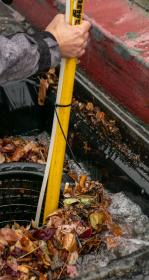
The Storm Chasers: What Stormwater Reveals About Pollution In San Francisco Bay
SFEI’s stormwater monitoring team has grown and is innovating techniques to further expand its influential studies. Part one of a special feature series on stormwater.
Fri, Nov 14 2025
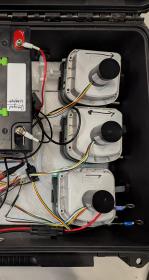
Winning Stormwater Robot Names Selected
Meet Captain Capture, Pre Sipitation, and our 13 other stormwater sampling robots we named with help from the public.
Tue, Aug 5 2025
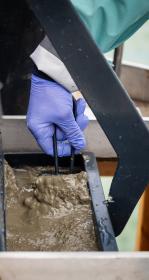
New Bay PFAS Data Show Reasons for Optimism and Concern
Monitoring for PFAS, or forever chemicals, has come a long way in the 16 years since the Regional Monitoring Program for Water Quality in San Francisco Bay (RMP) first tested water and sediment from the Bay for the toxic compounds. Forever chemicals are toxic and one of the most concerning under-regulated contaminants in San Francisco Bay.

Mon, Jun 30 2025
SFEI Scientist Interviewed on Microplastics for Maven's Notebook
Senior scientist Ezra Miller was interviewed in Maven's Notebook about SFEI's groundbreaking microplastics work. Miller discussed where microplastics in San Francisco Bay come from, the biggest unsolved questions our scientists are working on, and why focusing on sources is the best way to prevent microplastic pollution in the Bay.

Wed, Jun 25 2025
Fishing for "Forever Chemicals" In the Press: SFEI Study in Dozens of Media Outlets
Dozens of media outlets picked up our study that confirmed PFAS (“forever chemicals”) are widespread in ten species of popular fish to eat from San Francisco Bay, especially the South Bay.

Tue, May 20 2025
"Forever Chemicals" Found In Fish Through Most of Bay
More than a decade of monitoring found that ten species of popular fish to eat from San Francisco Bay may contain dangerous levels of “forever chemicals”—but where they’re caught in the Bay can make a big difference.

Wed, Feb 5 2025
SFEI is studying dryer emissions to find out if clothing dryers are a significant source of microplastic pollution in the San Francisco Bay. The study will measure the dryer emissions from single-family homes, laundromats, apartment buildings, and other shared laundry facilities.

Fri, Mar 8 2024
Storms drive emerging contaminants into the Bay
Rainfall washes contaminants from urban landscapes to San Francisco Bay, degrading water quality. In the latest RMP Update, we highlight the findings of a major multi-year screening study to quantify hundreds of emerging contaminants in stormwater.

Tue, Oct 31 2023
SFEI’s Dr. Kelly Moran Receives 2023 Teng-chung Wu Pollution Prevention Award
On October 8, 2023, the San Francisco Bay Regional Water Quality Control Board presented the 2023 Teng-chung Wu Pollution Prevention Award to the Bay Area Pollution Prevention Group Pesticides Subcommittee. The award honors both the subcommittee and the staff who have led its activities. SFEI’s Dr. Kelly Moran helped found the subcommittee and led its work to prevent pesticides water pollution for more than a decade, turning over leadership to her associates Stephanie Hughes, and Tammy Qualls in 2021.

Sun, Oct 15 2023
Vehicle Tires Threaten Water Quality
Update: On October 1, 2023: California Department of Toxic Substance Control (DTSC) 6PPD regulations became effective, making it the first government in the world to regulate the chemical content of vehicle tires to protect salmon. DTSC is requiring tire manufacturers to identify alternatives to the tire preservative that is the source of the chemical toxic to coho salmon.

Tue, May 9 2023
Scientists Raise Concerns About Popular COVID Disinfectants
The COVID-19 pandemic has boosted the unnecessary use of antimicrobial chemicals linked to health problems, ecological harm, and antimicrobial resistance, warn scientists in Environmental Science & Technology.
Thu, Jan 26 2023
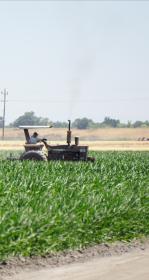
California moves towards sustainable pest management, phase out of highest-risk pesticides by 2050
On January 26, the Secretaries of the California Environmental Protection Agency (CalEPA) and California Department of Food and Agriculture (CDFA) joined leaders from a diverse range of backgrounds to unveil a roadmap of ambitious goals and actions to accelerate California’s systemwide transition
Thu, Jan 19 2023
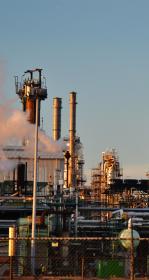
Scientists Advise a Major Shift in Chemicals Management in the U.S. and Canada
A new approach is essential to help governments and businesses eliminate harmful chemicals from daily use and exposure, according to a paper published today in Environmental Science & Technology.
Mon, Nov 14 2022
PFAS in San Francisco Bay Water
Scientists with the San Francisco Bay Regional Monitoring Program (RMP) detected PFAS, also known as “forever chemicals,” at parts per trillion concentrations in the waters of the Bay.
Mon, Apr 18 2022
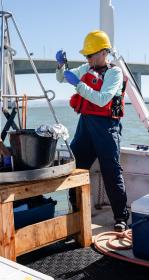
RMP Journal Article: Targeted Monitoring of Organophosphate Esters and Bisphenols
Organophosphate esters (OPEs) and bisphenols are two classes of mobile, endocrine-disrupting chemicals that are ubiquitously detected in environmental matrices due to high global production and use, particularly as plastic and polymer additives.

Fri, Feb 4 2022
Forum on PFAS elevates the perspectives of local fishing communities
Known as “forever chemicals” due to their persistence in the environment, per- and polyfluoroalkyl substances (PFAS) are a broad class of fluorine-rich specialty chemicals. Thousands of different PFAS are registered for use in consumer, commercial and industrial applications.
Thu, Jul 29 2021
SFEI Experts Assist California’s Safer Consumer Products Program
Recent studies by the San Francisco Estuary Institute (SFEI) and the Regional Monitoring Program (RMP) have pinpointed chemical and microplastic contami
Tue, Jan 19 2021
Dr. Kelly Moran Joins SFEI Staff
SFEI is excited to announce that veteran RMP contributor Dr.
Fri, Dec 4 2020
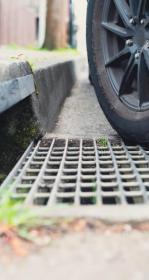
Toxic Tire Contaminant Found in Bay Area Stormwater
Scientists at the San Francisco Estuary Institute (SFEI) have found a highly toxic tire-related contaminant at levels lethal to coho salmon in stormwater flowing through four sites in the Bay Area. The contaminant, derived from a tire preservative, has been discovered by Washington state researchers to be responsible for high levels of coho salmon deaths in Puget Sound streams. These findings will inform a petition by state stormwater leaders to the Department of Toxic Substances Control to address pollution of California streams caused by tires.
Mon, Jul 13 2020
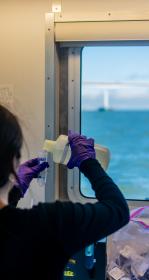
Bay RMP Non-Targeted Analysis Fact Sheet
In 2016, the RMP launched a novel investigation to detect new or unexpected contaminants in Bay waters, as well as treated sewage (or wastewater) discharged to the Bay.
Thu, May 7 2020
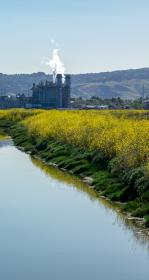
PFAS Stays in San Francisco Bay
SFEI senior scientist, Dr. Rebecca Sutton, published a new study in the journal Chemosphere showing that it will take almost 50 years for PFOA concentrations in water to stabilize in San Francisco Bay. This pales in comparison to the trajectory of PFOS concentrations that will not stabilize in sediment and fish for 500 years. PFOS and PFOA are harmful to humans, causing liver damage, endocrine disruption, fertility decrease, and cancer.

Tue, May 28 - Thu, Nov 28 2019
New Book Chapter: Pesticides in Our Homes Wash Down the Drain
A state-of-the-science review of current-use pesticides in wastewater, led by SFEI senior scientist Dr. Rebecca Sutton, indicates this pollution pathway is significant and should not be overlooked.
Fri, Dec 14 2018
Medicating the Bay: RMP Science featured in Estuary News
Highlighted in the December 2018 issue of Estuary News, a new report from the Bay’s Regional Monitoring Program documents the presence of numer
Fri, Dec 29 2017
Non-Sticks Stick Around: Estuary News highlights findings from new RMP study
Estuary News writer Kristine Wong interviewed SFEI’s Meg Sedlak, lead scientist on the latest RMP
Wed, Nov 8 2017
RMP Study in the News: “Dog and cat flea treatments suspected of polluting San Francisco Bay”
As a result of summary information presented in the latest Pulse of the Bay (see below), the San Jose Mercury News published an article based