Review our work products
We provide easy access to thousands of SFEI’s reports, journal articles, books, conference papers/proceedings, factsheets, hearing summaries, maps, and more.
These printable and downloadable materials connect our science to action, cover a broad range of topics, and have many applications. This library is searchable and filterable. If you have difficulty finding the information you are looking for, please contact us at [email protected].
Programs & Topics
Select the program or topic of your interest among the nested filters below.
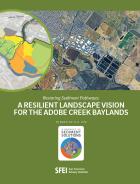
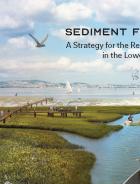
Restoring Sediment Pathways: A Resilient Landscape Vision for the Adobe Creek Baylands
Author(s): Emma Sevier | Katie McKnight | Kendall Harris | Scott Dusterhoff | Ruth Askevold | Ben Satzman
2026
Restoring Sediment Pathways: A Resilient Landscape Vision for the Adobe Creek Baylands synthesizes science and community priorities into a nature-based approach for improving the resilience and ecological functioning of, and community and Tribal access to, the Adobe…
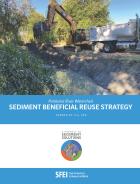
Author(s): Sarah Pearce | Kyle Stark
2025
Sediment is a critical yet often overlooked component of healthy stream, wetland, and bayland ecosystems. In the Petaluma River Operational Landscape Unit (OLU), decades of development, land-use changes, and channel modifications have disrupted natural sediment transport and…
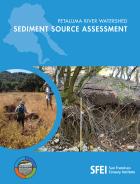
Author(s): David Peterson | Kyle Stark | Sarah Pearce | Scott Dusterhoff
2025
Over the past several decades, the average annual sediment supply from the Petaluma River watershed to the channel network is estimated to be 59,100 t/yr, equivalent to an average annual sediment yield of 184 t/km2/yr. This sediment source assessment quantifies average annual…

Conceptual Understanding of Fine Sediment Transport in San Francisco Bay
Author(s): Katie McKnight | Alex Braud | Scott Dusterhoff | Letitia Grenier | Sam Shaw | Jeremy Lowe | Melissa Foley | Lester McKee
2023
Sediment is a lifeblood of San Francisco Bay (Bay). It serves three key functions: (1) create and maintain tidal marshes and mudflats, (2) transport nutrients and contaminants, and (3) reduce impacts from excessive human-derived nutrients in the Bay. Because of these…
Author(s): Lester McKee | Alicia Gilbreath | Lisa Sabin
2022
Stormwater agencies in the San Francisco Bay Area are identifying watershed areas that are polluted with PCBs in order to prioritize management efforts to reduce impairment in the Bay caused by PCBs carried in stormwater. Water sampling during storms has been used to…
Author(s): Scott Dusterhoff | Katie McKnight | Letitia Grenier | Nate Kauffman
2021
This report analyses current data and climate projections to determine how much natural sediment may be available for tidal marshes and mudflats and how much supplemental sediment may be needed under different future scenarios. These sediment supply and demand estimates are…
Author(s): Sarah Pearce | Lester McKee | Alison Whipple | Tami Church
2021
Historic and current regional management of watersheds and channels for water supply and flood control across the San Francisco Bay Area has cut off much of the coarse sediment that was historically delivered to the Bay. Here we define coarse sediment as having grain sizes…
Author(s): Katie McKnight | Scott Dusterhoff | Robin Grossinger | Ruth Askevold
2018
This report proposes a multi-faceted redesign of the South San Francisco Bay shoreline at the interface with Calabazas and San Tomas Aquino creeks. Recognizing the opportunities presented by changing land use and new challenges, such as accelerated sea-level rise, we explore…