Sediment Management for Watershed-Bayland Ecosystem Resilience
Project Overview
Sediment is becoming an increasingly precious resource for maintaining baylands along the shoreline around San Francisco Bay. As sea level rises, sediment needs to deposit on baylands (marshes and mudflats) to allow them to rise in elevation and continue to provide vital ecosystem services. However, there may not be enough sediment naturally reaching San Francisco’s tidal marshes to keep pace with sea level rise. This may mean greater flood risk, loss of marsh habitat and biodiversity, decreased water filtration, and reduced drawdown of carbon.
Sediment Solutions is a timely and innovative project that builds on SFEI’s past work, operationalizing cutting-edge science to inform management approaches that take advantage of natural processes to provide more creek sediment to baylands, increase resilience to future environmental conditions, and enhance creek health. With study areas in North Bay, East Bay, and South Bay, the project will provide new guidance for management strategies that support flood risk management and ecosystem health benefits throughout the region.
Sediment Solutions includes close collaboration among many regional partners, including water agencies, restoration practitioners, regulatory agencies, cities, community based organizations, Tribal representatives, and other stakeholders. The project’s findings and outputs will be shared widely through a series of workshops and presentations, as well as via the project website.
Funding for the project comes from the EPA’s Water Quality Improvement Fund and Sonoma County Water Agency (Sonoma Water).
Sediment Solutions builds on SFEI’s previous successful WQIF-funded efforts, including Healthy Watersheds Resilient Baylands’ collaborative approach to creek-bayland restoration scenarios and Preparing for the Storm’s approach to the beneficial reuse of watershed sediment.
Project Components
Sediment Reuse Strategies and Pilot Projects
Historical and present day watershed management practices have decreased the volume of sediment that was once naturally delivered to the Bay. Creeks and streams have been dammed, diverted, or altered, sometimes causing sediment buildup in the lower parts of the channel. Sediment removed from flood control channels and soil excavated in construction projects is often taken to landfill as a waste product. In this component of the project, SFEI will 1) develop watershed sediment reuse strategies, and 2) support pilot sediment reuse implementation projects for the North Bay (partnering with Sonoma Water) and the South Bay (partnering with Santa Clara Valley Water (Valley Water)).
The primary focus of the watershed sediment reuse strategies will be beneficial reuse of sediment removed from flood control channels within tidal marsh restoration and shoreline adaptation projects. The strategies will build from recommendations from a past EPA-funded SFEI report, Towards a Regional Coarse Sediment Strategy for the Bay Area, developing a “playbook” that details specific management actions for increasing sediment reuse within each area. The strategies will be built from a quantitative analysis of the historical flood control channel sediment volumes that have gone to landfill, and specific challenges regarding beneficial reuse to date. These results will be used as the starting point for identifying watershed-specific opportunities for increasing sediment reuse. SFEI and San Francisco Estuary Partnership (SFEP) will facilitate workshops with the flood control agency partners, watershed and bayland restoration practitioners, and regulatory agency representatives to identify these opportunities, which may include logistical changes to current operations (e.g. connecting watershed sediment supply with bayland sediment demand over space and time) and a review of thresholds that determine sediment reuse suitability. From these opportunities will come the suite of near- and longer-term management actions that make up the strategy.
The first step towards implementation of the watershed sediment reuse strategies will be pilot projects to increase the reuse of flood control channel sediment. Each pilot project will be focused on Sonoma Water or Valley Water implementing deliberate choices within a sediment removal project that will lead to more beneficial uses compared to the current fates, and assessing environmental impacts. Each pilot implementation project will be documented with a factsheet for outreach to aid with future projects and to provide lessons to and encourage other agencies around the region.
Visions for Re-establishing Creek-Marsh Connections
Bay Area creeks have been heavily modified for flood control and development. Actions like channel extension, straightening, widening, and construction of levees have disconnected creeks from their surrounding floodplains and downstream baylands. Redesigning creeks to drain directly into tidal marshes provides a natural path for sediment delivery that will support long-term marsh resilience to rising sea levels.
This component of the project will advance planning in the North Bay (Lower Adobe Creek in Sonoma County) and East Bay (Lower Rheem Creek in Contra Costa County). SFEI will work with SFEP, The Watershed Project, and Friends of the Petaluma River to convene workshops with local communities, agency partners, regulatory agencies, restoration practitioners, and Tribal representatives to develop restoration concepts for the two creeks, and produce a Resilient Landscape Vision for each site. The Visions will reflect an alignment of restoration with community priorities, for example for flood management, marsh resilience, food web support, improved water quality, and other ecological, cultural, and recreational benefits. Both Visions will incorporate input from Tribal representatives, regarding the protection and enhancement of cultural resources. SFEI has conducted a similar collaborative visioning process in the South Bay and other areas in the past.
Major goals of the visioning process are to advance equity in environmental decision-making by working directly with Tribal representatives and local communities to develop the Visions, and to improve the ecosystem services delivered to local communities from each creek and marsh.
Future Watershed Sediment Dynamics
Watershed sediment dynamics influence physical and ecosystem processes that sustain habitat for native species and affect the conveyance of flow throughout the channel and floodplain network. These sediment dynamics are driven by geomorphic controls as well as external factors such as precipitation patterns, land use, and channel modification. Expected future shifts in precipitation patterns could drastically alter flood flows, erosion patterns, and sediment delivery within Bay Area watersheds. This component of the project seeks to assess and support the watershed sediment supply needed by marshes and mudflats to keep pace with sea level rise, while also supporting healthy stream and riparian ecosystems.
This component of the project will focus on assessing sediment dynamics and developing management recommendations in a North Bay and South Bay watershed. SFEI is partnering with Sonoma Water and the Sonoma Resource Conservation District on an analysis of the Petaluma River watershed in the North Bay, and with Valley Water on an analysis of the San Tomas Aquino Creek watershed in the South Bay. In both watersheds, SFEI will assess current sediment sources, model current and future flow and sediment dynamics under different temperature and precipitation scenarios, and identify current and future erosion/deposition hotspots. SFEI will then work with technical advisors and stakeholders to assess a suite of watershed management scenarios aimed at optimizing flow and sediment transport for supporting both marsh-mudflat and watershed ecosystems. Scenarios may include Green Stormwater Infrastructure implementation and restoration of floodplain and stream habitat. For both watersheds, scientists will evaluate how these actions support stream ecosystem health and benefit biodiversity throughout the watershed. The final synthesis reports for both watersheds will include projections of future sediment supply and dynamics, and recommended management actions to benefit watershed health, bayland health, and resilience to future environmental conditions. The findings will enable land managers in the study watersheds to take advantage of natural processes to achieve desired ecosystem benefits, today and in the future. The developed approach can then be applied in watersheds throughout the region.
Coordination and Outreach
Sediment Solutions aims to help inform future projects and provide lessons to other agencies around the region. The Coordination and Outreach component of the project focuses on disseminating the project outputs and advancing innovative tools and approaches that meet bayland sediment restoration needs and achieve long-term resilience.
Communication and coordination with stakeholders will occur throughout the course of the project. SFEI will hold annual meetings to dialogue with stakeholders and to receive input on all project phases. Early meetings will focus on understanding stakeholder values and goals for the sites in question, as well as how to include stakeholder expertise throughout the project. Subsequent annual meetings will update this dialogue, provide the opportunity for two-way transfer of expertise, and allow for adjustments to the stakeholder process. SFEI staff also will give presentations at key conferences such as the State of the Estuary Conference and at local partner organization meetings.
Regional Sediment Forums organized over the course of the project will bring together regulatory agency partners, water agency and municipal partners, restoration practitioners, construction representatives, NGOs, community organizations, and scientists. Discussion will focus on innovative approaches for meeting the future sediment need for Bay marshes and mudflats, and topics may include efforts such as regional coordination of upland excavated sediment, beneficial reuse, and peat farming to build elevation in marsh restoration projects.
Partnering with SFEP’s State of the Estuary Report, SFEI will also help develop a regional sediment indicator for baylands resilience. The indicator will show the current status of the sediment deficit across the Bay and include a trend score, helping the region track progress toward eliminating the current sediment deficit and achieving future resilient marshes and mudflats.
Products
Technical report: Petaluma River Watershed Sediment Source Assessment
Strategy: Petaluma River Watershed Sediment Beneficial Reuse Strategy
Vision: Lower Adobe Creek Vision Report
Meetings and Recordings
December 19th, 2023 Annual Meeting
January 18th, 2024 Stakeholder Meeting
Petaluma River Watershed Beneficial Sediment Reuse Workshop (May 1, 2024)
Lower Adobe Creek Vision Workshop (August 19, 2024)
2025 Annual Meeting (April 15, 2025)
Regional Sediment Forum (October 29, 2025 at State of the Estuary Conference)
Lower Rheem Creek Vision Workshop (November 5, 2025)
2026 Annual Meeting (February 2026)
Upcoming Meetings

































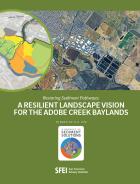
Restoring Sediment Pathways: A Resilient Landscape Vision for the Adobe Creek Baylands synthesizes science and community priorities into a nature-based approach for improving the resilience and ecological functioning of, and community and Tribal access to, the Adobe Creek Baylands.
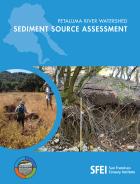
Over the past several decades, the average annual sediment supply from the Petaluma River watershed to the channel network is estimated to be 59,100 t/yr, equivalent to an average annual sediment yield of 184 t/km2/yr.
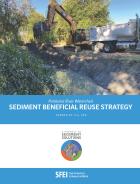
Sediment is a critical yet often overlooked component of healthy stream, wetland, and bayland ecosystems.
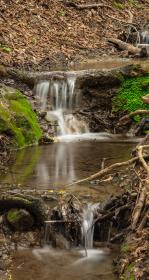
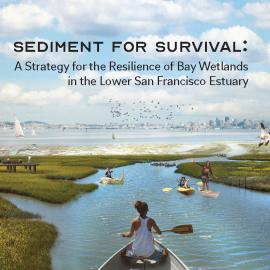
Sediment for Survival report released
SFEI worked with local, state, and federal science experts to develop the new Sediment for Survival report.
“Towards a Coarse Sediment Strategy for the Bay Area” completed!
The release of “Towards a Coarse Sediment Strategy for the Bay Area” represents a step forward towards beneficially reusing coarse flood control channel sediment by outlining reuse challenges, and identifying i