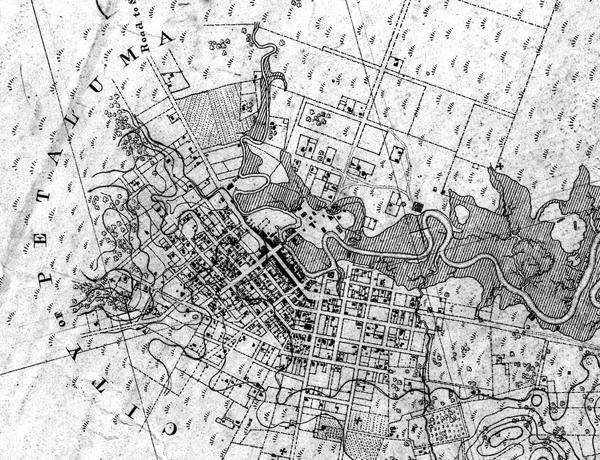
This project reconstructs the historical hydrology and ecology of the Petaluma River watershed prior to major Euro-American modification. It demonstrates the efficacy of historical hydrology and ecology in identifying and prioritizing multi-benefit restoration opportunities.
Prior to Spanish and American settlement of the region, the Petaluma River watershed supported a dynamic and interconnected network of streams, riparian forests, freshwater wetlands, and tidal marshes. These habitats were utilized by a wide range of plant and animal species, including a number of species that are today listed as threatened or endangered such as Ridgway’s Rail, Black Rail, salt marsh harvest mouse, California red-legged frog, Central California Coast steelhead, and soft bird’s beak.
Agricultural and urban development beginning in the mid-1800s has significantly altered the landscape, degrading habitat for fish and wildlife and contributing to contemporary management issues such as flooding, pollutant loading, erosion, and sedimentation. While many natural areas and remnant wetlands exist throughout the watershed – most notably the Petaluma Marsh – their ecological function is in many cases seriously impaired and their resilience jeopardized by climate change and other future stressors.
Multi-benefit wetland restoration strategies, guided by a thorough understanding of landscape history, can simultaneously address a range of chronic management issues while improving the ecological health of the watershed, making it a better place to live for both people and wildlife.
Printed copies are available from purchase from Amazon.com. The report is also available for free download.







This study reconstructs the historical landscape of the Petaluma River watershed and documents the major landscape changes that have taken place within the watershed over the past two centuries.