A Stubborn Problem in the Bay
Polychlorinated biphenyls (PCBs) are extremely persistent synthetic chemicals that were heavily used from the 1930s to the 1970s in hundreds of industrial and commercial applications. Federal legislation in 1979 banned their production and sale. After decades of PCB use, San Francisco Bay was left with a legacy of contamination spread widely across the landscape of the watershed, mixed deep into the sediment of the Bay, and moving through the food web.
More than forty years after the ban, PCBs are still far higher than the fish tissue cleanup target of 10 parts per billion and are not showing clear signs of decline. The RMP PCB Workgroup provides a forum to identify priority information needs that support PCB management in the region, and planning and implementing studies to address those needs.
Spotlight on Recent Work
High Concentrations in Sport Fish
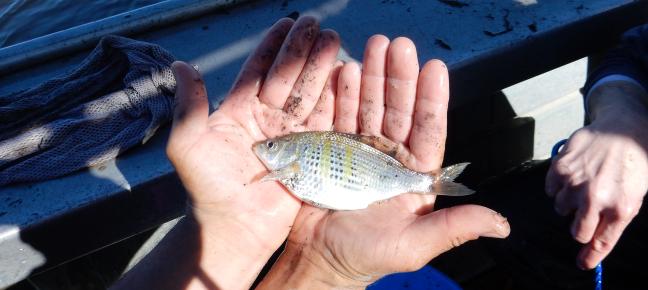
Shiner surfperch, a key sport fish indicator species for PCBs, had a Bay-wide average concentration 18 times higher than the cleanup target in 2019. Concentrations in shiner surfperch show limited signs of decline. Monitoring will continue in 2024 as part of RMP Status and Trends sport fish monitoring.
Focus on the Bay Margins
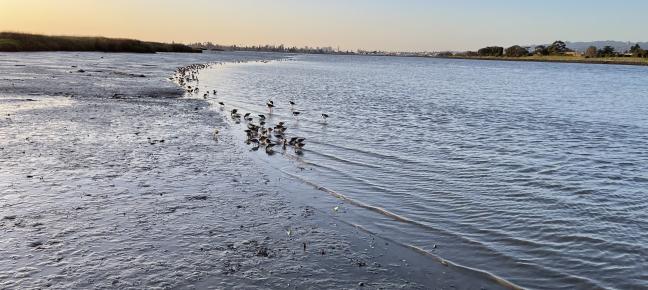
Assessments of three “priority margin areas” (the Emeryville Crescent, San Leandro Bay, and the Steinberger Slough/Redwood Creek area) established conceptual models as a foundation for monitoring responses to load reductions and for planning management actions. A key finding was that PCB concentrations in sediment and the food webs in the Crescent and San Leandro Bay could potentially decline fairly quickly (within 10 years) in response to load reductions from the watershed.
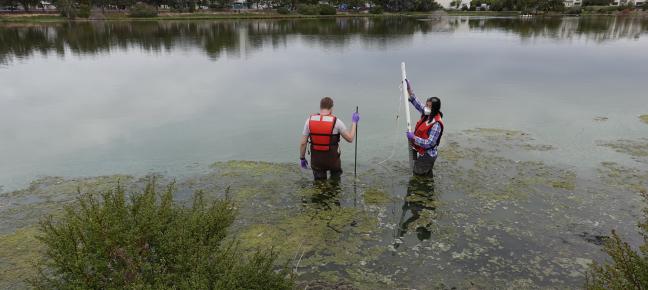
Field Studies to Inform Cleanup
In spite of the expected responsiveness of San Leandro Bay, extensive field studies have documented persistent sediment contamination that is likely due to continuing inputs from the watershed via stormwater.
Science Advisors
The scientific advisory panel for the Bay RMP PCB Workgroup consists of two internationally-renowned modeling experts:
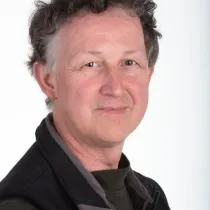

SFEI Lead Scientist

For more information, please contact Jay Davis at [email protected].
Latest News
Tue, Mar 25 2025
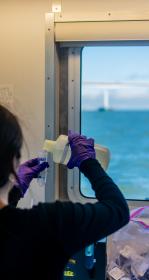
Sampling the Storm: Tracking PCBs in Bay Area Waterways
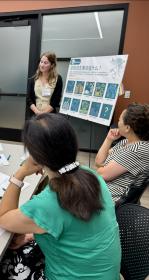
PCBs Workgroup Meetings
Thu, Jul 30 2026, 1 - 4pm
Bay RMP PCB Workgroup Meeting #2
Fri, May 8 2026, 9am - 4pm
Bay RMP PCB Workgroup Meeting #1
Wed, Jun 18 2025, 9am - 4pm
Bay RMP PCB Workgroup Meeting
Wed, May 28 2025, 9am - 12pm
Bay RMP PCB Workgroup Meeting
Tue, Feb 25 2025, 9am - 1pm
Bay RMP PCB Workgroup Meeting
Thu, May 30 2024, 9am - 3pm
PCB Workgroup Meeting
Recent Publications

Study of Historic Loading and Spatial Distribution of Polychlorinated Biphenyls (PCBs) using Passive Sampling Devices (PSDs) in the Steinberger Slough and Redwood Creek Complex in San Francisco Bay, California, USA
To assess historical PCB loading and spatial distribution in the Steinberger Slough and Redwood Creek (SS/RC) complex, a passive sampling campaign was conducted in the summer of 2020 at eight selected sites. Passive…
ASSOCIATED STAFF