Program Structure
The San Francisco Bay Regional Monitoring Program for Water Quality (RMP) governance structure is composed of a Steering Committee, Technical Review Committee, and workgroups. Strategy teams can also be created to focus on specific program interests. SFEI is the implementing entity for the RMP. All RMP meetings are open to the public.

*The RMP's governing bodies are separate from the Nutrient Management Strategy, which was created in 2014 as a separate entity. However, the RMP contributes some funding to the NMS for ongoing nutrients monitoring, and for special studies through the NMS Science Program. The steering committees of these two SFEI-administered programs maintain frequent communication.
RMP Committees
- Steering Committee
-
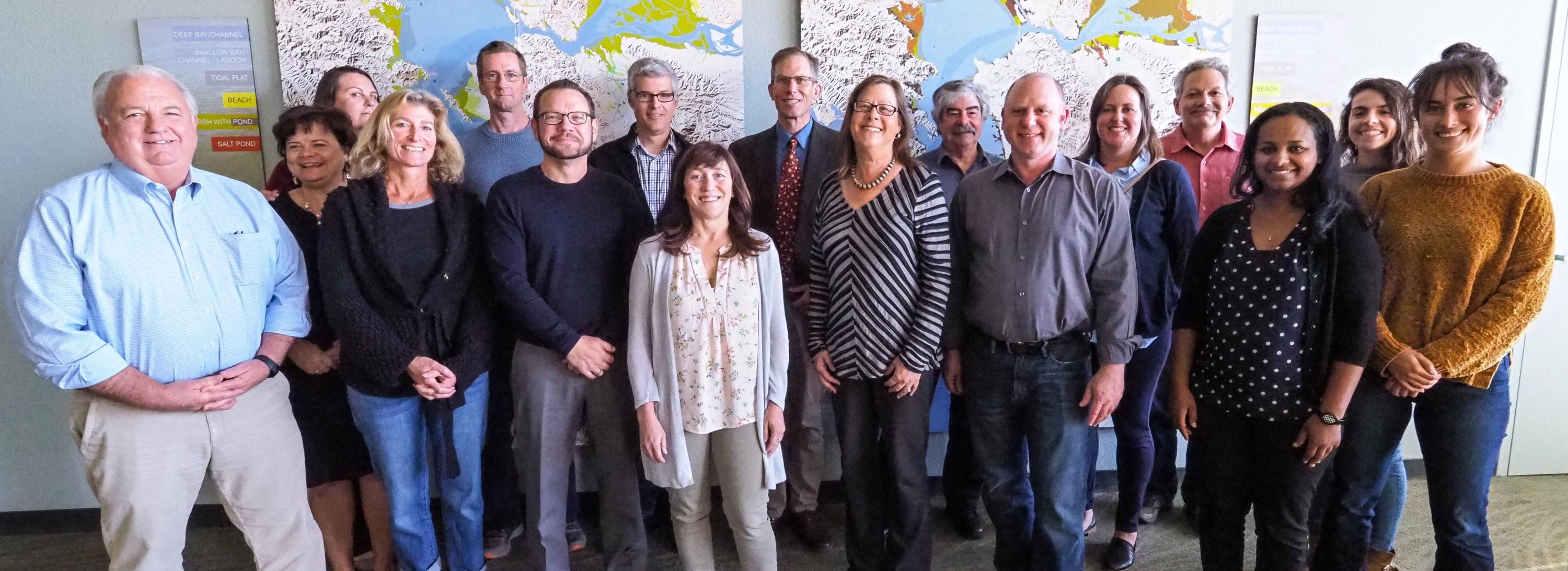
The Steering Committee is a formal stakeholder body, structured to represent all of the RMP participant groups. The Steering Committee is the decision-making body for the RMP. All recommendations and information from various groups in the RMP governance structure ultimately flow to the Steering Committee to support its decision-making. Steering Committee meetings are held quarterly. See Details.
- Technical Review Committee
-
Similar to the Steering Committee, the Technical Review Committee (TRC) is a formal stakeholder body, structured to represent the Program Participant Groups. The TRC provides oversight of the technical content and quality of scientific investigations conducted for the RMP and serves as an advisory body and critical link for recommendations that emanate from workgroups and strategy teams and advance to the Steering Committee. TRC meetings are held quarterly. See Details.
- Workgroups (for special studies on priority topics)
-
High priority water quality topics covered by the RMP are primarily addressed by five workgroups: the Emerging Contaminants Workgroup; the Sources, Pathways, and Loadings Workgroup; the PCB Workgroup; the Sediment Workgroup; and the Microplastics Workgroup. Workgroups consist of scientists who are currently studying the Bay, invited science advisors who are nationally-recognized experts in their field, federal and state regulators, and representatives from discharger groups participating in the RMP. Each workgroup meets one to three times a year to address issues concerning the planning and implementation of RMP special studies and relevant elements of Status and Trends monitoring. See Workgroup details on the Special Studies on Priority Topics page.
- Strategy Teams
-
RMP strategy teams provide a forum for local scientists and stakeholders to plan RMP studies. Strategy teams meet as needed to develop long-term RMP study plans for addressing high priority topics.
The RMP also participates in the San Francisco Bay Nutrient Management Strategy, which is developing the science needed for informed decisions about managing nutrient loads and maintaining beneficial uses within the Bay.
RMP Strategy Teams
RMP strategy teams provide a forum for local scientists and stakeholders to plan RMP studies. Strategy teams meet as needed to develop long-term RMP study plans for addressing high priority topics. The only strategy team that is currently meeting is the Sport Fish Strategy Team.
Sport Fish Strategy Team
The RMP Sport Fish Strategy Team includes local stakeholders, agency representatives, and scientists with an interest in the RMP’s long-term monitoring of contaminants in sport fish from San Francisco Bay. RMP sport fish monitoring is performed on a five-year cycle, and includes monitoring of mercury, PCBs, PFAS, and other contaminants in a wide range of fish species. This monitoring provides critical information for tracking water quality trends and for updating the fish consumption advisory for the Bay.
Meetings (coming soon)
Key Resources
- Bay RMP Charter
- Multi-Year Plan
- Detailed Annual Workplans and Budgets
- Starting a New Workgroup
- Consideration of MMP Proposals
RMP History and Document Archives
The RMP has many documents related to its establishment as well as early monitoring reports, and retrospectives.
RMP Governance Meetings
Tue, Mar 25 2025, 9am - 3pm
Bay RMP Technical Review Committee Meeting
Mon, Jan 27 2025, 9am - 4pm
Bay RMP Steering Committee Meeting
Thu, Dec 12 2024, 9am - 3pm
Bay RMP Technical Review Committee Meeting
Mon, Nov 4 2024, 9am - 4:30pm
RMP Multi Year Plan / Steering Committee Meeting
Tue, Sep 24 2024, 9am - 3pm
Bay RMP Technical Review Committee Meeting
Mon, Aug 12 2024, 9am - 3pm
Bay RMP Steering Committee Meeting
Recent Publications
2026 Bay RMP Multi-Year Plan
The purpose of this document is to guide efforts and summarize plans developed within the RMP. The intended audience includes representatives of the many organizations who directly participate in the Program. This document…
2026 Bay RMP Detailed Workplan and Budget
In 2026, the Regional Monitoring Program for Water Quality in San Francisco Bay (RMP) is entering its 34th year of collecting data and communicating information to support water quality management decisions. This Detailed…
Integrated Watershed Modeling and Monitoring Framework to Support the Regional Monitoring Program
The Regional Monitoring Program (RMP) is transitioning from a watershed program predominantly using monitoring data and data-driven load estimation methods to support management decisions on polychlorinated biphenyls (PCBs…