Assessing stream and wetland condition
The California Rapid Assessment Method (CRAM) is a cost-effective and scientifically defensible method for assessing the condition of streams and wetlands across California. It provides a high-level overall snapshot of habitat condition, as well as detailed data that can inform project design, adaptive management, or trigger additional, more detailed monitoring if needed.

SFEI is a CRAM Leader
SFEI develops, hosts and manages the California Rapid Assessment Method (CRAM) website and its associated database containing over 10,000 landscape assessments from across the state. The comprehensive site features statewide support for CRAM data management, training, documentation, and reporting tools to monitor and assess over seven kinds of wetlands using standardized rapid assessment protocols developed by the CRAM Steering Committee (Level-2 Committee).
CRAM assessments are conducted by trained practitioners; training is foundational to the program and is the most essential component of maintaining statewide quality control. Our staff administer and lead the statewide training program, offering multiple practitioner and manager level training sessions across the state each year.


Our staff regularly works with the California Wetlands Monitoring Workgroup (CWMW), the EPA, and other state and local agencies to develop additional CRAM tools that enhance the power of CRAM assessment data within the WRAMP framework. These tools include development of watershed, ecoregional, and statewide cumulative distribution function (CDF) estimates, and wetland-specific habitat development curves (HDC). CDFs and HDCs support the evaluation of individual restoration/mitigation project performance and development over time.
The statewide CWMW Level 2 Committee oversees the development and implementation of rapid assessment methods in the state. Our staff are active participants and leaders on the committees, contributing to the continual development and improvement of rapid assessment methods, including CRAM.


SFEI supports (1) local, state and federal agencies that use CRAM as a program-level monitoring tool, and (2) agencies and practitioners using CRAM within restoration or mitigation projects. The level of support is tailored to user needs, and varies from responding to simple inquiries to preparing formal written guidance and serving on advisory committees. In addition to providing support, our staff also conducts CRAM assessments as experienced practitioners, for individual projects and large-scale regional monitoring programs.


Latest News
Featured Projects
Recent Publications
Lake Silveira CRAM Assessments: Mitigation Monitoring Report Post-Construction - Year 5 (2025)
The Santa Clara Valley Water District’s (Valley Water) Upper Llagas Creek Flood Protection Project (Project) aims to increase flood protection within the City of Morgan Hill and surrounding unincorporated areas. Project…
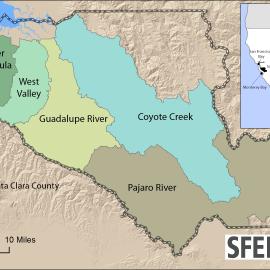
Guadalupe River Watershed Reassessment 2022: 10-Year Reassessment of the Ecological Condition of Streams Based on the California Rapid Assessment Method
The baseline survey of ecological condition of streams within the Guadalupe River watershed was completed in 2012, and this reassessment survey was completed ten years later in 2022. The survey focuses upon stream…
West Valley Watershed Assessment 2018: Study Area Extent, Stream Survey Design, Sample Frame, and Sample Draw
This memorandum describes the steps taken by the D5 Project and SFEI project team to identify the
extent of the West Valley watershed study area, define the CRAM stream survey design parameters,
and complete the…
ASSOCIATED STAFF