Lessons for greening in San Francisco and beyond.
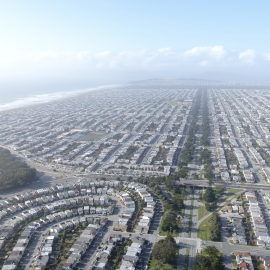
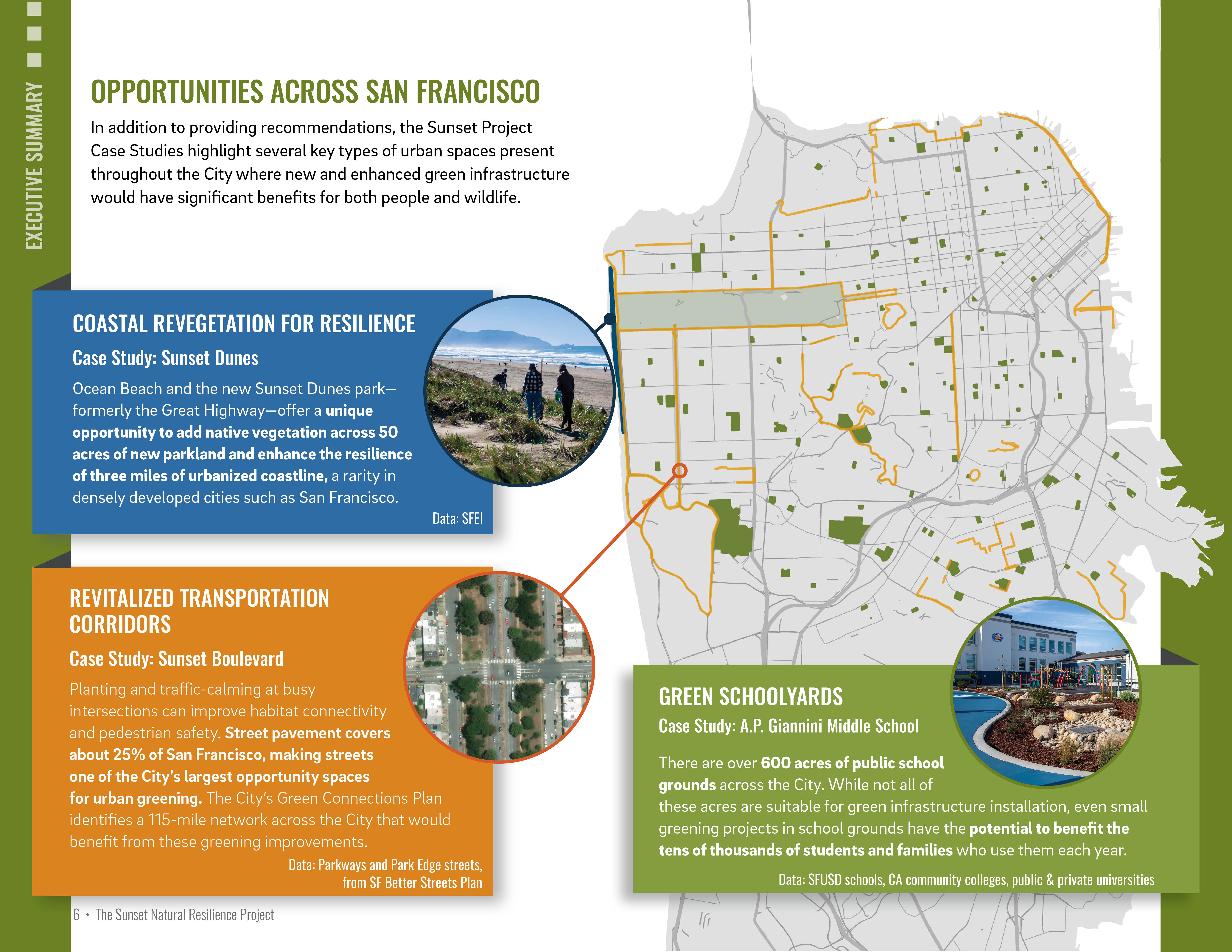
A new report details tangible lessons for urban greening gleaned from The Sunset Natural Resilience Project, which explores how to make San Francisco’s Sunset neighborhood greener and more resilient. It draws on case studies including native re-vegetation at Ocean Beach and the new Sunset Dunes Park, a major schoolyard greening project, plantings beside an in-the-works Indigenous Community Garden, and guidance for a vibrant wildlife corridor along Sunset Boulevard.
Case Studies
Recommendations from each of the case studies are inspirational yet feasible. They encourage creative thinking when communities redesign public spaces. They also serve as a practical reference for implementing nature-based solutions across common places in the San Francisco urban landscape: urbanized coastlines, schoolyards, green corridors, and park open spaces.
Policy Implications
The final chapter of the report connects lessons learned to policy. It highlights strengths and gaps that make implementation uneven, and clarifies how to implement multi-benefit greening across departments and jurisdictions. Recommendations offer approaches that can be scaled within San Francisco and adapted by other California cities working within similar planning frameworks. Key takeaways from the policy memo included:
- Multi-agency coordination is key to successful implementation of urban greening projects;
- Dedicated funding for maintenance is essential, yet in short supply;
- Native landscaping can be more resilient to environmental changes over time;
- Green stormwater infrastructure helps address San Francisco’s problems with stormwater flooding and combined sewer system overflows.
Together, the case studies and recommendations show how thoughtful urban design can advance multiple goals at once.
Read about the Sunset Natural Resilience Project and our recent report with policy recommendations, “Using Nature-Based Approaches to Support People and Wildlife in a Changing Climate.”