Could a neglected waterway running through the heart of Stockton become a vibrant green space that brings people, nature, and neighborhoods together?
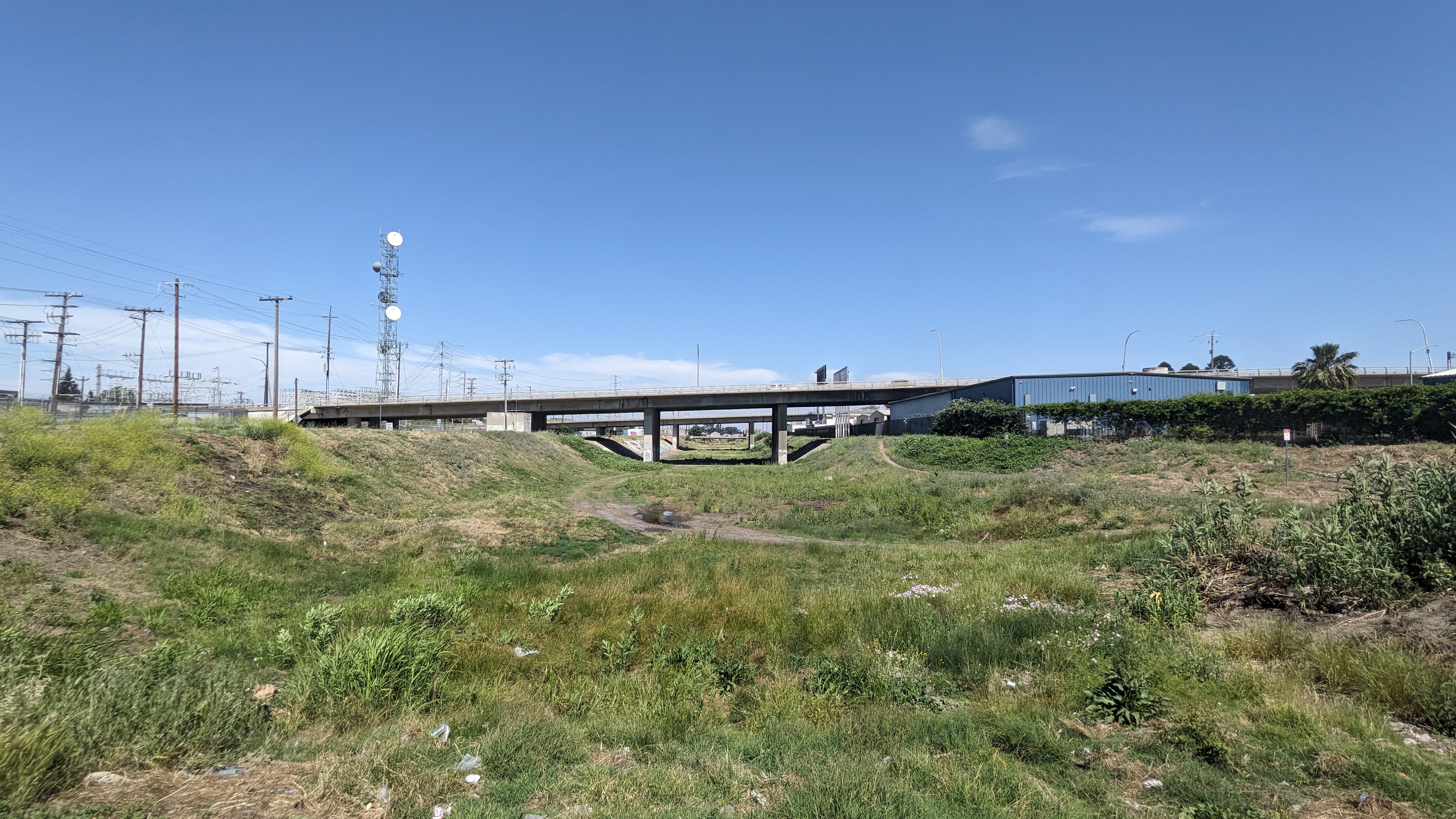
For decades, Mormon Slough has been an overlooked feature of Stockton's landscape. Historically, Mormon Slough was a natural waterway with tree-lined banks, deep pools, and habitat for fish and wildlife. Over time, flood-control modifications transformed it into a largely dry, degraded channel with limited vegetation, diminished habitat, and few opportunities for community access. Today, the six-mile waterway presents both challenges and opportunities for improving flood resilience, restoring habitat, mitigating heat, and expanding access to nature in surrounding communities.
Through the Mormon Slough Restoration Project, the San Francisco Estuary Institute worked alongside partners to help envision a new future for this historical waterway. Building on earlier landscape assessments conducted by the nonprofit River Partners, SFEI developed conceptual designs for two pilot sites along the slough: Solari Ranch and the Stockton Emergency Food Bank. These sites are opportunities to demonstrate how ecological restoration and community-centered design can create more resilient, welcoming urban spaces.
Community priorities at the center of design
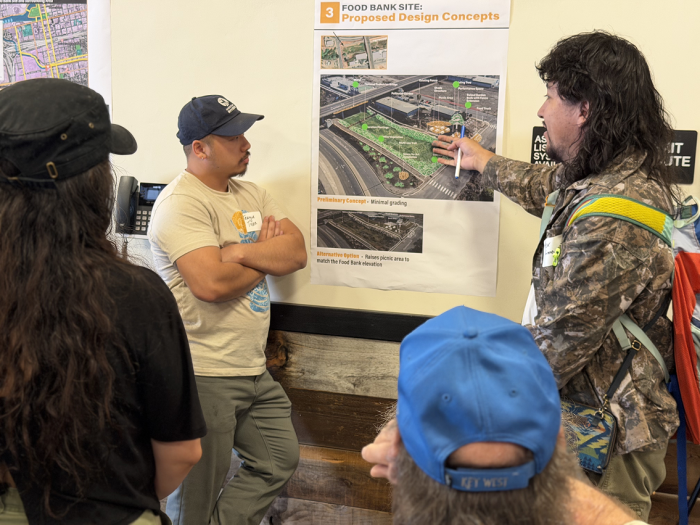
Community input was central to the project's approach. In May and July 2026, the project team hosted two design workshops in Stockton, inviting residents and community organizations to share their ideas, concerns, and priorities. More than 80 community members participated in reviewing and shaping the evolving design concepts.
At Solari Ranch, an undeveloped property in residential East Stockton, community members envisioned a welcoming neighborhood park that emphasized pedestrian connections and opportunities for community stewardship. Design ideas include walking trails, shaded seating areas, native landscaping, community gardens, and spaces for play and gathering.
At the Stockton Emergency Food Bank in South Stockton, the feedback reflected a different set of priorities. Residents focused on supporting the Food Bank's existing activities while improving the surrounding habitat. Priority improvements include expanded food gardens, shade trees, habitat plantings, safer walking and biking connections, and flexible spaces for community services.
Together, the two sites demonstrate how a shared restoration vision can take different forms to address community and ecological needs.
Connecting science, history, and community vision
Alongside the conceptual designs, SFEI developed an interactive StoryMap exploring Mormon Slough's history, ecological context, and future possibilities. Combining historical research, maps, photographs, and ecological analysis, the StoryMap illustrates the waterway's changing role in Stockton and opportunities to reconnect communities and wildlife with this important corridor.
The conceptual designs and StoryMap are tools for continued community conversations, project planning, and fundraising. Although additional design, permitting, and funding is needed to implement improvements, this work represents an important step toward translating a community-led vision into tangible projects. The project is a promising example of how local knowledge, ecological research, and creative design can reimagine neglected urban waterways as places that support both healthy ecosystems and thriving communities.
The project was led by Restore the Delta and funded by North Valley Thrive. It was made possible through the contributions of the Buena Vista Rancheria of Me-Wuk Indians and other members of the Mormon Slough Restoration Association, WRT, the Stockton Emergency Food Bank, the San Joaquin County Historical Museum, Solari Ranch landowner Ernest (Ernie) Vasti, Landscape Architect Jeff Gamboni, FlowWest, and most important of all, Stockton residents who dedicated their time and support to the project.
Explore the Mormon Slough StoryMap to learn more about the waterway's history and the vision for its future. Copies of the conceptual designs are available upon request (contact Restore the Delta).