Cities will face many challenges over the coming decades, from adapting to a changing climate to accommodating rapid population growth. A related suite of challenges threatens global biodiversity, resulting in many species facing extinction. While urban planners and conservationists have long treated these issues as distinct, there is growing evidence that cities not only harbor a significant fraction of the world’s biodiversity, but also that they can also be made more livable and resilient for people, plants, and animals through nature-friendly urban design.
Urban ecological science can provide a powerful tool to guide cities towards more biodiversity-friendly design. However, current research remains scattered across thousands of journal articles and is largely inaccessible to practitioners. Our report Making Nature’s City addresses these issues, synthesizing global research to develop a science-based approach for supporting nature in cities.
Using the framework outlined in the report, urban designers and local residents can work together to connect, improve, and expand upon city greenspaces to better support biodiversity while making cities better places to live. As we envision healthier and more resilient cities, Making Nature’s City provides practical guidance for the many actors who together will shape the nature of cities.
View and download the report
View and download the Executive Summary
View the UN-Habitat Global Urban Lecture








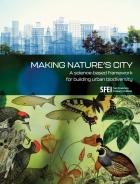
Cities will face many challenges over the coming decades, from adapting to a changing climate to accommodating rapid population growth. A related suite of challenges threatens global biodiversity, resulting in many species facing extinction.
Urban nature—such as greenness and parks—can alleviate distress and provide space for safe recreation during the COVID-19 pandemic. However, nature is often less available in low-income populations and communities of colour—the same communities hardest hit by COVID-19.
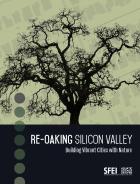
In this report, we investigate how re-integrating components of oak woodlands into developed landscapes — “re-oaking” — can provide an array of valuable functions for both wildlife and people.
Conserving urban biodiversity will rely on updating our planning paradigms.
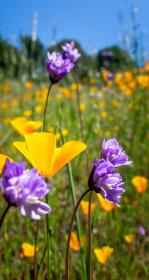
Introducing the Making Nature’s City Toolkit
In partnership with the International Union for the Conservation of Nature (IUCN) Urban Alliance, the San Francisco Estuary Institute (SFEI) has developed the Making Nature’s City Toolkit (makingnaturescity.org), an interactive, beautifully designed webs
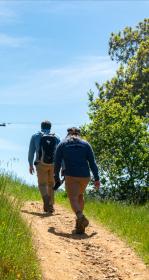
Erica Spotswood and a team of scientists published pioneering research in Nature Sustainability, finding that COVID-19 tracks neighborhood greenness in the US, exacerbating existing inequity.
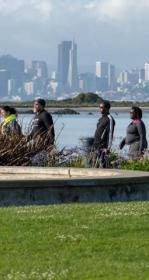
Building Cities to Better Support Biodiversity
Erica Spotswood and a team of other SFEI scientists have developed a framework outlining the key elements for supporting biodiversity in urban environments.