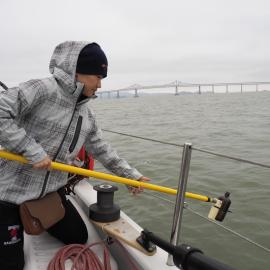
The California Ocean Protection Council (OPC), in close partnership with the State Water Board, has recognized the importance of standard methods for trash monitoring and has funded this project. The Southern California Coastal Water Research Project (SCCWRP) and San Francisco Bay Estuary Institute (SFEI) have partnered up to test multiple trash monitoring methods with a goal of developing a library of methods with known levels of precision, accuracy, and cross-comparability of results, and linking these methods to specific management questions.
Background
In 2015, the State Water Resources Control Board (Water Board) adopted an Amendment to the Ocean Waters of California (Ocean Plan) to Control Trash and Part 1 Trash Provision of the Water Quality Control Plan for Inland Surface Waters, Enclosed Bays, and Estuaries (ISWEBE Plan). Together these are referred to as the Trash Amendments. The Trash Amendments prohibit discharge of trash larger than 5 millimeters to state waters from stormwater systems. The Ocean Protection Council (OPC) sent a letter to the Water Board supporting adoption of the Trash Amendments in 2015. The letter expressed the OPC’s interest in the use of scientific measures to track and verify program effectiveness. Currently there is no agreed-upon scientific method to monitor for trash in water and receiving stormwater channels. This makes assessing permittees’ compliance and general progress on reducing trash in state waters difficult. This project would provide the research needed to develop scientific measures to monitor trash.
Project Goals
Library
Develop a library of standard trash monitoring methods through field testing, research, and outreach
Management Questions
Link management questions to viable trash monitoring methods
New Method Development
Explore novel methods for monitoring trash to measure their practicality and effectiveness
Information Exchange
Recommend standards in trash monitoring methods and information management to facilitate statewide trash characterization






Other Individual Contributors

As municipalities and water-quality regulatory agencies have implemented programs and policies to improve management of the trash loading to storm drain conveyances, there has been increased interest in using a common set of methods to quantify the effectiveness of management actions.
Trash has received renewed focus in recent years as policy makers, public agencies, environmental organizations, and community groups have taken many steps towards trash quantification and management across California.

Measuring Tobacco Product Waste Via a New Mobile App
Tobacco product waste—particularly cigarette butts, wrappers, filters, and electronic cigarette parts—are among the most common forms of environmental litter. SFEI developed and adapted methods for tobacco product waste monitoring as a mobile app for easy use with the California Department of Public Health.
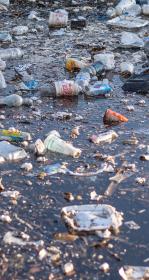
California Trash Monitoring Playbook now available
With the Ocean Protection Council-funded trash monitoring project concluded, the project team is eager to deliver its results to you.

In a partnership with Kinetica, a data analytics start-up, and Oracle, SFEI and SCCWRP leveraged public funding from the California Ocean Protection Council to advance automated trash detection capabilities. The team deployed servers in the @Oracle Cloud to increase performance dynamically.

California Trash Data Dive 2018
On November 16, 2018, the project team helped to coordinate a Trash Data Dive convened by the State Water Board’s Office of Information Management and Analysis.