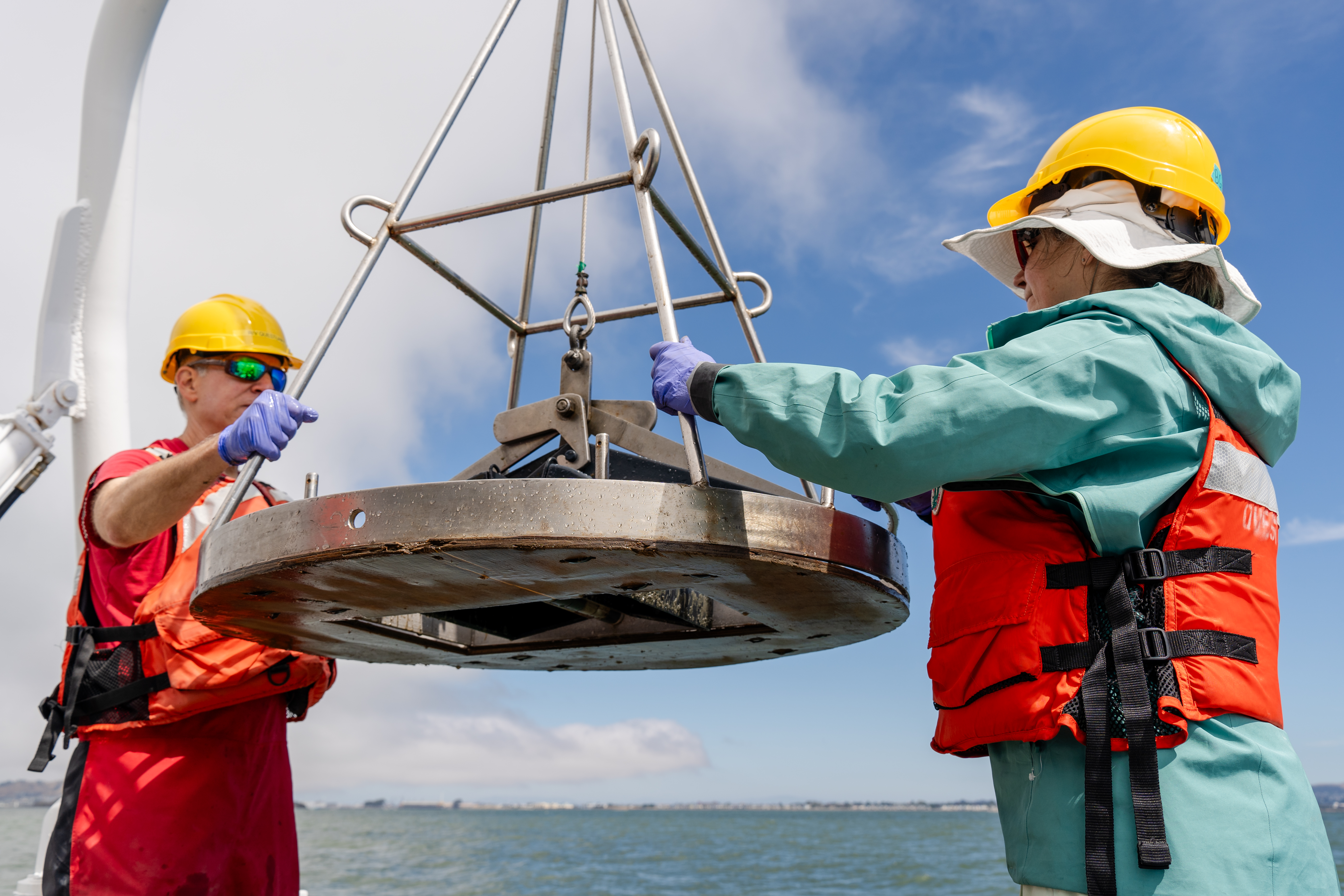
We [hadn't] really looked holistically, pretty much in a decade for PFAS in sediment. And we've advanced with new methods.
— Miguel Méndez, lead author of new report "Emerging PFAS Trends in Water and Sediment from San Francisco Bay"
Monitoring for PFAS, or forever chemicals, has come a long way in the 16 years since the Regional Monitoring Program for Water Quality in San Francisco Bay (RMP) first tested water and sediment from the Bay for the toxic compounds.
Forever chemicals are toxic and one of the most concerning under-regulated contaminants in San Francisco Bay. Newer methods let scientists screen the Bay’s water and bottom for 40 kinds of forever chemicals, plus precursors that transform into forever chemicals in the environment.
Thanks to these advances and ramping up monitoring in recent years, a new report on forever chemicals in the Bay’s sediment and water gives the most complete view yet of trends for this persistent pollutant.
In the Mud
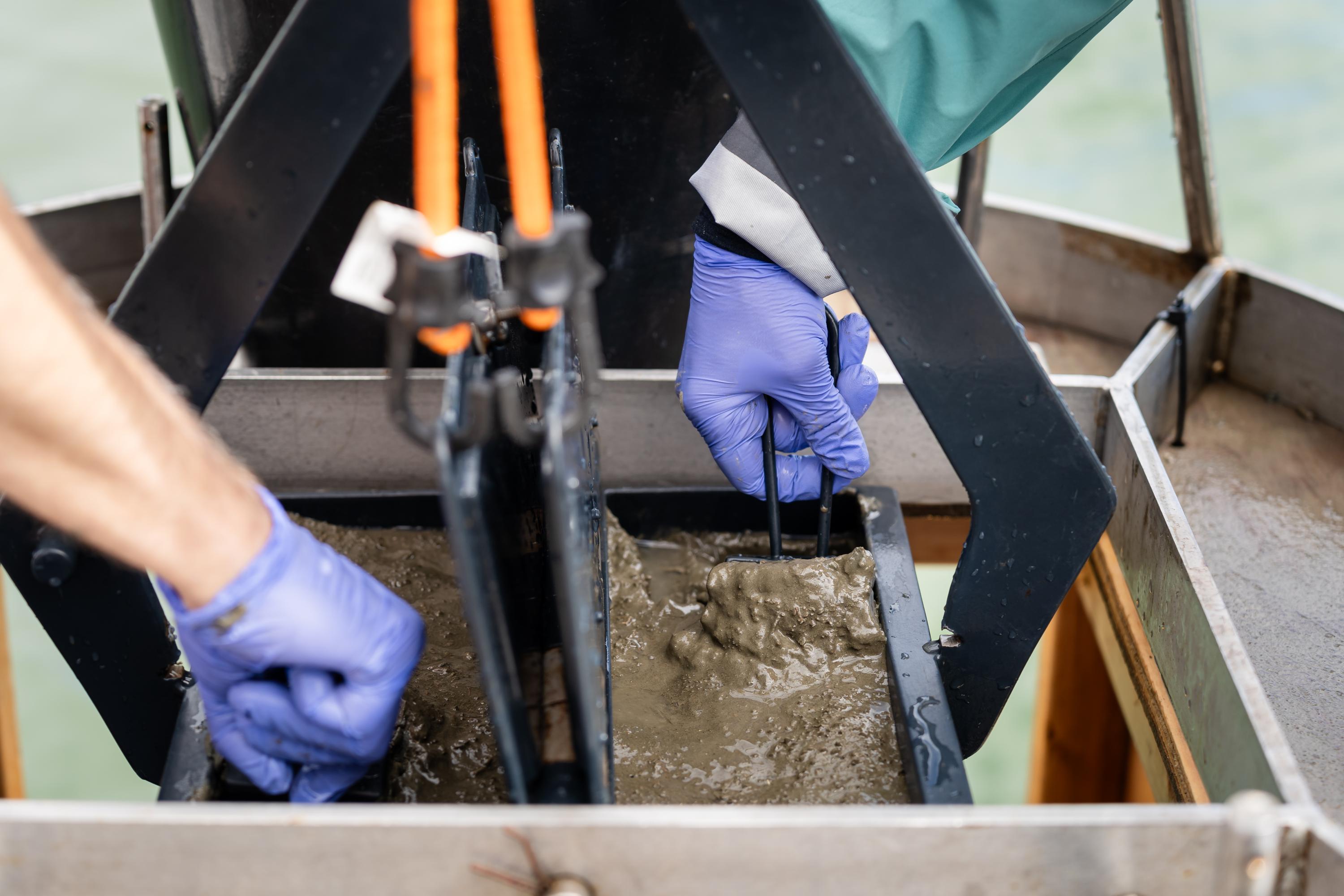
Some kinds of forever chemicals glom onto particles and sink to the Bay’s silty bottom. Monitoring PFAS in the mud gives a different profile from the more water-loving kinds of forever chemicals that stay suspended in the Bay.
“We haven't really looked holistically, pretty much in a decade for PFAS [in sediment]. And we've advanced with new methods,” says Miguel Méndez, the lead author of the new report summarizing a wealth of data on PFAS in San Francisco Bay. “It was a really opportune time to just check in with sediment, to see where we are and if we're seeing any new things.”
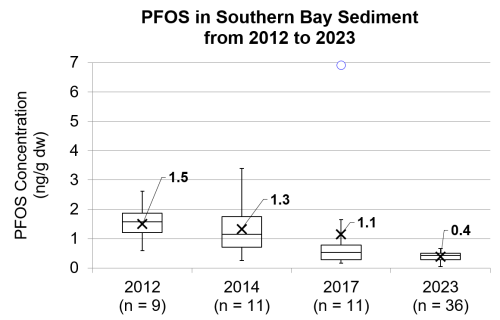
The results showed a decline in PFOS, one of the most-monitored forever chemicals, on the San Francisco Bay floor. PFOS was among the first forever chemicals to raise international alarm bells, and the long-chain acid was phased out in 2000. But even though it’s no longer in new products, plenty of households continued using furniture, carpets, and cookware manufactured with PFOS throughout the early twenty-first century. Combined with the infamous chemical persistence (which gives the “forever” part of their nickname), it meant scientists expected a long, slow recovery.
The latest data show that although PFOS is still stuck between particles on the Bay’s muddy bottom, there’s far less than we found a decade ago. On the surface, the drop in PFOS from sediment samples is encouraging because the ban is showing results in the environment. It’s a pattern that’s been seen across the world after PFOS bans.
Forever chemicals don’t just degrade or go away though, and the existing PFOS that was already there from decades of use hasn’t just disappeared. There are several explanations for the lower levels of the toxic chemical in the bayfloor’s top layer of silt and mud. One is more recent sediment (with less PFOS) settling in the Bay over the last decade, capping the evidence of our PFOS-filled days deeper down. But a more unsettling possibility, and one other data also supports, is that the persistent chemical may be working its way up the food chain, from tiny invertebrates to fish to accumulating in birds, marine mammals, and people.
In The Water
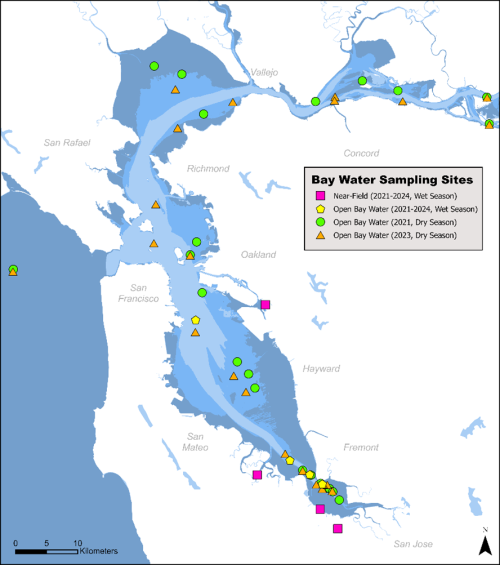
Although San Francisco Bay has decades of strong data on PFAS in cormorant eggs, various fish species, and harbor seals, monitoring the water in the Bay itself regularly is a newer endeavor. PFAS in water tend to be shorter-chain and less well understood chemicals.
The water samples fell well below the San Francisco Bay Regional Water Quality Control Board’s interim forever chemical thresholds for aquatic life, which is good news on the surface. But aquatic life can be hardier than mammals, including people, when exposed to PFAS.
“We tend to be more stringent and protective when it comes to human health compared to aquatic and ecological health thresholds,” says Méndez. “We're just less concerned about what happens to animals and fish compared to ourselves.”
That means a fish swimming in the Bay is unlikely to sicken or die from exposure to PFAS. But that doesn’t correlate to a human then eating that fish being safe, says Ezra Miller, a senior scientist with SFEI’s Clean Water Program and coauthor of the new report.
“It doesn't look like it's a problem if you just look at the water and sediment data. We know that's not true,” says Miller. That’s because recent research confirmed that PFAS levels in many fish species people eat from the Bay are still well above guidelines to protect human health.
Méndez points out that major differences in PFAS concentrations between the Bay’s floor, water, and wildlife confirm the importance of paying attention to all of them. “I think this just goes to show particularly the importance of modeling all of these things together, and understanding how they work in an ecological fashion as well,” says Méndez.
Him and other SFEI scientists are summarizing the existing information for decision makers who protect the health of the Bay and everyone who relies on it. The next step towards that goal is compiling the troves of data the RMP has gathered about PFAS in San Francisco Bay throughout the environment—from sampling fish, bird eggs, marine mammals, water, and sediment—into a strategy recommendation for later this year.




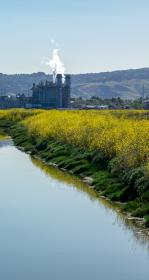
PFAS Stays in San Francisco Bay
SFEI senior scientist, Dr. Rebecca Sutton, published a new study in the journal Chemosphere showing that it will take almost 50 years for PFOA concentrations in water to stabilize in San Francisco Bay. This pales in comparison to the trajectory of PFOS concentrations that will not stabilize in sediment and fish for 500 years. PFOS and PFOA are harmful to humans, causing liver damage, endocrine disruption, fertility decrease, and cancer.

Perfluoroalkyl and polyfluoroalkyl substances (PFASs) are a broad class of fluorine-rich specialty chemicals. More than 4,700 PFASs are used in consumer, commercial and industrial applications.