The San Francisco Estuary Institute and the 5 Gyres Institute have completed a first-of-its-kind, comprehensive regional study of microplastic pollution of a major urban estuary and adjacent ocean environment.
On October 2, join scientists, policy makers, and change leaders for a day of science-informed recommendations and solutions to microplastic pollution. Registration for this symposium is free; however, there are very few seats remaining. We cannot accommodate walk-ins. Alternatively, webinar access is available (registration is required).
Get actionable scientific information, tools, and recommendations to aid your efforts to reduce plastic pollution in the Bay Area, California, and around the globe.
About the Event
It is possible to view the symposium via live stream. The videos for the Symposium's sections are posted below.
For more information, please email [email protected]
Symposium Agenda
Opening
Welcome and Introduction
Warner Chabot, Executive Director, San Francisco Estuary Institute
INTRODUCTORY KEYNOTE
Big Picture from the Ocean Protection Council
Mark Gold, Deputy Resources Secretary for Coast and Oceans and Executive Director, Ocean Protection Council
Potential impacts of microplastics on marine, freshwater, and terrestrial organisms:
What we know and what we need to know to better assess risk
GUEST EXPERT • Susanne Brander, Oregon State University at Corvallis
SESSION 1 • New Findings from the San Francisco Bay Microplastics Project
Science Panel: What’s the Big Picture on these Tiny Contaminants?
- Study Objectives - Meg Sedlak, SFEI
- Microplastics in Bay and Ocean Waters - Carolynn Box, 5 Gyres
- Microplastics in Sediment and Fish - Diana Lin, SFEI
- Microplastics in Wastewater and Stormwater - Alicia Gilbreath, SFEI
DISCUSSION • Moderated by Rebecca Sutton - SFEI, with Technical Expert Xia Zhu - University of Toronto
BREAK
From Land to Sea: Models to Trace the Movement of Microplastics in the Bay and Ocean
Don Yee & Rusty Holleman, University of California at Davis
The Future of Microplastic Science
Chelsea Rochman, University of Toronto
Next Steps for Science and Monitoring in the San Francisco Bay and California
Rebecca Sutton, SFEI, and Shelly Moore, Southern California Coastal Water Research Project (SCCWRP)
LUNCH
Focus on Solutions
Introduction
Airrion Copeland, Executive Director, 5 Gyres
AFTERNOON KEYNOTE
The Big Picture from CalEPA
Jared Blumenfeld, Secretary for Environmental Protection, CalEPA
SESSION 2 • Bay Area Solutions to Reduce Microplastics Pollution
Youth Stakeholders and the Importance of our Influence and Diversity
Cambria Bartlett and Damian Montesinos, Heirs to our Oceans
Data Driven Solutions for Microplastics Pollution in San Francisco Bay
Carolynn Box and Anna Cummins, 5 Gyres
Policy Panel: Local Actions to Drive Change
- Miriam Gordon, Upstream
- Jen Jackson, Department of the Environment, San Francisco
- Martin Bourque, Berkeley Ecology Center
- Chris Sommers, EOA
- Sherry Lippiatt, National Oceanic Atmospheric Administration
DISCUSSION • Moderated by Jen Jackson
BREAK
SESSION 3 • Rising to the Challenge, Microfibers and More
What does Design Change Look like for Textile Industry?
GUEST EXPERT • Krystle Moody Wood, Materevolve, LLC.
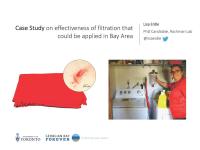
Case Study on Effectiveness of Filtration that Could be Applied in Bay Area
Lisa Erdle, University of Toronto
BIG Trends in MICROplastics Legislation in California
Nick Lapis, Californians Against Waste
Highlights from the Plastic Pollution Movement: Bay Area and Beyond
Marcus Eriksen, 5 Gyres
ADJOURN
Speakers
Keynote Speaker: Jared Blumenfeld
As California Secretary for Environmental Protection, Jared Blumenfeld oversees state efforts to fight climate change, protect air and water quality, regulate toxic substances, achieve recycling and waste reduction goals, and advance environmental justice. Jared has more than 25 years of environmental policy and management experience at the local, national, and international levels. He served under former President Barack Obama as Regional Administrator of the USEPA for the Pacific Southwest. Previously, he was Director of San Francisco’s Department of Environment, where he developed a municipal Environment Code that includes mandatory recycling and composting and bans on Styrofoam and plastic bags. Jared graduated from Cambridge College of Arts and Technology, and earned a Bachelor of Laws degree from the University of London and a Master of Laws from the University of California, Berkeley School of Law (Boalt Hall). He also hosts an award-winning podcast on environmental topics called Podship Earth.
Keynote Speaker: Mark Gold
Mark Gold is the deputy secretary for oceans and coastal policy and director of the Ocean Protection Council at the California Natural Resources Agency. He was associate vice chancellor for environment and sustainability at the University of California, Los Angeles from 2015 to 2019, interim director of the Institute of the Environment and Sustainability from 2014 to 2015 and associate director of the Institute of the Environment and Sustainability from 2012 to 2014. He was president of Heal the Bay from 1994 to 2012. Dr. Gold earned a Doctorate in environmental science and engineering from the University of California, Los Angeles.
Guest Expert: Susanne Brander
Dr. Susanne Brander is faculty in the Department of Environmental Toxicology and Chemistry at Oregon State University. Her research encompasses the fields of toxicology, endocrinology, and ecology; integrating molecular approaches with measurements at the organism and population level. Brander’s main focus is on the effects of stressors such as emerging pollutants, plastics, and changing climate on aquatic organisms, but her research and teaching also spans the links between ecological and human health. She has a Ph.D. in Toxicology and Pharmacology from UC Davis (2011), and an M.S. in Environmental Science and Policy from Johns Hopkins University (2005). Although Brander has worked in academia for the past six years, following completion of an M.S. and prior to pursuing a Ph.D. she worked in industry as an Environmental Analyst and Project Scientist at Weston Solutions, Inc. Before coming to OSU she spent four years as faculty at the University of North Carolina, Wilmington.
Guest Expert: Krystle Moody Wood
Krystle Moody Wood is the founder of Materevolve, LLC., a technical textiles consulting firm aimed at creating transformational change in the textiles and apparel industry. Through project-based consulting, developing experiential learning adventures with leaders in science and textiles, and building an inspirational community around soil, sea and circularity, Krystle aims to help the fashion industry become a powerful force for good. She also serves as co-chair of the Sustainability pillar of the California chapter of AATCC and is co-leading the execution of a 3-day conference this October titled “Resilient Textiles Systems: Through the Lens of Soil and Sea.”
Prior to Materevolve, Krystle drove many sustainable product and materials initiatives at The North Face, Inc. and VF Corporation including revamping icons like the Denali with significant energy, water and chemical savings, and spearheading the Backyard Project- a locally made, sustainable California cotton hoodie. As the materials manager of Fibershed, Krystle led the Community Supported Cloth Project, and the Climate Beneficial Wool Program in partnership with The North Face, Inc. Krystle earned her Bachelor’s of Science in Textile Science from the University of California at Davis.
Martin Bourque
Martin is the Executive Director of the Ecology Center, a community-based organization incorporated on Earth Day in 1970. The Ecology Center pioneered curbside recycling collection in 1973 and operates the longest running program in the country under contract with the City of Berkeley. Under Martin’s leadership, the Ecology Center is leveraging local direct community service programs to have state and national impact. His innovative efforts include creating a farmers’ market industry group, pioneering electronic food stamp access and farmers’ markets incentives, and passing the nation’s first Soda Tax. Martin was at the forefront of developing Berkeley’s innovative Foodware and Litter Reduction Ordinance and is working to pilot reusable foodware in the historic Telegraph Avenue area. Martin earned a Master of Arts in Latin American Studies and Environmental Policy from UC Berkeley, and a B.A. in Evolution, Ecology, and Behavior from UC San Diego.
Carolynn Box
Carolynn Box is Science Programs Director at 5 Gyres. Carolynn has traveled 20,000 miles researching microplastics on Ocean Expeditions with 5 Gyres. She received a Master’s from the University of Rhode Island in Marine Affairs in 2005 and worked in the field of Coastal Management for seven years in San Francisco Bay. After her first 5 Gyres Voyage in 2011, a 33-day trip across the South Atlantic Gyre, she decided to change the course of her life and apply her science and organizing background to efforts to fight plastic pollution. Carolynn has now participated on 10 Ocean Expeditions, many of these as an Expedition Leader. Carolynn was happy to bring her passion and experience to her backyard where she lead up the policy process that was built into the San Francisco Bay Microplastics Project, along with being part of project development, design, fieldwork, and analysis.
Warner Chabot
Warner Chabot brings over 30 years of executive experience in the private, public and non-profit sector, focused on science-based, environmental planning and policy issues. Warner has specialized in California coastal, ocean, water, land use and energy issues at the local state and federal level. Between managing his own environmental consulting firm Warner also served as the CEO of the California League of Conservation Voters. Prior to that, Warner was a Vice President of Ocean Conservancy, a national ocean policy organization.
Airrion Copeland
Airrion Copeland aka Air is the Executive Director of The 5 Gyres Institute. He has over 15 years of leadership experience, primarily in the health and wellness sector. Air implemented a plant-based nutrition and yoga program developed by Dr. Dean Ornish at UCLA Health and has produced several award-winning film projects, including the critically acclaimed documentary “White Wash”, a history of African-American surfers, narrated by Ben Harper with an original score by the Roots. He earned his MBA in business marketing and his MFA in Motion Pictures and Television. Air is an avid surfer, yogi, ocean advocate and loves spending time in nature.
Anna Cummins
Serving as Deputy Director of 5 Gyres, Anna Cummins is a highly regarded environmental strategist. With more than 20 years experience in environmental non-profit work — including marine conservation, coastal watershed management, community relations, and bilingual and sustainability education — she is an expert in the field. Her “Synthetic Sea, Synthetic Me” TEDx talk has been viewed and shared by thousands. Anna received her undergraduate degree from Stanford University, and a MA in Environmental Policy from the Middlebury Institute for International Studies.
Lisa Erdle
Lisa is a PhD Candidate in the Rochman Lab at the University of Toronto. Her work focuses on sources, contamination, and effects of microfibers in the environment. Lisa collaborates with the Ontario Ministry of the Environment, Conservation and Parks as well as Environment and Climate Change Canada to better understand how microfibers – including natural and synthetic fibers – impact fish and invertebrates through physical and chemical processes. Her other recent projects involving microfibers have been to (1) identify different microfiber types from environmental samples and (2) test mitigation strategies for washing machines in collaboration with a local NGO, Georgian Bay Forever, to see how well filters divert microfibers from a wastewater treatment plant.
Marcus Eriksen
Marcus Eriksen is 5 Gyres’ Research Director and has led expeditions around the world to research plastic marine pollution, co-publishing the first globalestimate and the discovery of plastic microbeads in the Great Lakes, which led to the federal Microbead-free Waters Act of 2015. He and Anna Cummins began 5 Gyres with an 88-day journey from California to Hawaii on the Junk Raft, built from 15,000 plastic bottles. Earlier, Marcus had rafted the Mississippi River, writing about the river and his experience as a Marine in the 1991 Gulf War in the book, My River Home (Beacon 2008). His second book, Junk Raft: An ocean voyage and a rising tide of activism to fight plastic pollution (Beacon 2017) recalls the rise of the plastic pollution movement, growing steadily today. He received his PhD from USC.
Alicia Gilbreath
Alicia Gilbreath is an environmental scientist in the Clean Water Group of the San Francisco Estuary Institute. She splits her time monitoring and modeling pollutant concentrations and loads in stormwater. Alicia helped lead the stormwater monitoring effort for the microplastics project and has been honored to be part of this stellar team. Alicia earned a BA in Philosophy and BS in Psychology from UC Davis, and an MLA with an emphasis in Environmental Planning from UC Berkeley. Whether it's for SFEI field work or taking her boys on special wet and muddy adventures in the Oakland hills, Alicia loves getting outside for big storms.
Miriam Gordon
Miriam has had a life-long interest in tackling waste and toxics issues to make the world a better place. Previously, she was the California Director of Clean Water Action between 2008 and 2016, where she launched ReThink Disposable, a program that helps food service operations move to throw-away-free. She was a leading advocate helping the Clean Seas Coalition secure 150 local bag bans and 100 foam bans, and helped ban micro-beads in personal care products and secure the statewide bag ban victory in California. Working for the state, she authored the California Action Plan to Reduce Land-Based Discharges of Marine Debris and the California Marine Litter Reduction Strategy.
Rusty Holleman
Rusty Holleman is a researcher at the UC Davis Center for Watershed Sciences, where he develops and applies numerical models and field studies to better understand the ties between hydrodynamics, ecology and water quality. Before joining UC Davis he helped build the modeling group at the San Francisco Estuary Institute, developing hydrodynamic and nutrient cycling models of San Francisco Bay as part of the San Francisco Bay Nutrient Management Strategy. He received a PhD in Environmental Engineering, focusing on numerical modeling of estuarine and tidal dynamics. He has also worked as an observational oceanographer, including field-based studies of stratified turbulence in salt wedge estuaries. Rusty is an open source and open hardware advocate, with a GitHub presence ranging from modeling software packages to oceanographic instrumentation. In addition to research activities, he has built scientific visualizations for the Exploratorium in San Francisco, and consulted on hydrodynamics for multiple professional sailing teams.
Jen Jackson
Jen Jackson manages the Toxics Reduction & Healthy Ecosystems Program at the San Francisco Department of the Environment. She and her team lead a variety of programs and implement policies that reduce toxic pollution and improve environmental and public health, such as an ordinance banning the use of food service ware containing fluorinated chemicals, a first-in-the-nation requirement for grocers to report antibiotics use in meat and poultry production, an award-winning Integrated Pest Management Program, a municipal Green Purchasing Program, an urban biodiversity program, and an extensive residential household hazardous waste disposal program. Prior to joining San Francisco in 2015, Jen worked in wastewater and stormwater pollution prevention in the public sector, and began her environmental career in the non-profit sector at Sierra Club and Save The Bay. Jen earned her master’s degree in Resource Management & Environmental Planning with a focus in water resources.
Nick Lapis
Nick Lapis is Director of Advocacy for Californians Against Waste. Since joining the organization in 2007, Nick has led several campaigns to enact nation-leading waste reduction legislation and regulatory action in California. In addition to coordinating CAW's overall advocacy strategy, Nick leads the organization's efforts to reduce the impacts of climate change and recover organic wastes. He also engages in policy development and coalition-building, representing CAW on a variety of boards, committees, workgroups, and coalitions.
Nick completed his Bachelors of Science in Environmental Biology and Management, with minors in Environmental Policy Analysis and Planning and Political Science, at the University of California, Davis. Before joining CAW, he interned at the Coalition for Clean Air and California State Parks and worked on ecological restoration and youth leadership development through several positions at the Golden Gate National Parks.
Diana Lin
Diana Lin is a senior environmental scientist in the Clean Water Group of the San Francisco Estuary Institute. She studies microplastics, other contaminants of emerging concern, and legacy contaminants in the San Francisco Bay surface water, sediment, fish, effluent and stormwater. Diana earned a B.S. in Chemical Engineering from the California Institute of Technology, and a Ph.D. in Environmental Engineering and Science from Stanford University. After completing her Ph.D., Diana was a science and policy fellow in the California State Legislature through the California Council on Science and Technology Fellowship Program.
Sherry Lippiatt
Dr. Sherry Lippiatt is the California Regional Coordinator for the National Oceanic and Atmospheric Administration Marine Debris Program (NOAA MDP). She works with stakeholders to identify regional marine debris priorities and provides expertise and oversight for MDP-funded prevention, removal, and research projects in the state. Sherry partnered with the California Ocean Protection Council to develop and implement the California Ocean Litter Prevention Strategy and leads the MDP’s flagship citizen science program, the Marine Debris Monitoring and Assessment Project. Sherry came to the NOAA MDP in 2010 as a Knauss Sea Grant Fellow and was honored as a 2016 NOAA National Ocean Service Team Member of the Year. Sherry earned a Ph.D. in Ocean Sciences from the University of California Santa Cruz.
Shelly Moore
Shelly Moore is a Scientist for the Southern California Coastal Water Research Project (SCCWRP) who specializes in a variety of areas relative to water quality. She has expertise in marine debris, fish biology and data management, analysis and visualization. Her present efforts focus on examining the amount, fate and effect of marine debris/trash in a variety of habitats through projects such as the Bight Regional Monitoring Program and the state-wide Trash Monitoring Method Project to develop monitoring methods for use by many stakeholders. She is also collaborating with others to evaluate and develop new methods for examining and quantifying macro-debris, as well as investigating microscopic techniques to examine microplastics.
Chelsea Rochman
Chelsea Rochman is an Assistant Professor in Ecology at the University of Toronto and a co-founder and director of the UofT Trash Team. Chelsea has been researching the sources, sinks and ecological implications of plastic debris in marine and freshwater habitats for the past decade. She has published dozens of scientific papers in respected journals and has led international working groups about plastic pollution. In addition to her research, Chelsea works to translate her science beyond academia. For example, her research group runs an outreach program in the community and Chelsea regularly presents their work to and/or provides advice for policy makers and managers in Canada, the US, the EU and the UNE.
Meg Sedlak
Meg Sedlak, a Senior Program Manager in the Clean Water group, is the program manager for the San Francisco Bay microplastic project, a comprehensive study of microplastics in San Francisco Bay surface water, sediment, fish, effluent, and stormwater. In addition to the Bay, this project also evaluated conditions in the adjacent National Marine Sanctuaries as well as the exchange between the Bay and ocean. The results of this project are being used to inform policy makers and decision makers to facilitate change. In addition to microplastics, Meg also works on chemicals of emerging concern such as the per- and polyfluoroalkyl substances. Meg earned a M.S. in Water Chemistry from the University of Wisconsin at Madison and B.A. from Carleton College. Meg would like to take this opportunity to thank the many people who made this project a success through their generation donation of time, expertise, funding, and senses of humor.
Chris Sommers
Chris is a Vice President with EOA, Inc., a small environmental engineering and science consulting firm in the Bay Area that specializes in stormwater trash/litter management and assessment strategies. Chris is highly regarded as one of the leaders in stormwater trash management and assessment in the State of California, having assisted numerous public agencies in identifying trash levels, sources and source and treatment controls to effectively reduce trash in stormwater discharges to local waterways and the Bay. Chris has managed a number of innovative and foundational stormwater trash-related projects, including the: San Francisco Bay Area Stormwater (Macro) Trash Generation Rates project (2014); Statewide Stormwater Best Management Practice (BMP) Toolbox for Trash (2009); On-land Visual Trash Assessment (OVTA) protocols (2015); and Receiving Water (Macro) Trash Monitoring Protocols. Chris has also been an active participant of the Regional Monitoring Program for the San Francisco Bay for the last decade. Chris received his B.S. in Environmental Science from Indiana University and his M.S. in Natural Resource Management from Humboldt State University.
Rebecca Sutton
Dr. Rebecca Sutton is a Senior Scientist with the San Francisco Estuary Institute and the Regional Monitoring Program for Water Quality in San Francisco Bay. She leads a team of scientists investigating microplastics and other contaminants of emerging concern in the San Francisco Bay and the state of California. Dr. Sutton received her B.S. in Environmental Resource Science from the University of California, Davis and her Ph.D. in Environmental Chemistry from the University of California, Berkeley. Since 2014, she has been appointed to California’s Green Ribbon Science Panel to aid in the implementation of the state’s Safer Consumer Products Regulations.
Alice Zhu
Alice (Xia) Zhu is a PhD student in Chelsea Rochman's lab at the University of Toronto. Alice was involved in collecting, processing, and statistically analyzing samples of surface water, sediment, fish, wastewater effluent, and stormwater runoff from San Francisco Bay to quantify and source apportion the Bay's microplastic pollution.
Cambria Bartlett and Damian Montesinos
Youth Stakeholders and the Importance of our Influence and Diversity
Heirs To Our Oceans’ leaders Damian Montesinos and Cambria Bartlett
Heirs To Our Oceans (H2OO) are youth leaders who are dedicated to inspire awareness, responsibility and action amongst youth worldwide to protect the waters of our Blue Planet for future generations. H2OO educates, empowers and connects youth in tackling human impacts on our oceans and waterways. The Heirs are committed to bringing the voice of youth to policymakers. During H2OO’s Summit for Empowerment Action & Leadership (SEAL) 2019, Damian, Cambria and Heirs from around the globe spoke to 23 member offices in Sacramento communicating the importance of California setting an example to the country and the world by passing the California Circular Economy and Plastic Pollution Reduction Act.
Damian is a self-proclaimed comedian whose passion is helping to raise awareness around ocean pollution, overfishing, and deep sea mining. He strives to become a great marine biologist in the future. Cambria’s most empowering moments have occurred while talking to legislators in Sacramento and Washington DC about plastic pollution issues. She believes communicating science in a youth voice reminds policymakers that future generations are some of the greatest stakeholders. Cambria believes we need positive environmental changes now, not in 2030 or 2050.
About the Project: These Scientists Want You to Rethink How You Use Plastic
September 2017: Setting Sail to Find Microplastics in San Francisco Bay
Social Media
Other Materials
Carolynn Box, Anna Cummins. 2019. San Francisco Bay Microplastics Project: Science-Supported Solutions and Policy Recommendations. 5 Gyres: Los Angeles, CA.
Presentations
Opening
SESSION 1 • New Findings from the San Francisco Bay Microplastics Project
The Future of Microplastic Science - Chelsea Rochman, 5 Gyres
SESSION 2 • Bay Area Solutions to Reduce Microplastics Pollution
Policy Panel: Local Actions to Drive Change
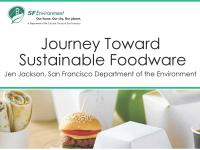
Jen Jackson, SF Department of the Environment
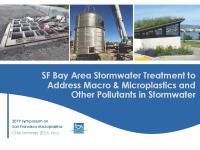
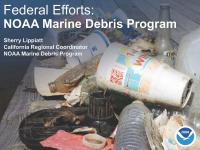
Sherry Lippiatt, National Oceanic Atmospheric Administration
SESSION 3 • Rising to the Challenge, Microfibers and More

What does Design Change Look like for Textile Industry? - Krystle Moody Wood, Materevolve, LLC
David Brower Center
2150 Allston Way
Berkeley, CA 94704