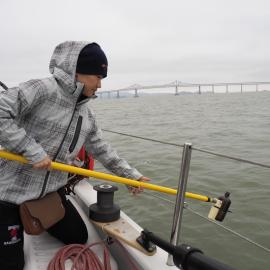
California mussels (Mytilus californianus and hybrid Mytilus galloprovincialis / Mytilus trossulus) and Asian clams (Corbicula fluminea) were collected at multiple sites in San Francisco Bay. Mussels from a reference area with minimal urban influence were also deployed in cages for 90 days at multiple sites within the Bay prior to collection.Mussels from the reference time zero site, Bodega Head, had some of the lowest microparticle levels found in this study, along with resident clams from the San Joaquin and Sacramento Rivers and mussels transplanted to Pinole Point. The highest concentrations of microparticles were in mussels transplanted to Redwood Creek and Coyote Creek. The results of this study and current literature indicate that bivalves may not be good status and trends indicators of microplastic concentrations in the Bay unless the interest is in human health exposure via contaminated bivalve consumption.
| Attachment | Size |
|---|---|
| Microplastic in Bivalves Report - FINAL.pdf | 1.14 MB |