About the Project
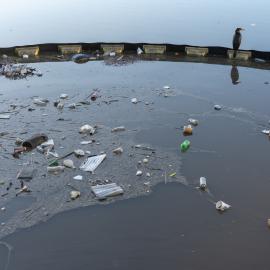
Microplastics are a pervasive and preventable threat to aquatic ecosystems. The San Francisco Estuary Institute and 5 Gyres conducted a first-of-its-kind, comprehensive regional study of microplastic pollution of a major urban estuary and adjacent ocean environment.
Key Findings
- We found microplastic pollution in every part of the Bay, at some of the highest levels measured globally.
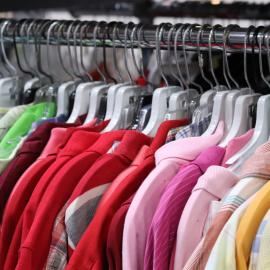
- Surprisingly, we found urban stormwater runoff transports hundreds of times more microplastics to the Bay than wastewater. Each year, stormwater carries an estimated 7 trillion microplastics through creeks and streams to the Bay. Nearly half are tire wear particles washed from roads. Tiny fibers, discharged from clothes dryers and other sources, make up most of the rest of the stormwater microplastics.
- California is a leader in the science and action to prevent microplastics pollution. Findings from our investigation continue to inform state efforts to tackle this growing threat to state waters.

The Science
Microplastics are tiny bits of plastic five millimeters or smaller. Their small size exempts them from most regulations, but makes microplastics a big pollution problem. When wildlife eat microplastics, these tiny plastic bits can block and damage organs and leach potentially harmful chemicals. Microplastics and chemicals can transfer up the food chain.
Microplastics come in a wide variety of shapes, sizes, and plastic types, each with unique physical and chemical properties and toxicological impacts. Understanding the magnitude of the microplastics problem and determining the highest priorities for mitigation require accurate measures of microplastic occurrence in the environment and identification of likely sources. To develop critical baseline data and inform solutions, the San Francisco Estuary Institute and the 5 Gyres Institute completed the first comprehensive regional study of microplastic pollution in a major estuary.

Our Results
Our three-year, $1 million study has generated critical insights including:
- Urban stormwater runoff contains hundreds of times more microplastics than wastewater, including unique particles with potential toxicity concerns, such as those derived from vehicle tires
- Local wastewater treatment facilities with advanced dual media filtration release lower concentrations of microplastics than facilities without this additional treatment
- San Francisco Bay water and sediment contain higher levels of microplastic contamination than other regions globally
- Prey fish in the Bay consume microplastics, particularly microfibers; available toxicity studies cannot tell us whether current levels are harmful
- Novel computer simulations indicate that the Bay traps dense microplastics, and discharges more buoyant particles to the Pacific Ocean
Findings are summarized in the Executive Summary of our comprehensive report. An open access, peer-reviewed scientific publication is also available.
Focus on Stormwater Pathway and Outdoor Sources
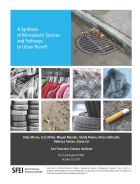
Building on the major finding that storm-driven runoff from cities is a major pathway for microplastics to enter California’s aquatic ecosystems, this new report synthesizes available information on major sources of microplastics to urban runoff, including textile, cigarette filter, and other types of fibers; single-use plastic foodware; and vehicle tires. The report also illustrates a broad menu of promising measures that California agencies, the public, and the vehicle industry can use to tackle each of the major sources of microplastic pollution.
The study identifies key science data gaps important to informing management actions, including:
- Cellulose acetate from cigarette butts may be an important source of microplastic fibers in urban runoff. Improved methods to distinguish cellulose acetate fibers from other cellulosic fibers in the field are needed to monitor microplastics from cigarette butts and evaluate the effectiveness of recent policies aimed to reduce cigarette butt litter.
- The main source of microplastic fibers in urban runoff has not yet been identified. Further investigation on whether dryers are a major source is necessary to inform mitigation measures.
- Further work is needed to develop a standardized framework for monitoring, analyzing, characterizing, and reporting trash and microplastics in order to support investigations to understand the breakdown of trash to microplastics in the environment.
- Tire wear particles are one of the top sources of microplastics. Investigations of tire wear particles in the environment is needed to understand what particle sizes are important to capture to mitigate water quality impacts.
California Leads the Way
The Statewide Microplastics Strategy, developed by California’s Ocean Protection Council in 2022, builds on the foundation of our synthesis report on microplastics in stormwater. In particular, the state strategy acknowledges the importance of tire wear particles and calls for the development of a tires-specific pollution prevention strategy. SFEI science on stormwater continues to serve state efforts to prevent pollution and protect aquatic ecosystems.










Other Individual Contributors

Plastics in our waterways and in the ocean, and more specifically microplastics (plastic particles less than 5 mm in size), have gained global attention as a pervasive and preventable threat to marine ecosystem health.

Microplastics (particles less than 5 mm) are ubiquitous and persistent pollutants in the ocean and a pervasive and preventable threat to the health of marine ecosystems.
California Senate Bill 1263 (2018) tasks the Ocean Protection Council (OPC) with leading statewide efforts to address microplastic pollution, and requires the OPC to adopt and implement a Statewide Microplastics Strategy related to microplastic materials that pose an emerging concern for ocean he
Stormwater runoff has been suggested to be a significant pathway of microplastics to aquatic habitats; yet, few studies have quantified microplastics in stormwater.
The physical and chemical properties of microplastics and their environmental distributions may provide clues about their sources and inform their fate. We demonstrate the value of extensive monitoring of microplastics in an urban bay, San Francisco Bay.

Microplastic contamination in the marine environment is a global issue. Across the world, policies at the national and international level are needed to facilitate the scale of change needed to tackle this significant problem.
Microplastics are ubiquitous and persistent contaminants in the ocean and a pervasive and preventable threat to the health of marine ecosystems. Microplastics come in a wide variety of shapes, sizes, and plastic types, each with unique physical and chemical properties and toxicological impacts.
Plastic pollution is a defining environmental contaminant and is considered to be one of the greatest environmental threats of the Anthropocene, with its presence documented across aquatic and terrestrial ecosystems.
To inform mitigation strategies and understand how microplastics affect wildlife, research is focused on understanding the sources, pathways, and occurrence of microplastics in the environment and in wildlife.
California mussels (Mytilus californianus and hybrid Mytilus galloprovincialis / Mytilus trossulus) and Asian clams (Corbicula fluminea) were collected at multiple sites in San Francisco Bay.

A multiyear water quality performance study of a bioretention rain garden located along a major urban transit corridor east of San Francisco Bay was conducted to assess the efficacy of bioretention rain gardens to remove pollutants.
Despite widespread detection of microplastic pollution in marine environments, data describing microplastic abundance in urban estuaries and microplastic discharge via treated municipal wastewater are limited.
Despite widespread detection of microplastic pollution in marine environments, data describing microplastic abundance in urban estuaries and microplastic discharge via treated municipal wastewater are limited.

SFEI Science at International Marine Debris Conference (March 12-16)
SFEI science will feature prominently at the Sixth International Marine Debris Conference in San Diego next week:
These scientists want you to rethink how you use plastics: SFEI and 5 Gyres issue a new video
The short (3-min) video summarizes the goals of the SF Bay Microplastics Project, which aims to better understanding the di

Local News: Scientists launch major study of microplastics pollution in San Francisco Bay
SFEI and The 5 Gyres Institute have launched an ambitious two-year research project to monitor San Francisco Bay for pollution in the form of tiny particles of plastic pollution, reports ABC7 News.
Hunting for Plastic in California’s Protected Ocean Waters
Rebecca Sutton, Meg Sedlak, and Diana Lin of SFEI, in partnership with Carolynn Box of 5 Gyres, conducted ocean water sampling associated with an ambitious project. The project is focused on determining the characteristics and fate of microplastics in the Bay and adjacent ocean waters. KQED reporter Lindsey Hoshaw published a story covering the team's activities along the California coast. After determinng that the Bay has greater than expected microplastic pollution, the science team, as reported by Hoshaw's story, is conducting further ground-breaking research.
East Bay Express Insert for Coastal Cleanup Day
Just in time for California Coastal Cleanup Day, an insert in today’s East Bay Express provides readers with ways to help protect San Francisco Bay.
New Microplastic Pollution Study to Launch in San Francisco Bay and Adjacent Ocean Waters
A two-year investigation on microplastic and nanoplastic pollution in San Francisco Bay and the surrounding ocean will launch this month, led by two research centers, the San Francisco Estuary Institute and the 5 Gyres Institute.

A Synthesis of Microplastic Sources and Pathways to Urban Runoff
What do clothes dryers and car tires have in common?
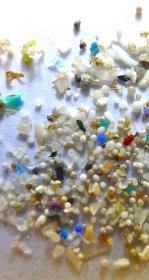
Big problem, small size: Improving methods in microplastics research
When it comes to plastic pollution, that candy wrapper half buried in the dirt is only the tip of the iceberg. Plastic bags, cigarette butts, and bottle caps are not just an eyesore, but over time they break down in the environment, creating small pieces of debris known as microplastics.
Groundbreaking SFEI and 5 Gyres microplastics study featured in multiple media outlets
Concurrent with a sold-out symposium on Oct 2nd, media outlets, including the Mercury News, San Francisco Chronicle, and Los Angeles Times, have released the articles relating the alarming findings regarding the pervasive presence of microplastics in our surface waters.