|
|
 | This study will assess watershed conditions prior to significant Euro-American modification, as a basis for understanding subsequent changes in watershed structure and function, and potential options for future environmental management. | | |
 | Alameda Creek is the largest watershed in the Bay area draining approximately 650 square miles of the East Bay interior hills and valleys, including the Livermore-Amador and Sunol valleys. | | |
|
|
 | The RMP is developing a strategy for assessing atmospheric loads of contaminants to the Estuary. | | |
 | The Ballona Creek project supports historical research conducted by the Southern California Coastal Water Research Project and CSU-Northridge on the historical ecology of the Ballona Creek watershed | | |
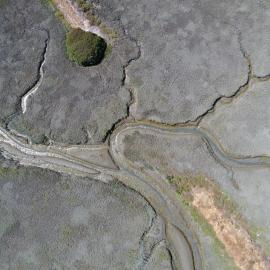
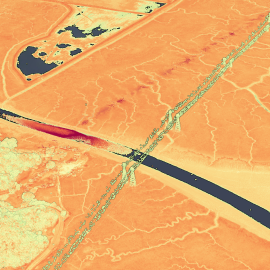
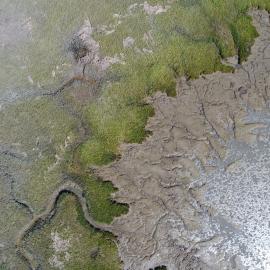
 | BAARI is a base map of the Bay Area's aquatic features: wetlands, open water, streams, ditches, tidal marshes and flats, and riparian areas. | | |
 | Forgotten landscapes reappear on commercial billboards | | |
 | A map of historical habitats and channels in the South Bay. | | |
 | The RMP conducts triennial monitoring of cormorant and tern eggs for mercury, selenium, and trace organics. | | |
 | This project is intended to enable California Wetlands Portal to be the common data management system for the State’s primary wetland protection policies and programs. | | |
 | Water quality monitoring provides important information to environmental managers, regulators, and citizen groups about the condition of the State's Coastal Waters. However, since there are many individual programs which currently exist, each providing information, it has been difficult to find who is monitoring what, and where. | | |
 | Through the ASC, SFEI is working with a team of technical advisor to provide the breadth and depth of
scientific understanding about wetlands and riparian areas needed to assure the scientific
credibility of the new state policy to protect California's Wetlands. | | |
 | Comprehensive information on California wetlands | | |
 | Where are California's wetlands? The California Wetlands Portal is a tool designed to answer this question. | | |
 | An online resource that promotes and facilitates coordination of water monitoring across the Central Valley basin. | | |
|
|
 | Recent studies on emerging contaminants in San Francisco Bay will be released in 2011, and may influence the management of CECs in San Francisco Bay and the entire state. A summary document that synthesizes these data will be prepared, to guide future monitoring efforts. | | |
 | In 2007, the CCMP was updated to reflect continuing and new needs and opportunities for protecting and restoring valuable ecosystem components, to more strongly link the Estuary itself to its surrounding watersheds, and to refine and adjust education, outreach, and progress tracking activities | | |
 | The Estuary is listed as impaired for many contaminants as a result of elevated concentrations observed in biota. This project will develop a conceptual model of contaminant uptake by biota. | | |
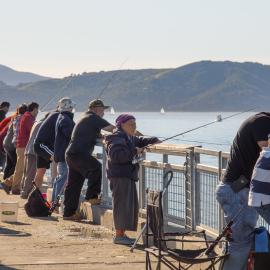
 | Sportfish Monitoring informs management and restrictions on sportfish consumption from the Bay. | | |
 | Historical condition, Landscape change and restoration potential in the Eastern Santa Clara Valley, California | | |
 | Phase II of the CCA Program is designed to build on the preliminary assessment conducted under Phase I,
which was completed in 2007. A key goal is to demonstrate the validity and applicability of various predictive tools to local government and other implementers of Best Management Practices (BMPs) under each set of applicable Management Measures. | | |
|
|
 | Aquatic Science Center supports the Central Valley and State Water Boards in the development of the Delta Regional Monitoring Program. | | |
 | Aquatic Science Center supports U.S. EPA in developing an Action Plan for a cleaner, healthier Delta. | | |
 | This project will develop land use classifications (e.g., urban, open space, industrial, etc.) for the Bay Area, in order to identify the highest priority land use types to be monitored in the future. | | |
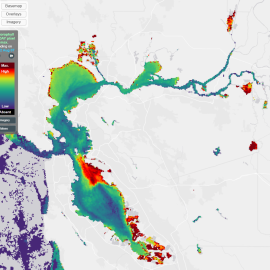
 | A high priority for the modeling strategy and the Contaminant Fate workgroup is the development of a numerical flexible grid model of the Estuary. | | |
 | San Francisco Bay waters are listed as impaired as a result of elevated concentrations of dioxins and furans in fish, and studies in sport fish have found dioxin concentrations relatively unchanged since 1994. Improving our understanding of dioxin through sediment and water sampling is a necessary first step in reducing concentrations in Bay fish. | | |
 | The San Francisco Bay was listed in 1998 as an impaired water body for dioxin as a result of elevated fish dioxin concentrations. | | |